On August 16, 2026, the world is witnessing a radical transformation of the geopolitical landscape in the Middle East. Recent events in Syria have marked the end of the era of Russian military patronage of Bashar al-Assad's regime and a transition to a new format of relations based on pragmatism and mutual economic interests. Against the backdrop of a devastated economy and colossal needs for reconstruction, Damascus is forced to find a balance between maintaining vital supplies from Moscow and striving for sovereignty.
Transition from Military Control to Joint Management
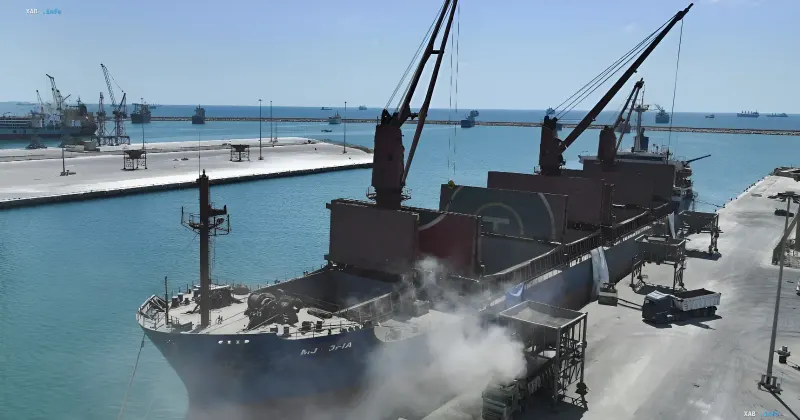
The key event that determined the new vector of development was the signing of a memorandum of understanding between Damascus and Moscow on August 9. After 18 months of tense negotiations, the parties agreed to reorganize the Russian military presence at the Khmeimim and Tartus bases. According to the terms of the agreement, Syria has regained full control over Khmeimim airport, commercial berth No. 4, and associated warehousing facilities. The military part, previously exclusively Russian, will be transformed into a joint training center within three months. This decision symbolizes a shift from the "client-patron" model to a partnership where the Syrian side gains more levers to manage its territory.
Wheat as a Tool of Stability
While the military sphere is undergoing structural changes, economic dependence remains critical. In conditions where the cost of Syria's reconstruction is estimated by the World Bank at $216 billion, food security becomes a matter of regime survival. According to customs documents from 2025–2026, Russia and the Russian-controlled Crimean Peninsula provide about 85% of Syria's wheat imports — equivalent to 2.9 million tons. In a country where the population's purchasing power has been undermined by decades of war, bread is not just a commodity but a factor of public order. Interruptions in supplies could lead to social explosions, so Damascus is interested in maintaining logistical chains with Moscow.
The Energy Bridge and the Search for Alternatives
The second pillar of relations remains oil. Syria's energy sector, devastated by the conflict, is unable to meet the country's needs for fuel and electricity. In 2025, Syria received about 16.8 million barrels of Russian oil, and by the beginning of 2026, supplies were projected to increase to 60,000 barrels per day. However, analysts note that Damascus is actively seeking alternative sources to reduce dependence on a single supplier. Russian oil currently acts as a "bridge," allowing the country to avoid an energy system collapse while it diversifies its supplies. This creates a complex dynamic: on the one hand, a critical need for resources; on the other, a desire for energy sovereignty.
Contradictory Data
Assessing the significance of these events sparks debate among experts and the media. Reuters calls the events a "reorganization," emphasizing the pragmatic nature of the new agreements. At the same time, the Financial Times focuses on the reduction of Russia's strategic influence, interpreting the transfer of berths and the airfield as a loss of positions. Russian sources, such as Pravda.ru, tend to view the agreement as a diplomatic victory, allowing the preservation of presence in the region in a new format. The difference in interpretations reflects the depth of the transformation: for some, it is a step towards sovereignty; for others, a sign of weakening Russian influence.
New Horizons of Cooperation
Despite changes in the military and economic spheres, Russia continues to invest in the humanitarian and educational space. A delegation from Rossotrudnichestvo arrived in Damascus to resume the work of the "Russian House," which indicates a desire to maintain cultural and educational ties. This direction is becoming an important part of the new format of relations, where the focus shifts from a forceful presence to soft power and long-term partnership. In conditions where Syria is recovering, such projects can become the basis for sustainable cooperation in the future.