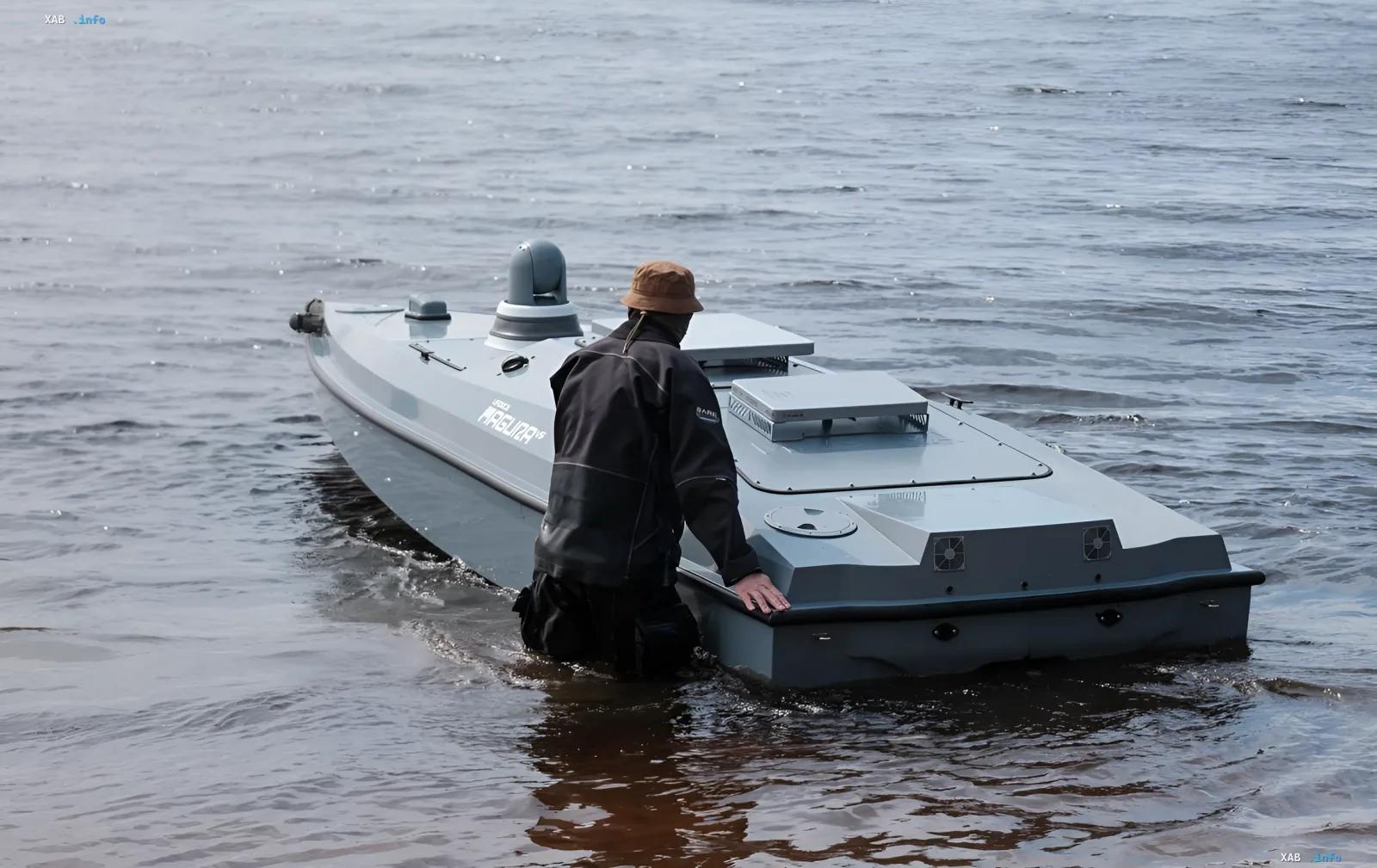
The American defense industry is betting on experience gained through real combat operations. ReconCraft from Portland and Ukrainian developer Uforce have signed a memorandum of understanding that will kickstart the production of Magura maritime drones on US soil. The agreement was formalized last week at the Ukrainian embassy in Washington, symbolizing a shift from tactical cooperation to strategic partnership in the arms sector.
Mass Production in the States
Under the terms of the partnership, both companies will pool resources, providing materials, equipment, and personnel. ReconCraft co-founder Joe Silkowski outlined ambitious plans: facilities in Oregon and South Carolina are expected to produce hundreds, and possibly thousands, of drones annually. This decision is directly linked to the Pentagon's need to scale up the production of autonomous systems.
Uforce CEO Oleh Rohynskyi emphasized that authorization for production in the US is a key factor. It will allow the US armed forces to implement tactics and concepts honed by Ukrainian operators over years of war. Sean Planki, head of Uforce USA, stated that they have become the first company officially approved by the Ukrainian government to produce unmanned surface vessels (USVs) in America for the success of US military forces.
Technical Specifications and Capabilities
Magura drones are unmanned high-speed boats with impressive combat characteristics. They are capable of carrying a payload of approximately 770 kg over distances of up to 560 km. The cost of one boat, depending on the configuration, can be less than $500,000, making them significantly more affordable compared to traditional munitions.
The functionality of these systems goes far beyond simple strike missions. In addition to delivering strikes, they can:
- Launch aerial drones for reconnaissance or attacks;
- Conduct mine countermeasure operations;
- Tow sonar systems for submarine detection.
Images of the new Magura V7 model have already appeared online, featuring the ability to engage aerial targets while remaining on the water. Furthermore, the Book of Records of Ukraine has officially recorded five combat records achieved by military intelligence through the use of this drone family.
Geopolitical Context and Operational Experience
The decision to produce Magura in the US coincides with the expansion of arms exchange between the two countries and a shift in approaches to warfare. The Pentagon is prepared to spend tens of billions of dollars on autonomous systems in the coming years. The conflict with Iran and the depletion of expensive US munitions stocks have highlighted an acute need for cheaper and more effective weaponry.
The US has already begun actively using maritime drones in combat operations following a period of testing. This month, American suicide drones attacked an Iranian submarine and a naval object at a naval base in the Strait of Hormuz. This experience confirmed the effectiveness of the technology, which previously proved its viability in the Black Sea, forcing Russian ships to retreat, as well as striking oil tankers and bridges.
Global Trend Towards Localization
The agreement between ReconCraft and Uforce is part of a broader process. Last year, the Pentagon sent a list of 12 Ukrainian drones to major defense companies with a proposal for cooperation. Similar agreements have already been reached with Britain, Germany, and Denmark, where Ukrainian companies have begun work adapting combat-proven technologies to the needs of Western armies.
Thus, Magura drones are entering an already saturated US unmanned surface vessel market, where numerous startups and corporations are releasing new boats with increasing range and power. However, it is the combat application in Ukraine that gives these systems a unique competitive advantage.