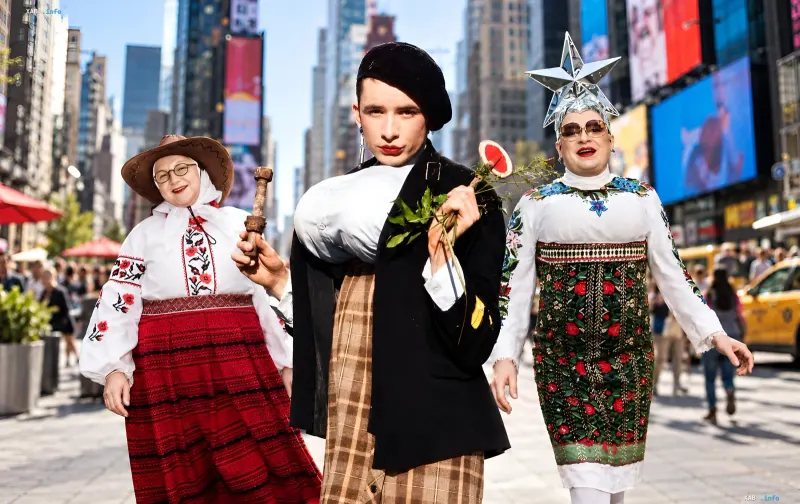
Verka Serduchka is one of the most recognizable stage personas in the history of Ukrainian culture, having undergone numerous transformations over the decades. Behind the comedic manner of speaking, brilliant costumes, and the large star on her head stands Andriy Danylko, who created the character back in the early 1990s. Over more than three decades of stage life, this persona has evolved from a local comedic heroine into an international star who has performed on one of Europe's largest music arenas.
Poltava Roots: How the Character Was Born
The story of Verka Serduchka began in Poltava. Andriy Danylko was passionate about theater and humor during his school years, participating in creative contests and gradually crafting his own stage personas. In 1990, he began working on the character that would later become famous. One of Danylko's earliest heroines was Galya the saleswoman, who subsequently transformed into a train attendant. It was this character that became the foundation for the future stage star. Initially, Serduchka was not a singer — she was a comedic heroine with a distinct pronunciation, unpretentious behavior, and recognizable everyday stories. Her image resembled the type of woman one might encounter in a station queue or a train carriage.
Where the Name Came From
The character's name has a quite real history. In a 2013 interview with the "High Castle" publication, Andriy Danylko shared that he took the name Verka from a school cleaner named Vera, and the surname Serduchka from his classmate Anya Serdyuk. Thus, a stage name was born that would later become known far beyond Ukraine's borders. Public performances quickly brought Danylko audience attention: the artist recalled that his first number as a train attendant provoked such a turbulent reaction that he was repeatedly called back to the stage. It was then that he realized how successful the character turned out to be.
The Television Era: "SV-Show" and the Compartment on "1+1"
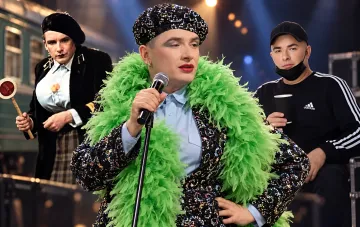
The next important milestone was Ukrainian television. In 1997, Verka Serduchka began hosting the "SV-Show" on the 1+1 television channel. The program's title referred to a sleeping car (SV), and the studio itself was designed as a railway compartment. The format was built on conversations with famous guests: Serduchka chatted with artists, musicians, and other public figures, joked, asked awkward questions, and behaved as if she were talking to old friends rather than stars. A special place in the show belonged to Verka's mother, played by actress Inna Bilokon. Her character became Serduchka's constant companion not only on television but also during concerts. Thanks to the "SV-Show," the heroine ceased to be merely a comedic act: viewers grew accustomed to her as a distinct individual with her own habits, character, relatives, and stories.
Musical Transformation and the Title of Honored Artist
While viewers were getting used to television Verka, Andriy Danylko began developing her as a musical performer. Serduchka's songs differed from the conventional pop music of the time: they combined dance rhythms, humor, simple choruses, and a signature performance style. The artist did not try to make his heroine a classic pop diva — on the contrary, he maintained her comedic nature even during large concert performances. Among the tracks that made Serduchka especially popular are "Gop-gop", "Vse budet khorosho", "Ya ne ponyala", and "Kha-ra-sho!". Gradually, the stage appearance also changed: while earlier the main attributes were clothing and everyday details, bright dresses, sequins, massive jewelry, unusual hairstyles, and extravagant headwear soon appeared. In 2003, Andriy Danylko received the title of Honored Artist of Ukraine — confirmation that his creative work had long surpassed the bounds of humor acts.
Eurovision 2007: Entering the International Arena
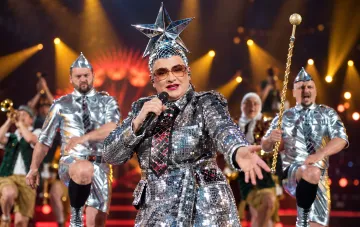
By 2007, Verka Serduchka was already popular in Ukraine and the former USSR countries. But it was Eurovision that transformed her into an international star. Andriy Danylko represented Ukraine in Helsinki with the track "Dancing Lasha Tumbai". For the performance, he chose a silver stage costume, a glittering star on his head, and a spectacular staging with dancers. The number noticeably stood out from many other contest performances: Serduchka did not try to demonstrate a classic vocal image — she joked, danced, interacted with the audience, and turned the stage into a grand show. The song's title itself also drew special attention: after the contest, Russian media began claiming that the words "Lasha Tumbai" sounded like "Russia Goodbye". This episode became part of a broader cultural resonance that accompanied the performance on the European stage.