With frosts setting in at the end of November 2026, drivers across the country are once again facing one of the most unpleasant winter situations: the key won't turn, the central lock clicks, and the door refuses to budge. According to automotive experts, this problem is usually caused by two different reasons—freezing of the lock mechanism and the rubber seals freezing to the car body. The solution method and the risk to the car depend on which exact scenario has occurred. The erroneous use of force or "folk" thawing methods often costs more than the frost itself: handles break, seals tear, electronic key chips and paintwork get damaged.
Three Blocking Scenarios: How to Figure Out What Is Frozen
Before taking action, it is important to diagnose the problem because there is no universal "one-size-fits-all" move. Specialists from the German automobile club ADAC highlight three typical signs. If the key does not insert or turn in the lock, moisture has gotten inside the mechanism and turned into ice. If the central lock operates but the doors do not open, the rubber seals have frozen to the body. If the handle moves with difficulty, an ice crust has formed around the handle itself or within its mechanism. In each of these cases, the golden rule is not to use force: a sharp movement can damage the door handle, lock, or rubber elements, turning a minor inconvenience into a repair job.
Frozen Lock: Safe Procedure
If the problem lies specifically in the lock mechanism, it is best to use a special de-icer sold in automotive stores, which contains components that melt ice inside the keyhole. The product is applied to the keyhole according to the manufacturer's instructions, after which the key is inserted and turned without excessive force. If the mechanism remains blocked, you should not twist it blindly—that is a direct path to breakage. An alcohol-based product will serve as a temporary alternative, but its composition must be considered: products with additives can leave sediment inside the lock, so a specialized automotive de-icer remains a more reliable option. Heating a metal key with a lighter, which many drivers use out of habit, is undesirable for modern cars: high temperatures can damage the electronic chip, transponder, or plastic parts of the key.
Frozen Seals: How to Release the Block Without a Blow
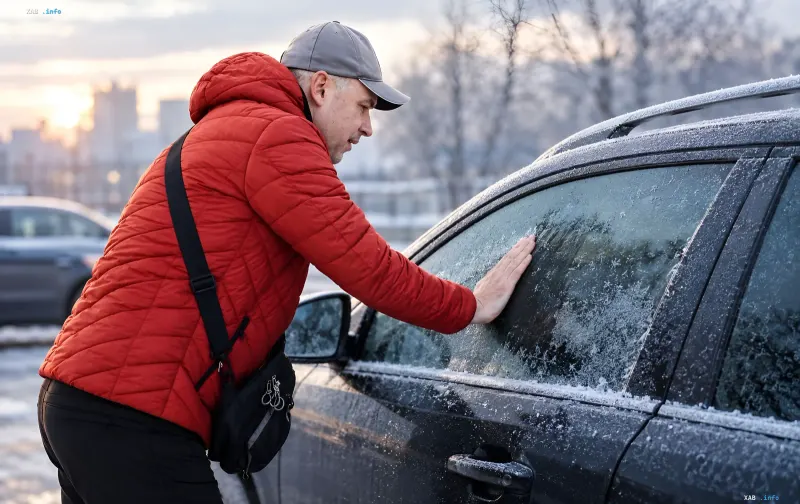
When the lock works but the door doesn't open, it is usually the seals. Experts from the British automotive organization RAC emphasize that in severe frost, you must handle frozen elements carefully so as not to damage them. Do not pull the door handle sharply: instead, gently press the door against the body to loosen the ice bond, or lightly press with your palm in several places along the seal without delivering blows. If that doesn't help, it's wise to check other doors—passenger doors often remain accessible even when the driver's door is frozen shut. Once inside, the car should be gradually warmed up and the blocked door carefully opened from the inside. At the same time, before starting to drive, make sure the driver's door opens normally from the outside as well: this is critical to ensure access to the driver in case of an accident.
What Not to Do: Household Methods That Cost More Than Frost
Trying to get inside as quickly as possible, drivers often resort to methods that cause more harm to the car than the frost itself. Pouring hot water on the lock and seals is one of the riskiest techniques: the sharp temperature drop damages the paintwork, plastic elements, and glass, and the water can get inside the mechanism and re-freeze. A sharp movement with frozen seals can tear the rubber or break the handle. Removing ice from the lock with a knife, screwdriver, or other sharp objects is also unwise—they damage the mechanism and leave scratches on the body. A heat gun with excessively hot air can ruin paint, plastic parts, and rubber seals, so it is not recommended for thawing doors.
Winter Prevention: How Not to Get Into This Situation Again
To prevent the problem from repeating all winter, you should take care of the car in advance. It is recommended to treat rubber seals with special automotive rubber care products—this reduces the risk of freezing. For lock prevention, use suitable automotive lubricants if they are compatible with the specific mechanism. After a wash, it is important to thoroughly dry the door frames and seals so that no moisture remains inside to turn into ice. And after the frozen door has finally been opened, the seals should be wiped dry and a protective agent applied if necessary. The combination of these simple steps noticeably reduces the likelihood of finding yourself facing a locked car on the next frosty day.