With the first cold snaps and morning frosts, drivers are increasingly thinking not only about comfort, but also about road safety and whether they will attract the attention of patrol officers because of 'summer' tires. We figure out what the law says and what law enforcement officers themselves recommend so as not to find yourself in an unpleasant situation on slippery surfaces by the beginning of winter.
There is no separate fine for summer tires in winter in Ukraine
The key thesis confirmed by representatives of the Patrol Police of Ukraine in their official Telegram channel: the Traffic Rules of Ukraine do not have a set calendar date by which all cars are required to be switched to winter tires. The mere fact that a car has summer tires in the cold season is not an independent basis for a fine. Clause 31.4.5 of the Traffic Rules, which regulates requirements for wheels and tires, contains only a recommendation to use tires that correspond to the condition of the roadway if the car is constantly operated on slippery roads.
When liability still occurs
The absence of a seasonal fine does not relieve the driver of the obligation to monitor the technical condition of the car. The Traffic Rules define requirements for the condition of tires — tread depth and pattern, tire integrity, and compliance with vehicle parameters. Administrative liability is provided for violation of the requirements for the technical condition of the vehicle in accordance with Article 121 of the Code of Ukraine on Administrative Offenses. It is important to clearly distinguish between two things: a wheel malfunction, for which punishment is provided, and the very fact of using summer tires in the cold period, which is not considered a separate violation.
When it is better to switch to winter tires
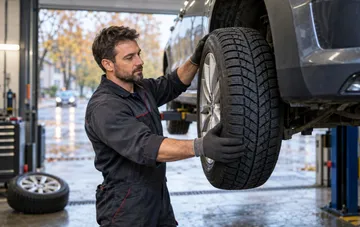
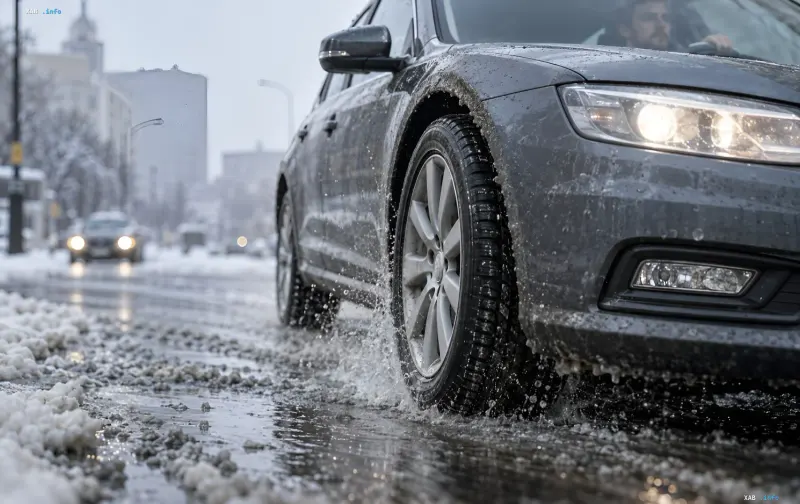
The Patrol Police of Ukraine advise focusing not on the calendar, but on the average daily air temperature: when it drops to +7 °C and below, it is time to switch to winter tires. Do not wait for steady frosts or the first snow — at low temperatures, summer tires lose elasticity, grip deteriorates, especially on wet asphalt, during morning frosts and black ice. Winter tires are made of a special rubber compound that retains elasticity in the cold, and the tread pattern is designed for driving on snow and slippery surfaces. Those who regularly drive early in the morning, cover long distances, or often travel outside the city should prepare for the cold in advance.
What to check before winter
The tire replacement itself does not cancel the need to maintain a safe speed, increase the distance, and avoid sharp maneuvers. When planning seasonal tire fitting, it is worth considering not only the weather forecast, but also the actual operating conditions of the car. Before winter, it is recommended to check the tread condition, tire pressure, lighting serviceability, and fill winter windshield washer fluid. Thus, there is no separate fine for 'just' summer tires in winter in Ukraine, but the serviceability of tires remains a prerequisite for safe operation, and seasonal replacement is best planned when the average daily temperature approaches +7 °C.