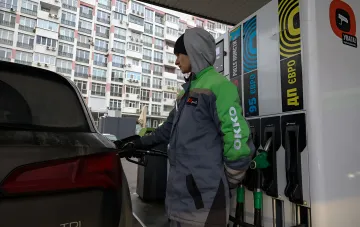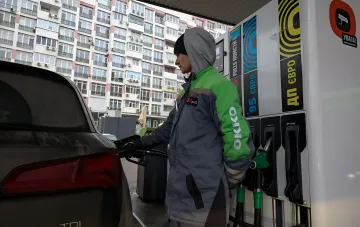

The Ukrainian fuel market has been experiencing relative calm for several days: price tags at gas stations have remained virtually unchanged. However, according to specialists, this pause is temporary and does not signal the end of price increases. The cost of gasoline and diesel continues to be determined both by the dynamics of the petroleum products market and by the specifics of how retail prices are formed, which include both actual costs and the risk component built in by operators.
Calm at gas stations: what lies behind the price pause
Following a sharp spike in fuel costs, prices at gas stations have remained almost unchanged for the second day. Nevertheless, experts emphasize that this is not a signal of stabilization. The retail price is still influenced by traders' expectations and the risk premium that operators build into the cost of fuel. The main components of the price remain the cost of purchased petroleum products and taxes, so even with "frozen" price tags, the internal logic of price formation continues to work in the direction of growth.
Objective causes of price increases
Energy expert and director of special projects at the "Psyche" Scientific and Technical Center, Hennadii Riabtsiev, explains that among the objective causes of price increases are the overall rise in the cost of petroleum products supplied to Ukraine, as well as the weakening of the hryvnia against the dollar and the euro. As a result, more funds are required to purchase the same volume of fuel. In his words, the market currently has no clear limit to which operators are willing to raise prices, a situation that, according to the expert, is fueled by insufficient oversight of how retail fuel prices are formed.
Technical limitations of equipment
A separate factor affecting the speed of price changes is the technical capabilities of the gas stations themselves. Founder and CEO of the Prime Group of companies, Dmytro Leushkin, notes that some fuel dispensers have an insufficient number of digits to correctly display a new price. Accurate display of the cost requires a format with three digits before the decimal point and two after it. Due to these limitations, some operators physically cannot set a price requiring such a format and are re-equipping their equipment. Therefore, the current pause may be linked not to the end of price increases, but to the technical inability to reflect the new cost.
Contradictory data
The public discourse features two opposite interpretations of the current dynamics. On the one hand, a number of operators and observers speak of a "calm" and nearly unchanged price tags over the course of two days, which can be interpreted as temporary stabilization. On the other hand, according to monitoring data, on September 20 one of the largest gas station networks made an unexpected move in price setting, and by September 22 diesel once again exceeded the 100-hryvnia mark. Thus, the version of a "freeze" in prices contradicts the actual movements of certain networks and the breach of psychological levels for diesel. The gap between the perception of a pause and the real changes at individual stations remains unresolved.
Why prices differ across networks and regions
The cost of fuel varies significantly depending on the network and the region. Riabtsiev attributes the difference between prices at "Ukrnafta" and premium networks such as SOCAR primarily to differences in operating expenses: premium stations offer more additional services, which increases maintenance and upkeep costs. According to the expert, there is no basis for explaining the difference by fuel quality. The final price is also influenced by logistics (where the gas station sources its fuel and how far it is transported), competition between stations, loyalty programs, and the purchasing power of a given locality: in large cities fuel is usually more expensive than in district centers.
What to expect next
Further increases in gasoline and diesel prices over the coming days remain possible. According to Riabtsiev, operators do not explain to consumers why they are changing prices and what components make up their cost, and the price is influenced not only by actual costs but also by traders' expectations with a built-in risk premium. Therefore, it is still too early to treat the current pause in price changes at gas stations as final stabilization. The further dynamics will depend on the cost of imported fuel, the exchange rate, and how operators will revise retail prices, with changes in the near term potentially being uneven across networks and regions.