Fusion engines have the potential to fundamentally transform the entire paradigm of space travel, turning once-fictional concepts into practical realities. Private startups and independent research groups are actively advancing technology that promises to leave traditional chemical rockets far behind. The core principle of nuclear fusion involves merging light atomic nuclei into heavier elements while releasing colossal amounts of energy. Unlike terrestrial power plants, where the primary challenge remains the stable magnetic containment of plasma, in the open environment of deep space, high-temperature plasma can be directionally expelled through a nozzle to generate continuous and powerful reactive thrust.
Advantages and Prospects of Fusion Propulsion
A spacecraft equipped with a nuclear fusion propulsion system is theoretically capable of reaching speeds measured in hundreds of kilometers per second. This will drastically reduce the duration of interplanetary missions and free up critically important payload mass, because fusion propulsion requires significantly smaller fuel reserves compared to bulky chemical alternatives. As noted by Stefan Lintner, CEO and co-founder of Helicity Space, maintaining the current trajectory of development will completely reshape humanity's understanding of space travel within the next decade. Additionally, University of Washington Aeronautics and Astronautics Professor Bhuvana Srinivasan emphasizes that developing such an engine combines elements of heightened complexity and unexpected simplicity compared to terrestrial energy generation.Practical Steps by Startups and Key Deadlines
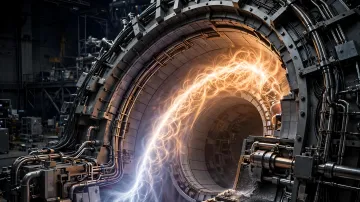
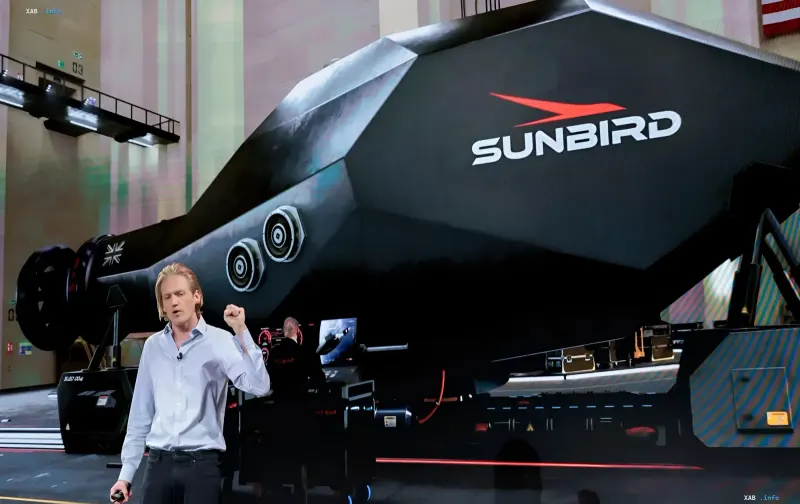
British innovative startup Pulsar Fusion has already demonstrated a major technological breakthrough by generating 'first plasma' inside the Sunbird test engine and containing it using a complex electromagnetic field. To generate thrust, the company utilizes deuterium and helium-3. Company founder Richard Dinan states that a crewed flight to Mars will require only a few grams of primary fuel and between 10 and 20 tons of deuterium propellant, allowing the spacecraft to accelerate up to a phenomenal 529,000 km/h. According to their roadmap, the first orbital demonstration tests of Pulsar Fusion's fusion engine are scheduled for 2027. Concurrently, in the 2030s, Helicity Space intends to launch its own Helicity Drive prototype operating on plasma pulses to achieve a positive energy balance.Contradictory Data
Despite overall industry optimism, debates persist among experts regarding implementation timelines and the technological superiority of alternative projects. Specifically, space agency NASA is concurrently developing its own nuclear-fission-based research spacecraft, SR-1 Freedom, for a Mars mission slated for 2028. Critics point out that nuclear fission significantly lags behind nuclear fusion in both speed and energy efficiency. Nevertheless, government-backed projects benefit from more predictable funding levels, whereas startups like Pulsar Fusion and Helicity Space remain heavily reliant on venture capital and the successful execution of orbital tests within their stated timeframes (2027 and the 2030s, respectively).
Massive Implications for Deep Space Exploration
The implementation of fusion engines will unlock unprecedented access to explore distant Solar System objects that were previously unreachable due to time and fuel constraints. For instance, an ambitious mission to the dwarf planet Sedna, which typically requires around 30 years of preparation and travel time using traditional chemical fuel, could reach its destination in just 10 years using a fusion propulsion system. This will bring humanity significantly closer to conquering deep space, transforming interplanetary expansion into a standard practice of space navigation.