The General Staff of the Armed Forces of Ukraine has reported a gradual increase in the effectiveness of air defense when repelling attacks by Russian jet-powered strike drones. Based on an analysis of the last three months, the average destruction rate for Geran-4 type UAVs is nearly 60%, while during certain repelled attacks, the interception efficiency reaches up to 80%. This was stated by the military department on October 27, 2026, in its official Telegram channel, as referenced by RBC-Ukraine, UNN, and Fakty ICTV.
Three-Month Dynamics: From 60% to 80%
The General Staff emphasizes that these figures represent averages over a quarter of attacks. At the same time, in certain sectors and on specific days when the air defense system operates under optimal conditions, the share of downed jet drones can reach 80%. Previously, according to the same department, in isolated cases, the damage efficiency against enemy jet UAVs was recorded at up to 85%. At the same time, the military points out that final indicators are significantly affected by the round-the-clock nature of enemy attacks, limited missile resources, and weather conditions.
Tactical Aviation as a Key Element
According to the General Staff's assessment, a significant role in destroying jet UAVs is played by tactical aviation—F-16, Mirage 2000, and MiG-29 fighters. These very aircraft ensure the interception of drones at long ranges when anti-aircraft missile systems can no longer guarantee target destruction. Recently, Ukraine received a batch of ammunition from Denmark for F-16 fighters, intended inter alia for shooting down jet 'Shaheds', which expands air interception capabilities.
'Small Air Defense' and Mobile Fire Groups
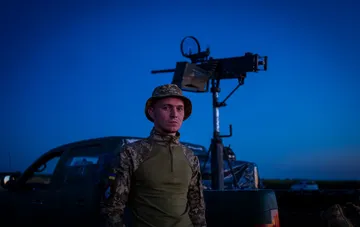
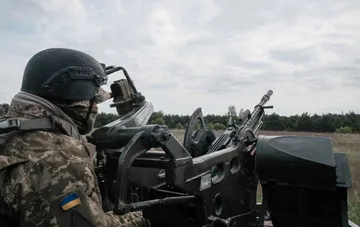
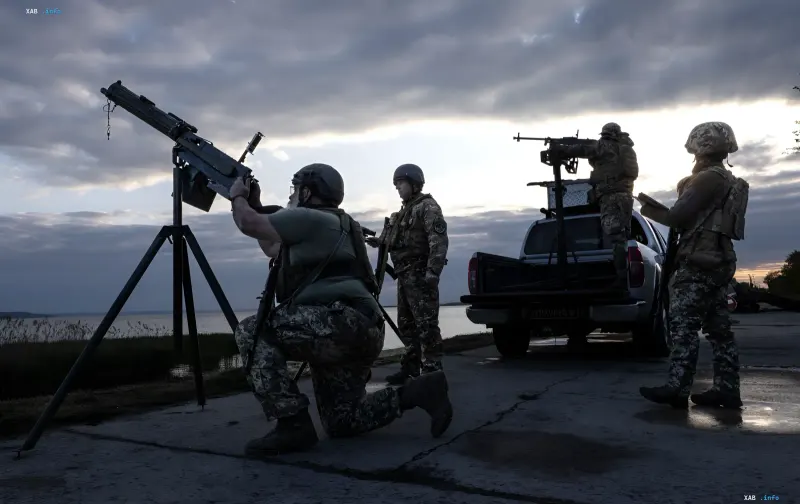
Amid a shortage of guided anti-aircraft missiles, the military department is relying on strengthening the so-called 'small air defense'. Its components include Gepard and Shilka anti-aircraft systems, the latest Skynex, Skyranger, and Terrahawk Paladin systems, interceptor drones, and mobile fire groups (MFGs) from all branches of the Ukrainian Defense Forces. As noted by the General Staff, MFGs are equipped not only with machine guns and related equipment but also with man-portable air-defense systems (MANPADS). 'With the help of MANPADS, our soldiers are now quite successfully shooting down enemy jet drones,' the military stated. Photographs published in open sources capture the work of mobile fire group crews operating heavy machine guns on tripod and vehicle mounts in coastal areas.
Interceptors and Cost Reduction of Interception
Simultaneously, work is underway to reduce the cost of repelling air threats. The General Staff reported that testing of new interceptors is ongoing, with certain samples already having several dozen downed Russian jet 'Gerans' to their credit. This direction is seen as a way to lower the cost of a single interception compared to using guided anti-aircraft missiles, the supply of which remains limited.
Expert Assessment and Limitations
Independent military experts, including those quoted by UNIAN, note that Ukraine has not yet reached the level of regular, mass shooting down of jet drones, but the dynamics are positive—the share of interceptions grows from attack to attack. Russian jet drones are capable of covering significant distances and reaching western regions of Ukraine; their range depends on technical characteristics, fuel reserves, and onboard equipment. Thus, although the General Staff's statistics record steady growth in efficiency, the issue of providing air defense with sufficient missile resources and expanding the fleet of interceptors remains a priority.