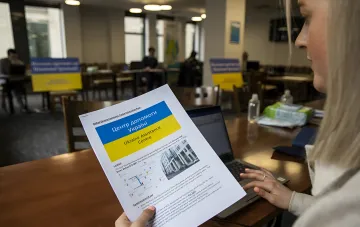

The Government of Georgia has decided to extend financial and medical support programs for Ukrainian citizens who have arrived in the country due to military hostilities. The corresponding order was signed by Prime Minister Irakli Kobakhidze. The new validity period for these programs is set until October 1, 2026.
Financial support and payment conditions
According to the updated rules, the material assistance program applies not only to Ukrainian citizens but also to individuals with the right of permanent residence in Ukraine, provided they were also forced to leave their homeland due to the war. Payments are administered by the Georgia Social Service Agency.
Key parameters of financial support remain unchanged:
- Families receive 300 GEL (approximately 100 euros) per month for housing.
- Each recipient is entitled to monthly cash assistance of 45 GEL (approximately 15 euros).
Special attention is paid to the conditions for terminating payments. The monthly assistance of 45 GEL will be cancelled only starting from the month following the individual's departure from Georgian territory. As for the 300 GEL housing subsidy, it ceases only if all family members leave the country.
Medical care
Parallel to financial support, the medical care program has been extended. It is available to Ukrainian citizens who arrived in Georgia between February 1, 2022, and October 1, 2026, provided they remain continuously within the country's territory.
Until the specified date, Ukrainians will be able to access a range of medical services for free, significantly reducing the financial burden on refugee budgets during long-term residence abroad.
Context of the situation in Europe
Tbilisi's decision fits into the broader context of supporting Ukrainian refugees in Europe. Last week, the European Union also extended the validity of the temporary protection status for another year — until March 4, 2028. However, experts note that the rules for granting this status in the EU will become stricter.
At the same time, Council of Europe Commissioner for Human Rights Michael O'Flaherty warned of a growing political trend of "pushing" Ukrainian refugees back home in several European countries. In his opinion, the situation can still be corrected, and Georgia's actions demonstrate an example of sustained support.