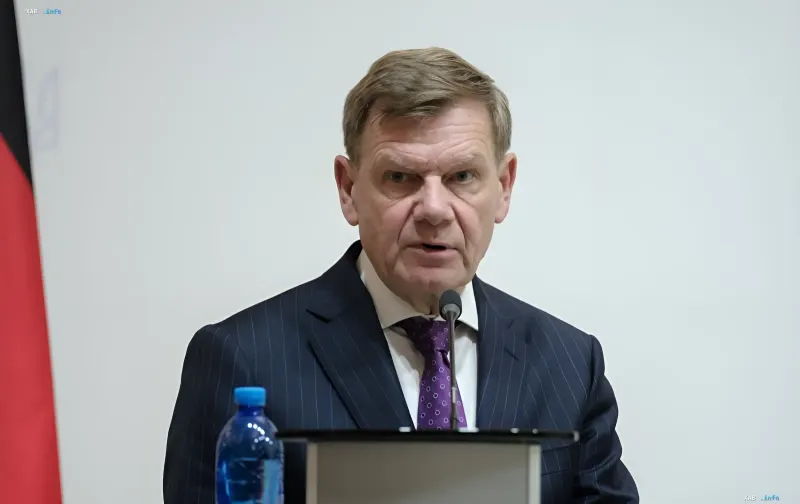
German Foreign Minister Wadephul has expressed hope that an agreement on grain exports from Ukraine and Russia through the Black Sea can be reached in the coming weeks. According to RBC-Ukraine, he made this statement in an interview with ZDF television, emphasizing that although the Ukrainian conflict as a whole will not be resolved in the foreseeable future, ensuring the transportation of grain from both countries to the Global South is essential.
The grain issue as a foreign policy priority
According to the minister, the issue of securing grain transport through the Black Sea became one of the central topics of discussion at the G20 summit held on October 30–31 in Atlanta (USA). Wadephul stated that he does not intend to slacken efforts in this direction and believes that "results can still be achieved" in the coming weeks. Thus, Berlin views the restoration of grain corridors not as an element of conflict resolution, but as an independent humanitarian and economic task critical for countries dependent on food imports.
G20 summit as a platform for pressure on Russia
The minister added, the G20 summit is one of the few opportunities to persuade Russia to halt hostilities and begin real negotiations on ending the war against Ukraine. In his view, despite existing differences with the Russian side, maintaining dialogue is necessary. This position reflects the West's attempt to use multilateral formats to create diplomatic pressure on Moscow without abandoning the negotiation track.
Refusal of a joint photo with Lavrov
Wadephul separately commented on the refusal of G20 ministers to take a joint photograph with Russian Foreign Minister Sergei Lavrov. According to him, the reason is that summit participants do not want to create the impression of unity with Russia. In the assessment of the Berlin minister, this gesture reflects the general line of Western capitals, which strive not to demonstratively cozy up to Moscow amid the ongoing war.
EU position: support for Ukraine and economic pressure
The German Foreign Minister stressed that EU countries maintain a common position regarding the necessity of negotiations as well as continued support for Ukraine. Until this happens, he said, European states will continue supporting Kyiv and increasing pressure on Russia. Wadephul summarized that it is precisely the economic pressure on the Russian Federation and the lack of significant advances by Russian troops on the front lines that create the conditions for potential diplomatic shifts regarding the end of the war.
Context: Kyiv's expectations and Ankara's position
Earlier, Ukrainian Foreign Ministry spokesperson Georgiy Tyхий stated that Kyiv expects a number of countries to urge Russia to cease fire in the Black Sea, primarily states dependent on exports through this region. In turn, Turkish Defense Minister Yaşar Güler reiterated Ankara's call for Ukraine and Russia to halt attacks in the Black Sea, threatening "legal measures" in the event of strikes on vessels associated with Turkey. The combination of these statements indicates that the issue of Black Sea shipping security remains one of the key intersections of interests for Kyiv, Moscow, Berlin, and Ankara.