In the DW podcast «Geofactor», experts discussed where the new phase of the drone war in the Black and Azov Seas is leading and whether it could force Moscow to agree to a ceasefire. The broadcast featured Captain 1st Rank (ret.) Andriy Ryzhenko, former Deputy Chief of Staff of the Ukrainian Navy, and Sidharth Kaushal, Research Fellow at RUSI — the Royal United Services Institute in London. The central topic of discussion was Ukraine's attempt to isolate the Russian-annexed Crimea by bringing the peninsula's supply routes, primarily fuel, under drone fire control.
Fire Control of Supply Routes
According to the discussion participants, the key task of the Ukrainian operation is to turn Crimea from a convenient bridgehead into a vulnerable enclave cut off from rear support. Drones are being used to exert fire control over the routes through which fuels, lubricants, ammunition, and equipment are delivered to the peninsula. The effectiveness of this approach and its impact on enemy logistics became one of the main topics of the podcast.
From Logistics Base to Enclave
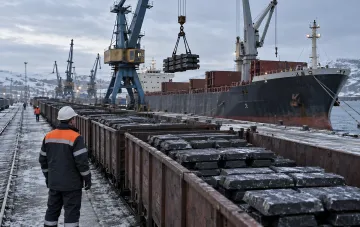
Previously, military observers note, the occupation authorities used Crimea as a key logistics base: fuels, ammunition, and personnel for rotations were accumulated here, and military equipment arrived from rear areas via railway and car ferries. According to Ukrainian sources, recent strikes hit a Russian «Kasta-2E2» radar station used for airspace control, as well as disabling fuel tankers and railway equipment—freight locomotives and fuel cisterns. These episodes, experts say, significantly complicate the supply of the peninsula.
Black and Azov Seas: A New Front
The second vector of discussion is the changing situation in the Black and Azov Seas. The drone war, specialists note, has restructured the rules of control over the water areas: unmanned systems and strike assets are being used to contest maritime routes and pressure port infrastructure. Experts point out that it is in this direction that a new phase of the conflict is forming, where the importance of maritime routes is growing.
Will Moscow Agree to a Ceasefire
The main strategic question of the podcast is whether the isolation of Crimea and fire control over supplies will force Russia to agree to a ceasefire. Participants emphasize that the effect of the campaign is cumulative: the longer the peninsula remains cut off from steady supplies, the higher the burden on Russian logistics. However, no definitive answer was given on the timing and conditions of a possible ceasefire—experts view this as a factor of pressure rather than a guaranteed trigger for negotiations.
Significance for the Negotiation Process
Beyond its military dimension, the isolation of Crimea has political significance. As observers note, transforming the peninsula from a powerful base into an isolated enclave weakens Russia's material position while strengthening Ukraine's position in a potential negotiation process. Thus, the drone campaign is assessed as part of a broader strategy combining military pressure and preparation for the diplomatic track.