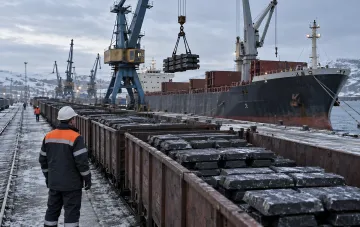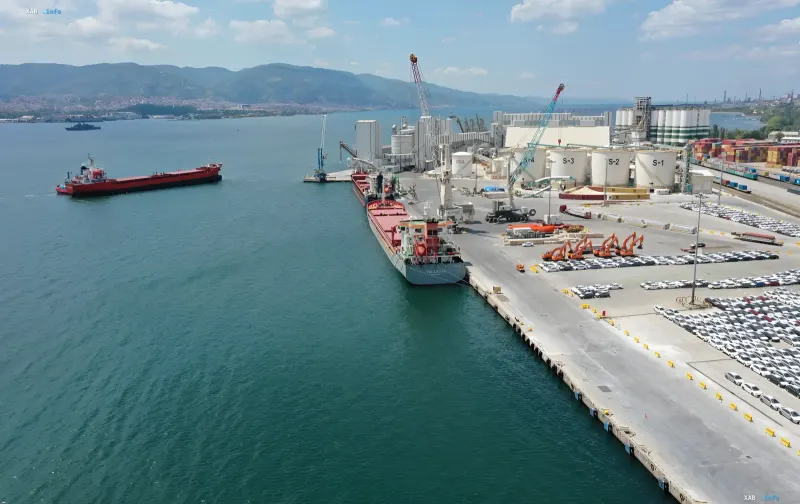
Athens is preparing a pilot freight route for the export of Ukrainian grain through the Greek port of Alexandroupoli. According to the Greek publication To Vima, cited by RBC-Ukraine, the project is intended to serve as an alternative to Black Sea ports, which are regularly targeted by Russian strikes and have effectively halted maritime grain exports since August. The initiative is structured as a bilateral multimodal corridor between Greece and Ukraine, with Alexandroupoli acting as the key hub and Thessaloniki playing a lesser role.
Diplomatic Prelude: From Thessaloniki to the Alexandroupoli–Odesa Axis
The topic of exporting Ukrainian grain through Greece was discussed in September at the Thessaloniki International Fair, where Greek Minister of Infrastructure and Transport Christos Dimas met with Ukrainian Deputy Minister Artem Rybchenko. This conversation followed a June meeting between the Greek minister and Serhiy Derkach, who at the time served as Ukraine's Deputy Minister for Communities and Territories Development. According to To Vima, the idea of involving Greece in grain exports was already considered in 2023, though it did not materialize back then.
Multimodal Corridor and the Role of Alexandroupoli
The foundation for the current steps is an agreement reached in September 2025 between Greek Prime Minister Kyriakos Mitsotakis and Ukrainian President Volodymyr Zelenskyy. It concerns the Alexandroupoli–Odesa axis, which is supposed to run through the Baltic Sea–Black Sea–Aegean Sea transport corridor. This corridor stretches from Helsinki to Nicosia and encompasses 13 countries: 11 of them are EU members, while Ukraine and Молдова (Moldova) are affiliated with it despite not being EU members. The pilot project is known to the European Commission, specifically the Directorate-General for Mobility and Transport, overseen by European Commissioner Apostolos Tzitzikostas.
Logistics: Trains, Bridges, and Restrictions
Trial rail transportation, according to To Vima, is made possible through Hellenic Train and GFR Hellas — the latter being a subsidiary of Romania's GFR, the largest private rail company in Central and Southern Europe. To make the route profitable, it is necessary to launch two to three trains per day from south to north and integrate Greek companies into the project. A separate challenge remains the Ruse–Giurgiu Bridge over the Danube on the section between Bulgaria and Romania, which is scheduled to close from April to December 2027. Road transport is more expensive, and although Greek and Ukrainian carriers can travel between countries without transit permits, only Greek companies have the right to carry out cargo transport within Greece, for example from Alexandroupoli to another Greek city.
Economic Logic: Why a Return Flow is Necessary
Officials from both countries emphasize that the route will only be profitable when cargo moves in both directions. In addition to grain exports, Ukraine requires winter diesel fuel for severe frosts, as well as electrical equipment and building materials. Russia's relentless strikes on Black Sea ports have severely limited the ability to export grain in large batches, and a drought has sharply lowered water levels in the Danube — according to the publication, this has particularly impacted corn exports since mid-November.
Context: Suspension of Maritime Exports and Gas Links
Ukraine's maritime grain export stopped back in August due to Russian attacks on ports and vessels. Since then, Ukraine has been negotiating with Turkey, India, and Egypt to resume shipping and has asked the EU to reinstate the Solidarity Lanes program. Earlier, Ukraine, the European Commission, Romania, and Moldova discussed alternative export routes via Danube ports, agreeing to develop rail, road, and border infrastructure and reduce customs clearance times. Concurrently, the government adjusted minimum export prices for certain agricultural products to prevent the halt of grain and oilseed exports, according to Prime Minister Serhiy Koretsky. Notably, Alexandroupoli is also familiar to Ukraine through gas cooperation: one of the new gas supply routes passes through this Greek terminal, leading through Bulgaria, Romania, and Moldova to Ukrainian storage facilities.