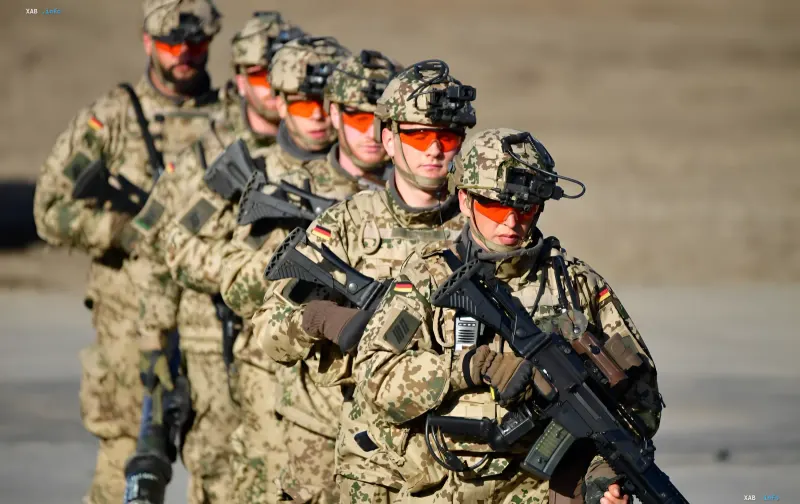
Germany's elite Special Operations Command (KSK, Kommando Spezialkräfte) has fundamentally overhauled its combat training program, focusing on the scenario of a prolonged military clash with Russia. This was stated by unit commander Major General Andreas Kühne in an interview with the German publication BILD. According to him, the tactics and content of the training were changed not abstractly, but specifically targeting a known adversary: «We are focusing very concretely on the adversary in the form of Russia».
From Three-Day Operations to Extended Field Deployment
The key change concerns the duration of planned operations. While previously the special forces factored in field deployments of approximately three days, fighters are now preparing for significantly longer campaigns outside of bases. This means a revision of logistics, supply, and tactical cycles: the unit is learning to conduct combat operations isolated from the rear for extended periods, which is characteristic of conditions in a potential eastern flank conflict.
Countering Tanks, Artillery, and Drones
During training exercises, the KSK is once again practicing countering an enemy equipped with heavy weaponry: tanks, artillery, unmanned aerial vehicles, and electronic warfare systems. The emphasis on electronic warfare and drones reflects the lessons of modern conflicts, where these exact tools determine the survival of small special operations groups in open terrain.
Extreme Cold as a Training Factor
Particular attention during exercises is paid to operations in extremely low temperatures, which, according to command, are typical of NATO's eastern flank. Training in the cold—ranging from frostbite prevention and equipment operation to winter camouflage tactics—is viewed as a necessary condition for operations in regions bordering Russia during the winter period.
Structure, Base, and Rigorous Selection
The KSK is based at the Zeppelin barracks in the town of Calw near Stuttgart. The unit numbers around 1,500 personnel, but actual special forces operators make up only a third of the personnel, with the rest serving as administrative and support staff. Selection for the KSK remains one of the strictest in Europe, successfully passed by only about 15% of candidates, ensuring a high density of elite personnel.
Political Context: Berlin's Warnings
The restructuring of special forces training is taking place against the backdrop of public statements by German leadership regarding security threats. Chancellor Friedrich Merz warned of serious risks stemming both from internal extremist groups and external adversaries, primarily Russia. Foreign Minister Johann Wadephul, in turn, stated that Russia has not abandoned its intentions to restore the USSR, which, according to him, poses a threat to a number of countries that need to be prepared for a potential invasion. The overhaul of the KSK program fits into this general course of strengthening the readiness of the Bundeswehr for direct conflict scenarios.