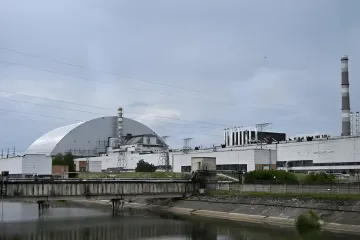
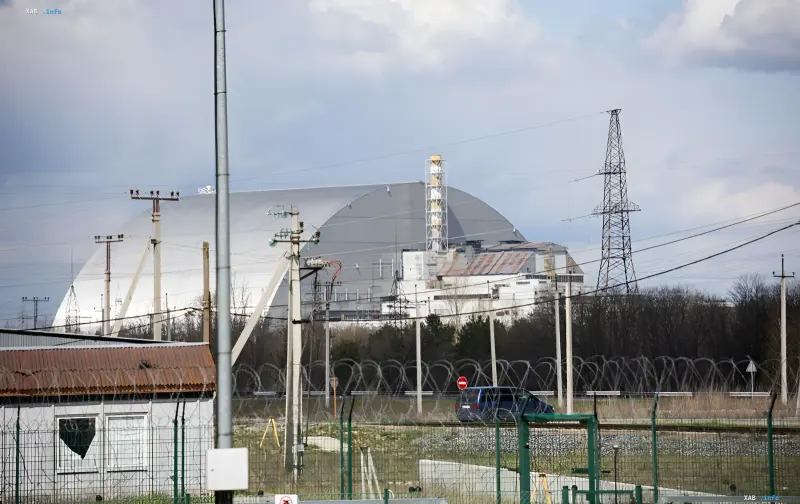
Amidst the ongoing military conflict and constant threats to nuclear safety, Ukraine has received a new dose of international support. Germany has officially confirmed the allocation of €50 million for the restoration of the New Safe Confinement (NSC) at the Chernobyl Nuclear Power Plant. This decision was made after the facility was damaged in February 2025 as a result of a Russian drone attack. This funding will be a critical step in ensuring the stability of the sarcophagus and preventing a potential environmental catastrophe.
Details of German aid and the delegation visit
The announcement regarding the allocation of funds was made by the Minister of Energy of Ukraine, Denys Shmyhal, during a meeting with a delegation from the Federal Republic of Germany led by Federal Minister for the Environment Karsten Schneider. According to the head of the Ministry of Energy, the funds will be transferred to the Chernobyl Fund for International Cooperation, guaranteeing their targeted use.
"Thank you to Minister Schneider and the German delegation for visiting the Chernobyl Nuclear Power Plant. We appreciate the prompt decision regarding the funds. The restoration of the confinement is extremely important for ensuring the nuclear safety of Ukraine and all of Europe," emphasized Denys Shmyhal. During the visit, German officials not only discussed financing but also personally inspected the NSC Arch, its infrastructure, and the new solar power plant built on the industrial site.
Scale of destruction and cost of restoration
The New Safe Confinement, which is the largest movable structure in the world, was damaged in February 2025. A Russian drone struck the object, necessitating urgent repair work. According to estimates by the European Bank for Reconstruction and Development (EBRD), the total cost of restoration work is approximately €500 million. Thus, the German contribution covers only 10% of the total required costs.
Despite the significant volume of work, the international community is demonstrating solidarity. Previously, the European Commission, the USA, and Norway also announced their readiness to finance the restoration of the shelter. The joint efforts of donor countries are intended not only to restore the physical integrity of the facility but also to support the morale of the personnel working in the exclusion zone.
Series of attacks on nuclear facilities
The attack on the NSC in February 2025 was not the only attempt by Russia to create a threat to nuclear safety in the Chernobyl zone. Earlier, on June 7, a Russian drone hit a building on the territory of the spent nuclear fuel storage facility. As a result of the strike on the Centralized Storage Facility in the Kyiv region, a fire broke out, causing serious concern in both Kyiv and Brussels.
Ukrainian President Volodymyr Zelenskyy called the shelling of the nuclear storage facility "an exceeding of the sky-high audacity of the RF" and emphasized that the enemy struck the civilian object quite consciously. These incidents confirm that the Chernobyl Nuclear Power Plant remains a strategic target for the Russian army, despite international calls to refrain from strikes on civilian and nuclear facilities.
Contradictory data
Although the main facts regarding the allocation of funds and the attack in February 2025 are confirmed by several sources, there are discrepancies in the details. Some reports indicate that the damage to the NSC was minor and did not affect the load-bearing structures, while other sources report more serious destruction requiring the complete replacement of individual roof sections. Furthermore, the exact date for the start of restoration work remains uncertain, as it depends on logistics and security in the exclusion zone.
The future of the Chernobyl Nuclear Power Plant
The restoration of the NSC is not just about repairing a building; it is a matter of global environmental safety. The successful completion of the work will preserve the radiation barrier that protects the environment from the leakage of radioactive materials. At the same time, continuing attacks on the infrastructure of the Chernobyl NPP create risks for personnel and the population living in adjacent areas.
The international community must continue to support Ukraine to ensure the safety of the Chernobyl Nuclear Power Plant. This is not only a matter of Ukraine's national security but also a responsibility to the whole world. In conditions where Russia continues to use nuclear facilities as a tool of pressure, Western countries must be ready for further financing and technical support.