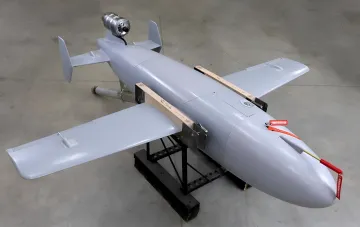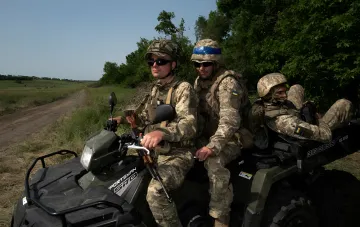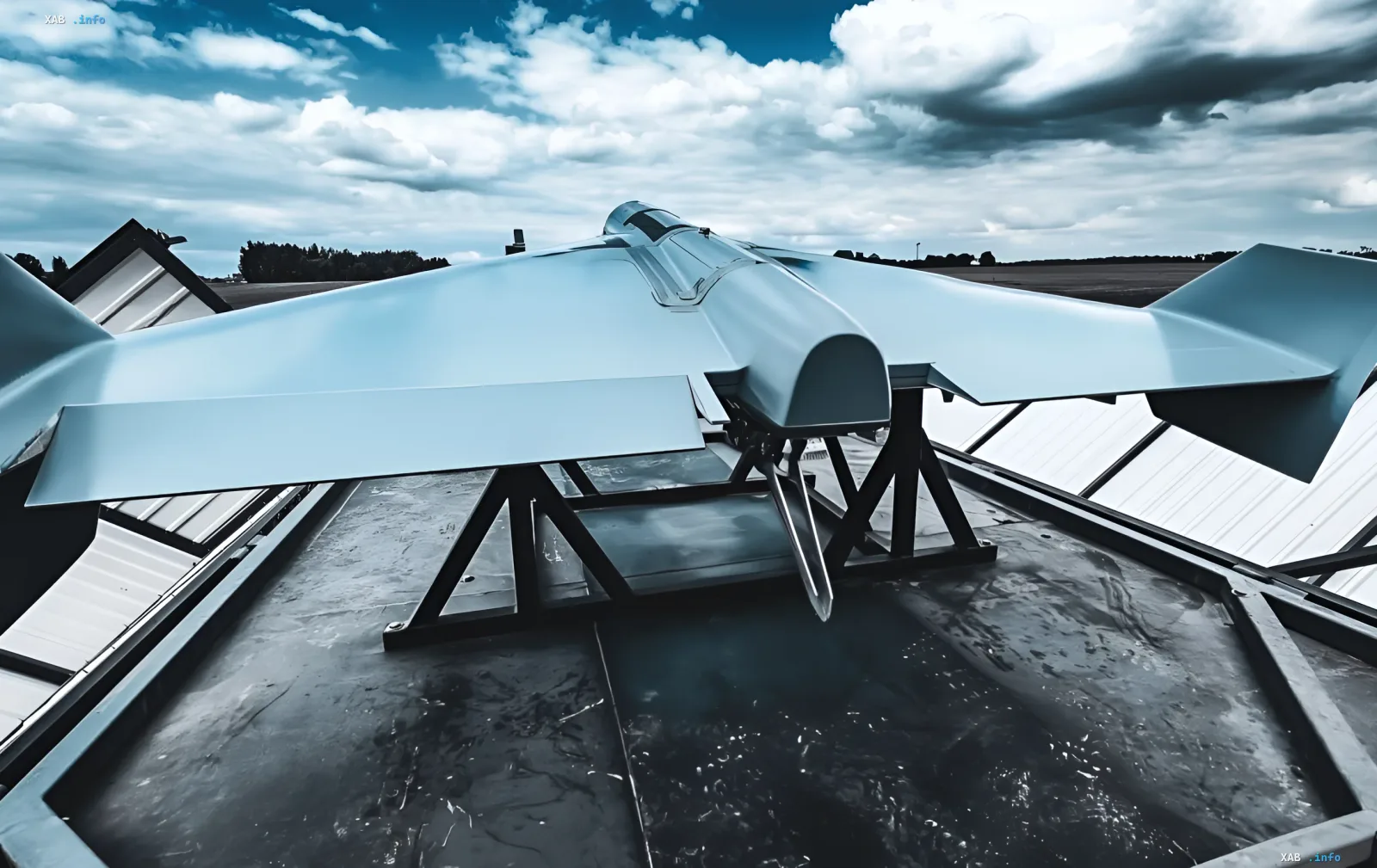
Germany has officially begun serial production of a batch of more than five thousand long-range strike unmanned aerial vehicles intended for the Armed Forces of Ukraine. According to defense industry sources, the first units are already ready, and the tested systems will enter service with the Ukrainian military in the current year, 2026. The project is being carried out under a direct order from the German government and is considered one of the largest examples of military-technical cooperation between Berlin and Kyiv in the field of unmanned systems.
Joint venture near Munich
The aircraft are being produced by a joint venture established in February 2026 in the vicinity of Munich. Its partners are the German-American company Auterion and the Ukrainian developer Airlogix. Defense industry sources estimate the contract value at approximately 300 million euros. To meet the stated assembly rates, production is being scaled up not only at the Munich site but also at an additional plant in eastern Germany, which allows the partners to increase manufacturing capacity and reduce logistical risks.
Two models and a clear division of roles
The plants are assembling two modifications of the drones: a medium-range version and a long-range version capable of traveling up to 1,500 kilometers. All units are single-use and carry explosives for the direct destruction of enemy targets. In this cooperation, the technological tasks are strictly divided: the Ukrainian Airlogix supplies the airframes and mechanical components, while Auterion is responsible for the drones' software and operating system.
Artificial intelligence against electronic warfare
A key element of the drones' architecture is the integrated artificial intelligence. According to the developers, it enables the aircraft to successfully reach their designated targets even under active suppression by enemy electronic warfare systems. This is especially important given the growing use of EW, which previously significantly reduced the effectiveness of remote drone control.
Order scale and outlook
The partners plan to fully complete the large-scale order by mid-2027. At the same time, the companies are counting on new contracts and long-term cooperation in the future. As Auterion's head Lorenz Mayer stated, thanks to the project Germany has gained its own production line for manufacturing precise and relatively affordable weapons in large volumes, which strengthens its defense-industrial potential.
Context: the problem of intercepting 'Shaheds'
The launch of production fits into the broader context of the drone war. Jet-powered 'Shaheds,' whose speed exceeds 400–450 km/h, are becoming an increasingly difficult target for interceptor drones, since most of the latter simply cannot keep up with such a flight tempo. Under these conditions, long-range strike aircraft with elements of autonomous guidance are seen as one of the tools for shifting the balance of power on the front line.