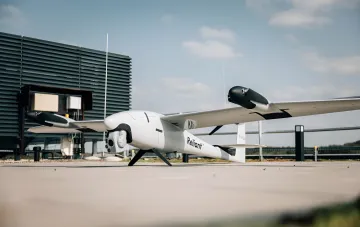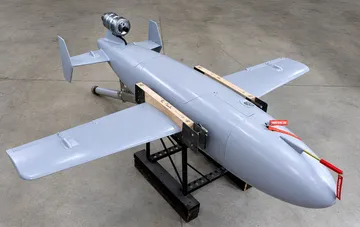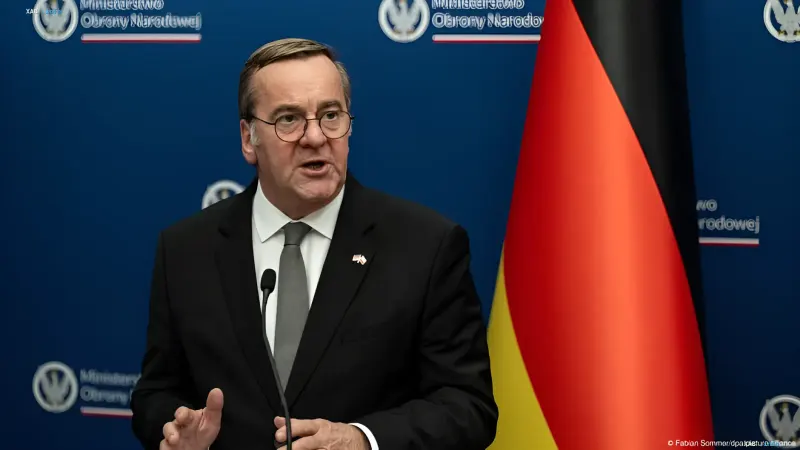
Berlin has officially confirmed the start of production of Ukrainian 'Babka' reconnaissance drones on German soil. This was announced on Monday, November 23, 2026, by German Defense Minister Boris Pistorius following a meeting in Berlin with his Ukrainian counterpart, Yevhen Khmara. According to the head of the German Ministry of Defense, Berlin will allocate approximately 34 million euros to establish the relevant production facilities. The project will be implemented by the German company Wingcopter and the Ukrainian company Shadow Flytech, which have established a joint venture for this purpose.
Joint Production and Financing
The creation of a joint venture between Wingcopter and Shadow Flytech will be the first step towards localizing the production of Ukrainian 'Babka' reconnaissance drones in Germany, intended for supply to Kyiv. The allocated 34 million euros will go towards forming production lines and infrastructure. As Pistorius emphasized, the decision reflects Berlin's strategic commitment to deepening defense cooperation with Ukraine and relocating a portion of military technology production to German territory, which the parties intend to accelerate supply cycles and reduce logistical risks.
Battle Management System Delta for the Bundeswehr
In addition to the drone agreement, Pistorius and Khmara signed a memorandum of understanding providing for the use of the Ukrainian Delta battle management system by the Bundeswehr. As explained by the German Minister of Defense, this platform allows for the real-time consolidation of fragmented battlefield situation information from various sources. Pistorius noted that back in October 2026, German ground forces conducted joint tests of Delta with Ukrainian military personnel. The system is now slated for further development and preparation for full-scale operational use within the German Armed Forces.
Package of Six Projects and IRIS-T Contract
Ukrainian Defense Minister Yevhen Khmara presented the broader context of bilateral cooperation during the same meeting. He reported on six joint defense projects with a total investment volume of over one billion euros. Separately, Khmara mentioned a new contract for the production of 1,000 IRIS-T missiles — an air defense system that has long been one of the key elements of NATO's air defense. The signing of this contract signals a transition from ad-hoc deliveries to long-term production commitments.
11.6 Billion Euros for Ukraine Support in 2027
Boris Pistorius also announced the scale of the financial package that Germany intends to allocate to support Ukraine next year: 11.6 billion euros. According to the Minister, a priority area for these funds will be strengthening Ukraine's air defense. Thus, Berlin is establishing a multi-year financial horizon for military aid that goes far beyond current arms deliveries and includes elements of joint production and technological exchange.
Parallel Context: Agreement with the United Kingdom
It is worth noting that two days prior to the Berlin meeting, on November 21, the defense ministries of Ukraine and the United Kingdom announced a separate agreement under which Ukrainian drones for the AFU will begin production in the United Kingdom with financial support from London. The combination of these two events — German and British — indicates the formation of a stable model in which Western countries not only finance but also directly participate in the production of Ukrainian military technologies on their own territory, thereby creating manufacturing capacity that could potentially serve both Kyiv's needs and their own armed forces in the future.