The head of Germany's Interior Ministry, Alexander Dobrindt, presented to the government and the public a package of measures aimed at strengthening the country's defense against hybrid threats, primarily sabotage and attacks that Berlin attributes to the Russian side. As envisioned by the minister, the initiative package is designed to close several vulnerable fronts simultaneously: the airspace over key facilities, critical infrastructure, the digital sphere, and the video surveillance system. The proposed solutions are predominantly defensive in nature and are intended to shorten the response time of both public and private structures to incidents.
Mobile Anti-Drone Units of the Federal Police
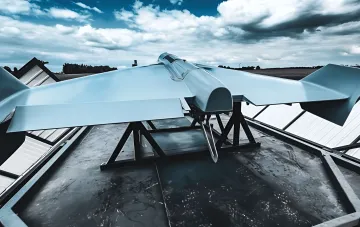
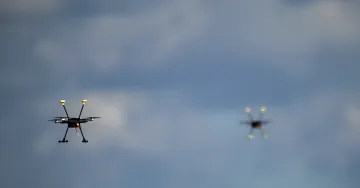
The central element of the plan is the expansion of mobile units of the federal police that will specialize in countering unmanned aerial vehicles. According to the Interior Ministry's design, such forces will be able to be rapidly redeployed between regions and will be equipped with helicopters and specialized equipment. Their primary mission is declared to be ensuring the security of the airspace over key transport facilities — airports and railway stations — as well as over the government quarter in Berlin. The units' capabilities are not limited to detecting and intercepting drones: their tasks also include neutralizing unmanned vehicles that may carry explosives.
Expanded Powers for Critical Infrastructure
A separate initiative concerns companies responsible for critical infrastructure. Water utilities, energy companies, and representatives of the defense industry, according to the Interior Ministry's proposal, may receive additional legal powers to independently counter drones. This should allow them to respond to the threat directly, without waiting for the arrival of state forces, which, according to the ministry's assessment, will reduce the window of vulnerability of the facilities.
Artificial Intelligence, Biometrics, and Cyber Defense
The third direction is linked to the deployment of modern technologies. German authorities intend to make broader use of artificial intelligence, biometric facial recognition systems, and video surveillance, including at railway stations. Such tools are meant to help detect weapons, suspicious behavior, as well as individuals suspected of preparing attacks or espionage activities. In parallel, cyber defense is planned to be strengthened: Germany intends to create a national Cyberdome — a sophisticated system of digital sensors designed to detect and help block cyberattack attempts.
Contradictory Data
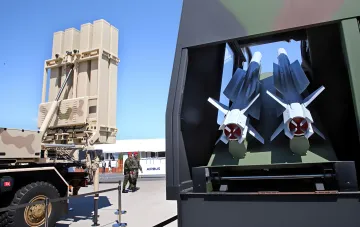
In the public sphere, there are diverging interpretations of these measures. On the one hand, Dobrindt's official package is formulated as a defensive and preventive program of protection against hybrid threats — from drones to cyberattacks. On the other hand, some media narratives embed these steps in a broader context, describing them as part of a large-scale strategy of pressure on Russia with the involvement of Ukraine, and also link them to announcements of new air defense packages from Germany, which, according to reports, were voiced by President Vladimir Zelensky. At the same time, the text of the Interior Ministry's proposal itself does not declare a direct link between the anti-drone and cyber measures and any "retaliatory" or "repressive" actions: the ministry emphasizes the protection of infrastructure and the population. Thus, the difference lies not in the facts of the measures presented, but in their interpretation — the defensive framework of the official document versus a broader geopolitical reading in certain publications.
Altogether, the proposed package reflects Berlin's attempt to restructure the security system for a scenario of prolonged hybrid threats: from mobile rapid-response forces against drones to digital sensors and expanded powers for private operators. The implementation of the plan, however, will depend on the legislative formalization of the new powers and on how coherently federal, regional, and private structures will be able to act.