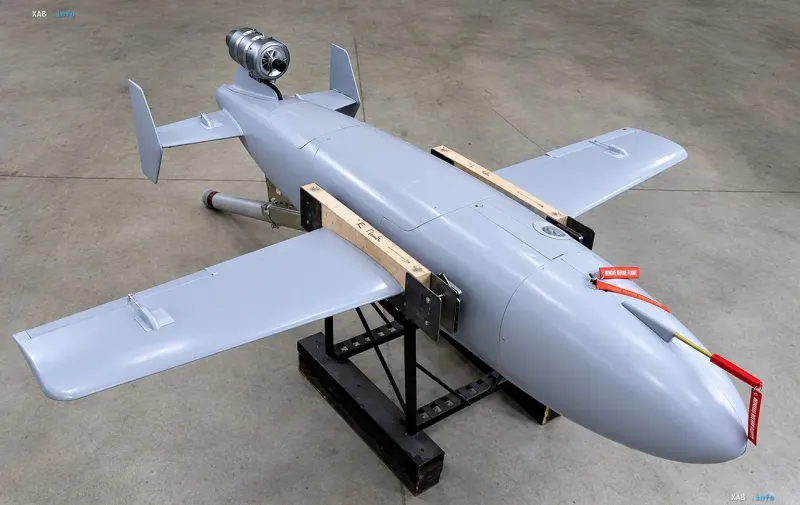
Germany is conducting extensive negotiations to acquire several thousand advanced long-range missiles and drones to strengthen its own defense capabilities. This ambitious list includes Ukrainian Bars cruise missile-drones, the production of which is being considered within the framework of bilateral cooperation. According to informed sources cited by Bloomberg, Berlin is forced to seek alternatives to American weaponry due to delays in the queue for Tomahawk cruise missiles.
Berlin's strategic goals and the shortage of American weaponry
The urgent need to replenish Germany's missile arsenal is driven by the requirement to deter potential threats and modernize the armed forces. Currently, the only air-launched long-range strike weapon in service with the German army is the Taurus cruise missile with a range of about 500 kilometers, manufactured by the MBDA and Saab AB consortium. However, the lengthy wait for American Tomahawk missiles has forced German officials to revise their defense strategy and turn their attention to European and Ukrainian manufacturers.
Technical characteristics and modernization of the Ukrainian Bars
The Ukrainian Bars jet missile-drone has attracted the attention of foreign partners due to its combat capabilities and technical parameters. Initially, the device was equipped with a jet engine, a 22.5-kilogram warhead, and a flight range of up to 700 kilometers. During subsequent design improvements, the operational range was increased to 1,000 kilometers, the warhead mass grew to 60 kilograms, and the cruising speed exceeded 700 km/h. Furthermore, an important advantage of the Bars is its capability for remote online control in enemy territory, which solves a key communication problem for long-range unmanned systems.
International contracts and joint production
In addition to discussing procurements and joint production of Ukrainian Bars systems, official Berlin is holding negotiations with other high-precision weapons developers. Specifically, German Defense Ministry officials are discussing a deal worth over one euro billion with the American defense startup Covenant to supply thousands of Anthem long-range ground-launched cruise missiles with heavy payloads. Other potential suppliers include the Dutch company Destinus with Ruta systems and the German-British company Hypersonica, which is developing hypersonic technologies.
Significance and prospects of new defense initiatives
The large-scale procurement program and diversification of suppliers will significantly alter the configuration of Germany's missile potential in the coming years. The integration of Ukrainian developments, such as the Bars, into European defense supply chains highlights the growing role of Ukraine's military-industrial complex in creating modern unmanned systems. It is expected that the successful conclusion of current negotiations will allow Berlin not only to meet its current long-range weapon needs but also to establish long-term technological partnerships.