The Ministry of Defense of Ukraine, in cooperation with the Ministry of Digital Transformation and the Brave1 foundation, has announced the launch of grant competitions for the development of air-to-air guided missiles and Ukrainian radar systems. The military department's press service reported this on October 30, 2026, as cited by RBC-Ukraine. According to the Ministry of Defense, the next stage of the program will be a separate grant competition for the development of turbojet engines. Thus, the state is building a consistent financing chain — from final combat assets to key components of power plants.
Priorities: Drone Interception and Cost Reduction
Ukrainian Defense Minister Yevhen Khmara explained that the main goal of the new competitions is to provide the Security and Defense Forces with effective means to counter air targets, reduce the cost of intercepting jet drones, and establish mass production of radars within the country. Khmara named ballistic missiles, cheap cruise missiles, high-speed drones, and guided aerial bombs (KABs) as the main Russian threats at the current stage. The systems under development are specifically designed to counter this spectrum of threats.
Requirements for Domestic Manufacturers
The Ministry of Defense has formulated specific expectations for Ukrainian developers: creating their own navigation solutions, strengthening electronic warfare equipment, developing radars capable of detecting low-observable targets, and producing affordable and mass-scalable countermeasures. «Our requirements are clear: efficiency, affordable cost, system interoperability, and a sufficient volume of supplies. It is on these results that the joint work of the state, the military, and the Ukrainian defense-industrial complex must focus», Khmara emphasized. He named finding new solutions to counter KABs and reducing the effectiveness of their deployment as a separate task for manufacturers.
Strategy of Asymmetric Impact
Commenting on the long-term strategy, the Minister of Defense stated: «Today our focus is countering Russian threats. But it is important to create innovative solutions that will allow us to act proactively and prevail. We need asymmetric impact. We need technologies that change the rules of the game in our favor». This phrasing indicates that grant competitions are viewed not only as an instrument to close current deficits, but also as a mechanism for forming technological superiority in niche segments.
Context: Ruta Production as a Benchmark
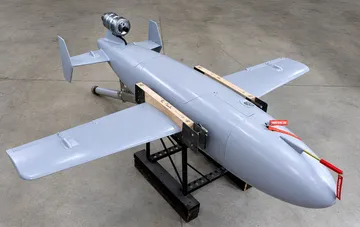
The announcement of the competitions comes against the backdrop of already demonstrated results by the Ukrainian defense-industrial complex. It was previously reported that the Destinus startup produced over 1,750 Ruta cruise missiles in Europe. According to available data, the current production rate exceeds the monthly volume that the whole of Europe produced in a year before Russia's full-scale invasion. This example essentially sets the benchmark that the Ministry of Defense strives for in the air-to-air missile and radar system segments: mass, relatively cheap, and scalable production capable of compensating for the enemy's numerical superiority.