Lapinlahti, Finland — August 18, 2026. In central Finland, a region traditionally known for its forests and harsh climate, one of the most ambitious infrastructure projects in the history of the Scandinavian IT industry is preparing for implementation. The Swedish company Helios Nordic Energy Finland Oy has submitted a zoning initiative to build a giant data center on a site covering more than 80 hectares. The project, located in close proximity to the Fingrid Alapitkä substation, 450 km north of Helsinki, promises to change the energy landscape of the region.
Scale of Ambitions: From 80 MW to Half a Gigawatt
The key feature of the new initiative is the rapid growth of the declared capacity. While previous permits and discussions concerned facilities with a capacity of 80–100 MW, the current Helios plan proposes the creation of a data center with a capacity of up to 500 MW. This is a colossal leap that moves the project into the category of world-class "hyperscalers." For comparison, such capacity is capable of powering tens of thousands of servers necessary for processing artificial intelligence data, cloud computing, and information storage for global corporations.
The choice of location in Lapinlahti is dictated not only by the availability of free land but also by the critically important proximity to energy infrastructure. The Fingrid Alapitkä substation, which is a node in the national power grid, will become the "feeding artery" for the future complex. In conditions where data center energy consumption is growing exponentially, the availability of a ready connection point to the high-voltage network is a decisive factor for investors.
Hybrid Model: Solar Energy and Cold Climate
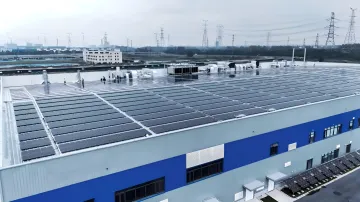
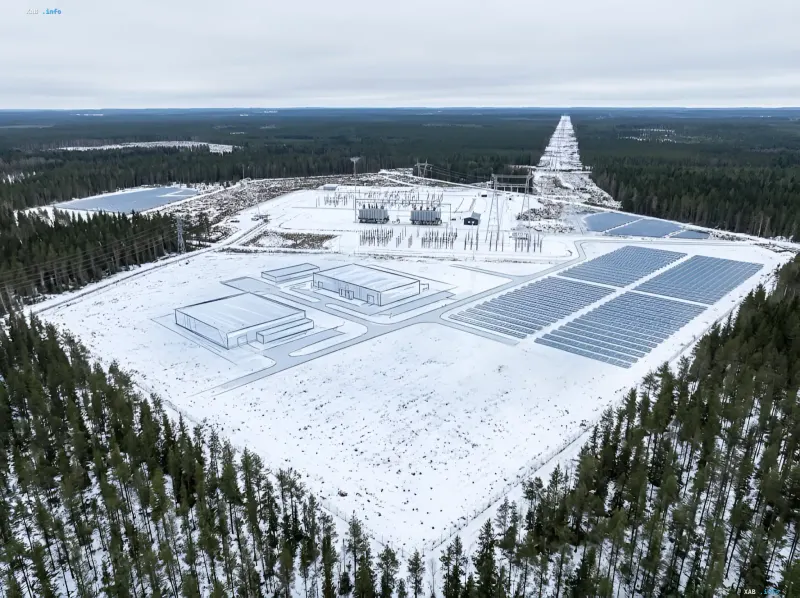
Helios does not limit itself to just energy consumption. The company's strategy includes the creation of its own generation. Parallel to the construction of the data center, a solar power plant will be erected on the territory of the complex. This solution reflects the global trend towards sustainable development and reducing the carbon footprint of IT infrastructure. Despite the northern location, modern photovoltaic panel technologies allow for efficient energy collection during daylight hours, while the harsh Finnish winter will provide natural cooling for servers, significantly reducing air conditioning costs.
The visualization of the project, presented in the initiative materials, demonstrates the harmonious integration of an industrial object into the landscape: rows of solar panels neighbor massive server building bodies, surrounded by snow-covered forests. This combination of high technology and nature is becoming the calling card of Helios's new projects.
Economic Impulse for the Region
The implementation of the project promises to become a powerful catalyst for the local economy. The Mayor of Lapinlahti, Henri Ruotsalainen, has already made official forecasts regarding employment. It is expected that hundreds of jobs will be created during the construction phase, and after the facility is put into operation, more than one hundred permanent highly qualified jobs will appear in the region. For a small Finnish municipality, this means an influx of investment, infrastructure development, and increased tax revenues.
It is important to note that Helios, founded in 2019, has been part of the French VINCI Group since 2024. This acquisition gave the company access to global resources and investments, which allowed accelerating the implementation of projects and scaling them to industrial sizes. The successful construction experience in other regions of Europe is now being transferred to Finland.
Contradictory Data
In the course of analyzing sources and statements from the parties, certain discrepancies were identified in the assessment of the current stage of the project and its technical characteristics. While official statements from Helios Nordic Energy Finland Oy speak of submitting a *zoning initiative* for 500 MW in Lapinlahti, a number of international sources (in particular, reports on the activities of Galaxy Digital in other locations) mention the completion of Phase I of the Helios data center with a capacity of 133 MW for CoreWeave.
There is a risk of confusion between projects: the declared 500 MW in Lapinlahti is the *planned* capacity of a future facility, which has not yet been approved and is at the discussion stage in the municipal council (planned for August 2026). At the same time, mentions of 133 MW refer to already implemented or completed projects in other jurisdictions or at other stages of the Helios brand's development. Thus, 500 MW is an ambitious goal requiring confirmation from regulators, not a current fact of commissioning.
Roadmap and Prospects
The Lapinlahti Municipal Council plans to discuss new zoning in August 2026. This decision will be a key stage: without a change in zoning, the construction of a facility of such power is impossible. If the decision is positive, Helios will be able to start active work, which, given the scale, will take several years.
In addition to Lapinlahti, Helios has already announced plans to build a second data center in Iisalmi, in eastern Finland. This testifies to the company's strategic intention to take a dominant position in the Finnish data center market, using the advantages of the northern climate and the availability of renewable energy to meet the growing demand for computing power in Europe.