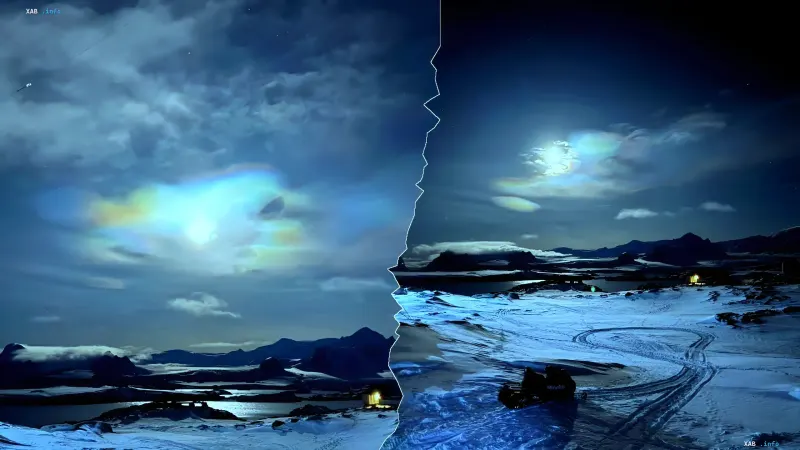
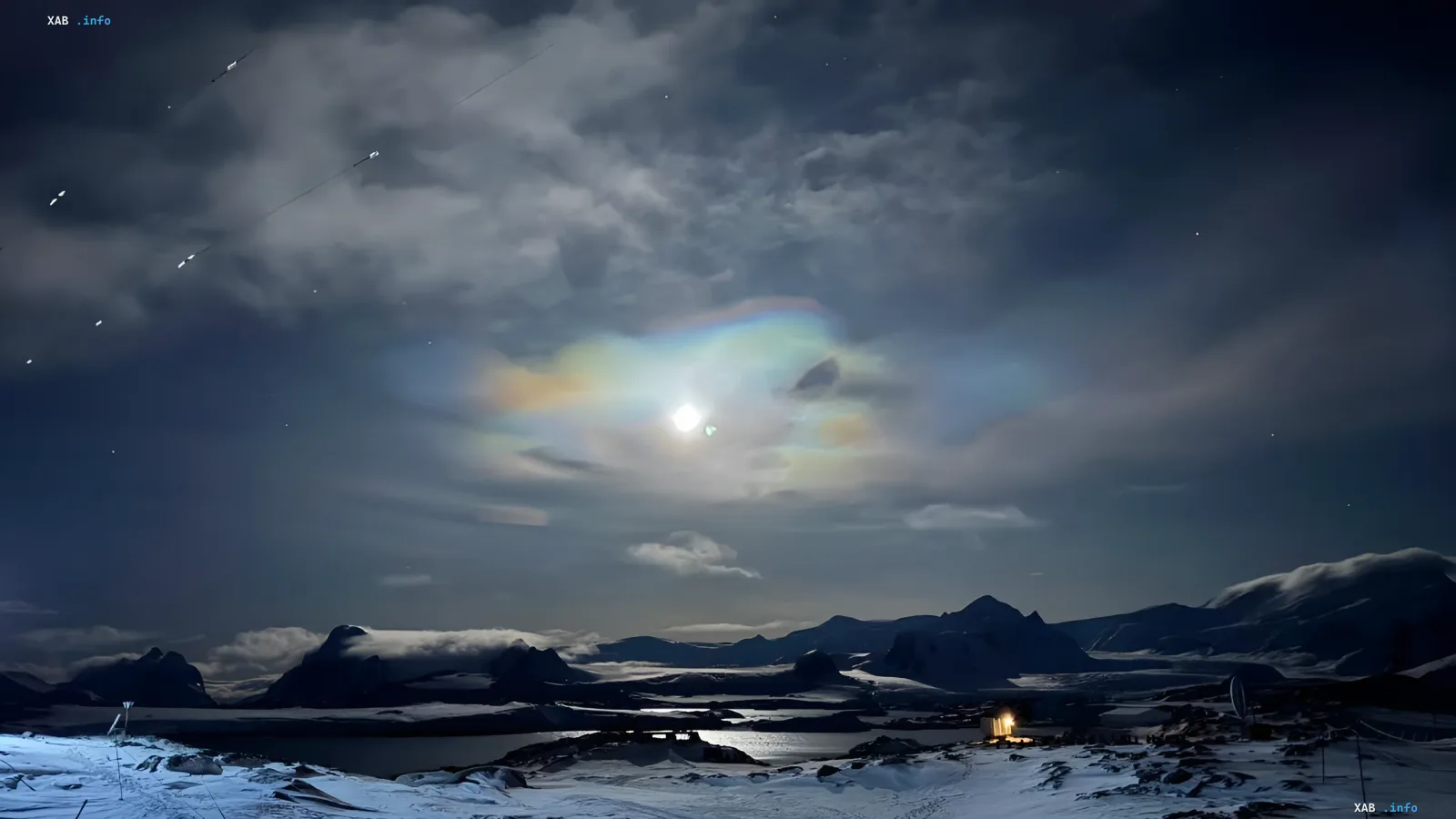
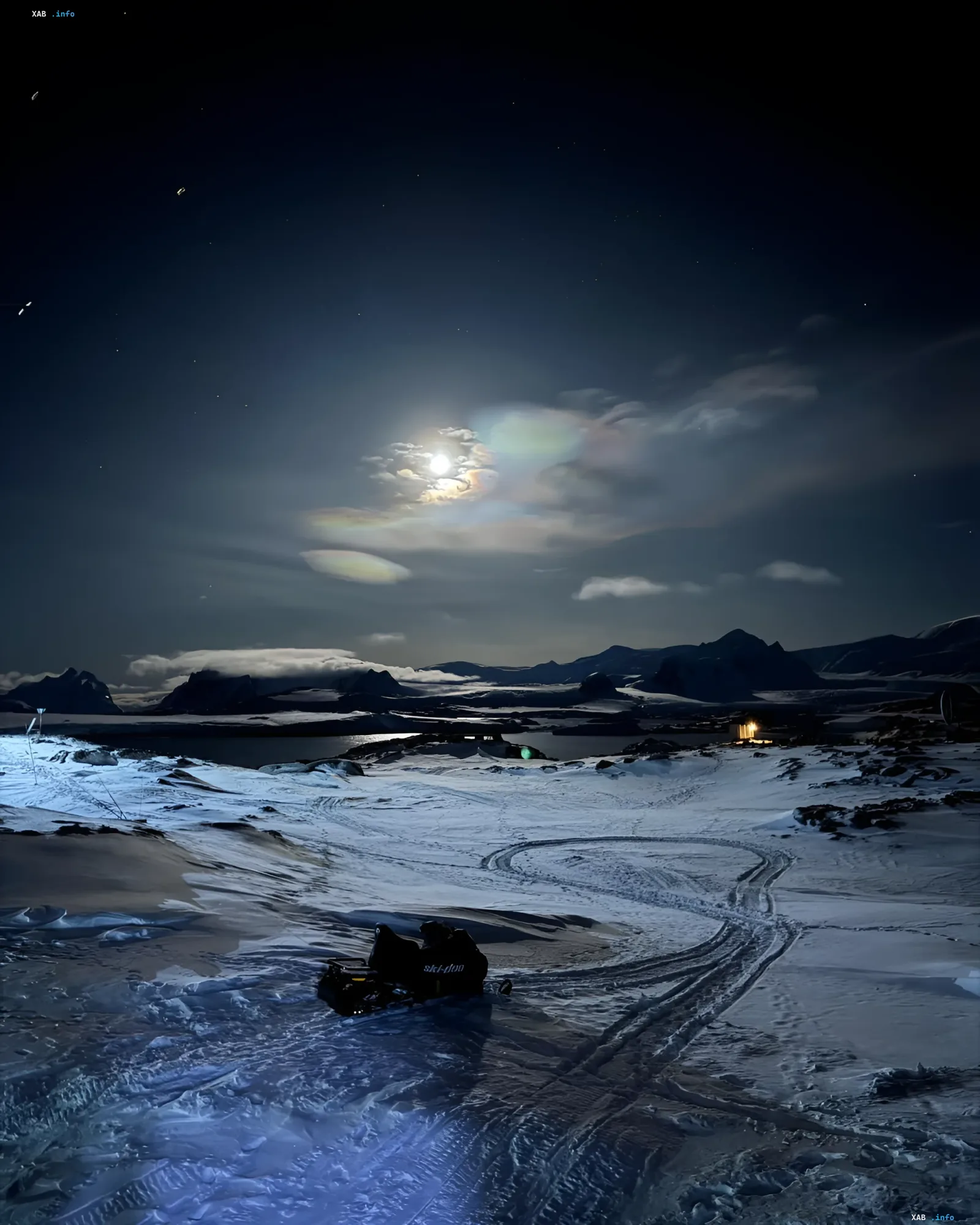
Participants of the 29th Ukrainian Antarctic Expedition at the "Academician Vernadsky" research station recorded a unique atmospheric phenomenon — nacreous stratospheric clouds against the backdrop of a full moon. The National Antarctic Scientific Center published these rare shots, emphasizing that such observations in the region are extremely difficult due to frequent storms and dense cloud cover.
Physics of a rare phenomenon
The author of the unique photos was the expedition's meteorologist, Serhiy Yakushchenko. The photographer managed to take advantage of a rare clearing over Galindez Island. In scientific classification, these formations are known as polar stratospheric clouds (PSCs) of type II. Unlike ordinary clouds, they form at an altitude of 15 to 30 kilometers in the stratosphere. Extreme conditions are required for their appearance: the temperature must drop below -78°C. Moonlight, passing through microscopic ice crystals, creates a diffraction effect, coloring the clouds in pastel tones.
Climatic indicator
Despite their aesthetic appeal, the appearance of nacreous clouds carries an important scientific signal. The surface of ice crystals in the stratosphere becomes a catalyst for chemical reactions that activate chlorine compounds. This phenomenon is a harbinger of the seasonal expansion of the ozone hole, which usually occurs with the onset of polar spring. Thus, the recorded footage serves as an important indicator for monitoring the state of the ozone layer.
Significance for science
Observing iridescence (rainbow coloring) in moonlight is considered a rare occurrence, as the human eye rarely distinguishes the color palette under low-light conditions. The success of the observation was due to ideal geometry: a specific angle of the moon's position and a uniform size of ice crystals. These data contribute to the understanding of atmospheric processes in Antarctica and help climatologists track global changes.
Contradictory data
While there is no disagreement in the scientific community regarding the nature of the phenomenon, there are different interpretations of its frequency. Some sources indicate that in recent years, due to changing climatic conditions, such clouds have been observed more often than in previous decades. Other researchers believe that this is due to improved camera equipment quality and more thorough monitoring, rather than a real increase in the frequency of the phenomenon. In any case, every recorded case remains valuable for science.