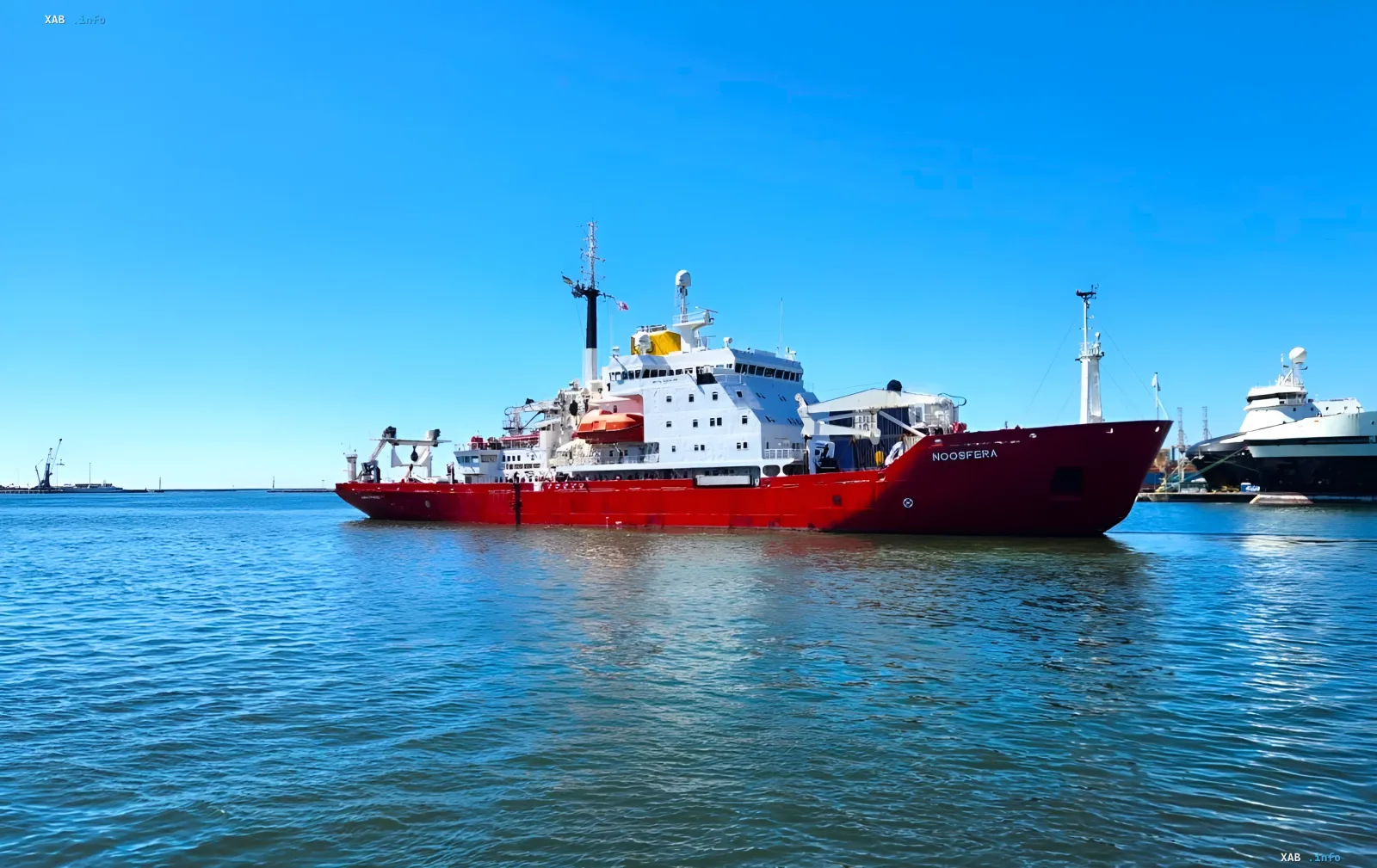
The Ukrainian research vessel "Noosfera" has officially launched its sixth Antarctic season. Despite the ongoing full-scale war and all the challenges facing the country, Ukrainian scientific diplomacy and polar research continue to develop, reaching an entirely new level of international partnership. The icebreaker has already left its port of registry in Cape Town, South Africa, and set course for the icy continent to carry out a large-scale logistical and research mission.
International Cooperation and Grant Funding
As emphasized by Denys Kurbatov, Ukraine's Deputy Minister of Education and Science, a crucial feature of this sixth season is that the expansion of the research program is being funded by international partners and grant programs. This makes it possible to implement complex scientific projects without placing an additional burden on Ukraine's state budget. Such an approach clearly demonstrates the high level of trust the global scientific community places in Ukrainian specialists and their unique expertise in studying polar ecosystems.
Icebreaker Route and Logistical Tasks
During its current voyage, the "Noosfera" performs vital logistical tasks not only for Ukrainian polar explorers but also for colleagues from other countries. The vessel's first intermediate stop will be the Polish Antarctic station "Arctowski", to which the Ukrainian flagship is providing substantial support in the construction of new buildings. Afterward, the icebreaker will head to the Chilean port of Punta Arenas, where the first group of the Ukrainian seasonal detachment, along with necessary scientific equipment and supplies for the "Vernadsky Akademik" station, will come aboard.
New Scientific Horizons and Projects
The main scientific breakthrough of the sixth season will be a large-scale joint study by Ukrainian and Swedish scientists in the Weddell Sea, located east of the Antarctic Peninsula. The National Antarctic Scientific Center notes that this is the first such significant expansion of research geography for domestic science. In addition, the first-ever Indonesian Antarctic expedition will work aboard the "Noosfera" and at the "Vernadsky Akademik" station. Researchers from Indonesia, alongside Ukrainian colleagues, will implement projects in biology, geology, and oceanography, while continuing cooperation with scientists from the Czech Republic, the USA, and Mexico within the framework of the European Union's POLARIN initiatives.