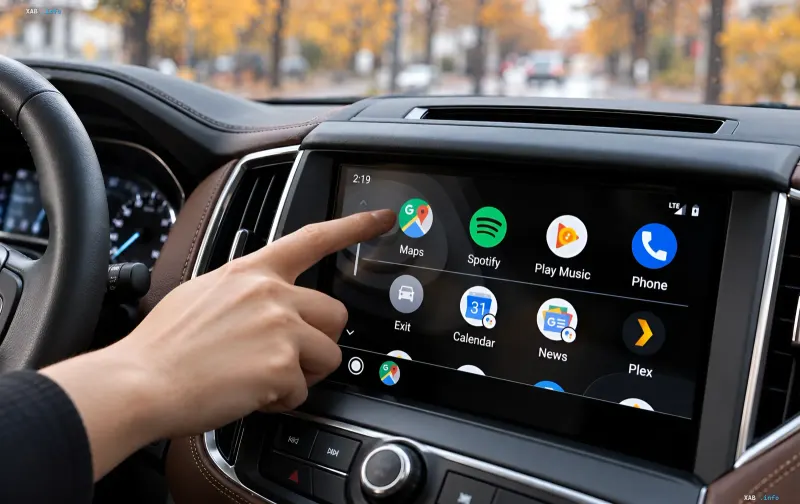
Google has officially raised the minimum system requirements for Android Auto: connecting a smartphone to a car multimedia system now requires the Android 11 (Red Velvet Cake) operating system or a newer version. These changes are already reflected in the current documentation on the company's technical support page. Owners of devices running Android 9 (Pie) and Android 10 (Q) have completely lost the ability to use the service for navigation, phone calls, and media playback in the car. According to developers, more than 88 percent of active Android devices worldwide are already operating on Android 11 or fresher versions, but in practice, the update has affected millions of gadgets that stopped at Android 10.
What Exactly Changed and How It Works
Previously, Android Auto supported devices running Android 9 and above. After the new requirements came into effect, the minimum threshold shifted forward by two generations—to Android 10. Wait, to Android 11. This means that smartphones that have not received an update to this version are physically unable to connect to the car system either via wire or wirelessly. In addition to the operating system version, 5 GHz Wi-Fi support remains mandatory for wireless connection to Android Auto. Users of affected devices are already reporting in open sources that the service stopped launching after updating the car head unit firmware or restarting the application.
Which Models Are at Risk
Specific models for which Android 10 became the last officially available operating system version include the Samsung Galaxy S9, Samsung Galaxy Note 9, and Sony Xperia XZ2 Compact. These and many other devices released in 2018–2019 received Android 10 as their final update and no longer receive security patches or new OS versions. For their owners, the only options to restore access to Android Auto are updating the firmware to Android 11 (if the device manufacturer provides such an option at all) or purchasing a more modern smartphone. In most cases, updating to Android 11 is unavailable for the listed models, effectively making them permanently incompatible with the car system.
History of Gradual Requirement Increases
The current change is not the first in recent years. In 2022, Google set the minimum bar for Android Auto support at Android 8.0 Oreo, and in 2024 it raised this threshold to Android 9.0 Pie. Thus, over four years, the minimum requirement shifted from Android 8 to Android 11—three steps up. The company warned about upcoming changes back in October 2026: smartphone owners on Android 10 began receiving relevant notifications in the app interface. Now, in November, the changes are recorded in official documentation, making them legally and technically mandatory for all service users.
Reasons for the Decision and Industry Context
Experts explain the drop in support for Android 10 by security and optimization considerations. The Android 10 operating system was released in September 2019, meaning that at the time of disconnection, it was already more than seven years old. During this time, numerous vulnerabilities have been fixed in the Android kernel, and the system architecture has changed significantly. Maintaining compatibility with outdated OS versions increases the attack surface and complicates testing. At the same time, modern tech giants, including Samsung and Google itself, currently offer up to seven years of system and security updates for their new smartphone models, making the transition to fresher hardware and software a logical step for the end user.
What Owners of Affected Devices Should Do
Users whose smartphones run Android 9 or 10 are advised first to check for available updates in the device settings. If the manufacturer does not provide Android 11 for a specific model, the only working solution is to purchase a new smartphone that meets current requirements. Google does not provide alternative ways to bypass the restriction—such as custom firmwares, modifications, or workaround applications—and any unofficial solutions may violate terms of use and create additional data security risks.