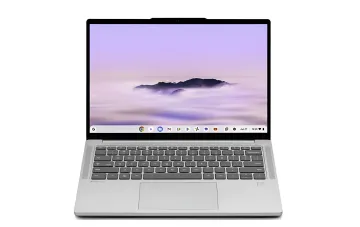
Google has officially unveiled a new category of computing devices — Googlebook laptops powered by the Android operating system. Unlike budget Chromebooks, which for years have occupied the niche of affordable devices for education and basic work with web services, the new Googlebooks are aimed at the premium market segment and are positioned as a direct alternative to Windows and macOS devices. Pre-orders for the devices are already open, and official sales begin on October 4, 2026.
A unified codebase and native Play Store support
The key architectural difference between Googlebooks and previous Chromebooks lies in their foundation on a unified codebase shared with the Android mobile system. This allows apps from the Play Store to run natively, without the use of virtual machines — a limitation that had been one of the main constraints of the Chrome OS ecosystem. In addition, the devices feature a desktop-class version of the Chrome browser and support deeper integration with smartphones. For developers, the Antigravity environment is provided for building, testing, and deploying applications, along with a full-featured terminal with CLI support.
Five models from leading manufacturers
The first Googlebook lineup consists of five models from partner manufacturers: Acer, Dell, HP, Lenovo, and Asus. All laptops feature premium metal bodies, vibrant OLED displays, touchpads with haptic feedback, and a fanless cooling system. The lid of each device is equipped with a Glowbar LED panel that lights up during system boot and shows the battery charge level. In the future, developers will receive a dedicated tool to extend its functionality.
Among the presented models stand out: Acer Googlebook 14 (from $899) — the only transformer in the lineup, powered by an Intel Core Ultra 5 or 7 processor with a 14-inch 2.8k OLED display; Dell XPS Googlebook (from $1,199) — based on the Snapdragon X Elite with a 13.4-inch 2.5k display; HP Googlebook 14 (from $1,299) — with a 14-inch 2.8k OLED display and an aluminum body; Lenovo Googlebook 15 (from $1,299) — with a 15.3-inch OLED display, a magnesium-alloy and carbon-fiber body, and facial recognition; Asus Googlebook 14 (from $1,299) — the lightest laptop in the series at just 1.0 kg, with a 14-inch 3k OLED display.
Deep smartphone integration and new features
Googlebooks offer a range of new features for interacting with mobile devices. The Cast My Apps technology allows you to open and use apps installed on an Android smartphone in a separate window on the laptop without physical contact with the phone. The Continue On feature lets you resume work in apps right where you left off on your smartphone, while the file system provides seamless access to the mobile device's storage. At the same time, Google is introducing stricter requirements for installing apps from third-party sources: downloading APK files will only be permitted from developers who have completed official identity verification.
Gemini AI as a system component
The Googlebook system is deeply integrated with Gemini models. The new Magic Pointer feature allows you to activate the AI simply by shaking the cursor: it can automatically extract dates from emails into the calendar, check email for phishing, or edit an image on the screen. For voice input, the Rambler tool is provided, which removes exclamations and automatically corrects the text. Buyers of any Googlebook model will receive a one-year subscription to the Google AI Pro service with 5 TB of cloud storage, as well as one year of access to the GeForce Now game streaming service.
Contradictory data
No significant discrepancies in figures, dates, or device specifications were found in the provided fact-checking sources. All four sources (RBC, Korrespondent, Habr, Hi-Tech Mail.ru) unanimously confirm the sales launch date of October 4, 2026, the list of five models, and the basic technical specifications. The only minor discrepancy concerns the wording of the cloud storage volume in the subscription: the original text contains a typo, "5 TB" (rendered as "5 ТВ"), which in context is unambiguously interpreted as 5 TB (terabytes), consistent with the Google AI Pro tier.