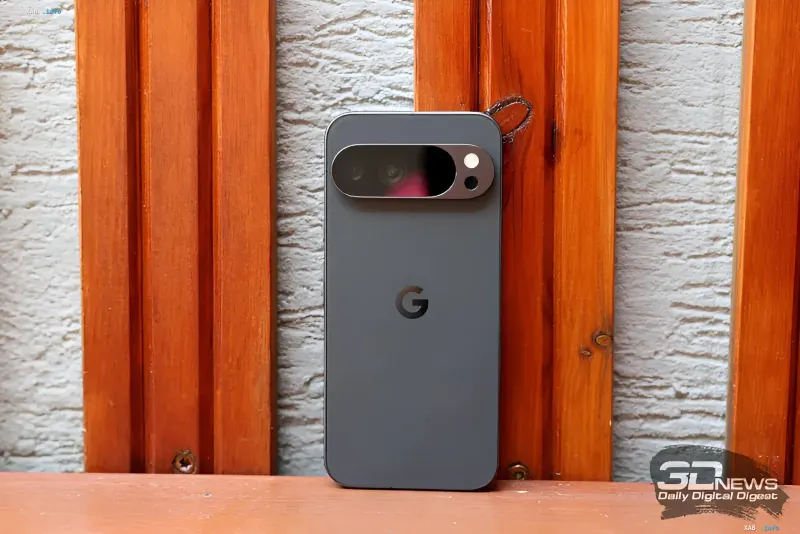
Last week, Google unveiled its new Pixel 11 smartphones and Pixel Watch 5 smartwatches, and one of the key announcements was the Health Guardian toolkit featuring the Insulin Resistance Trends function. This feature produces a monthly analysis of how the body reacts to blood sugar spikes, which is critical for weight management and monitoring the development of type 2 diabetes. A key indicator of insulin resistance and metabolic health is body composition analysis — the ratio of different types of fat, skeletal muscle, and bone. This is exactly where the new PhotoScan technology comes into play, which the search giant discussed during the same series of presentations.
Context: Pixel 11, Pixel Watch 5, and Health Guardian
The Insulin Resistance Trends function within Health Guardian shows the user a monthly trend of how the body responds to fluctuations in glucose levels. To fully interpret this data, an objective measure of metabolic status is needed, and that is body composition. Traditionally, it is determined using DXA (dual-energy X-ray absorptiometry) X-ray scanning or specialized home devices. For example, the Samsung Galaxy Watch Ultra 2 features bioelectrical impedance analysis (BIA): a weak electric current is passed through the human body, which travels differently through fat, muscle, and bone, allowing their ratio to be assessed. Google proposed a fundamentally different approach — doing without X-rays and without currents, using only a smartphone camera and an artificial intelligence model.
How PhotoScan Works
The PhotoScan technology is satisfied with an ordinary photo taken with a smartphone camera and a neural network model for image analysis. The search giant trained it by matching photos of people taken on smartphones with medical DXA scans and other parameters about the person; the entire dataset was then processed through AI. According to Google, the trained model achieved "high agreement with DXA" in estimating body fat percentage and a number of other metrics, and in assessing insulin resistance, accuracy close to DXA was achieved. Thus, in the future, a user will be able to get an objective picture of their body composition simply by taking a photo with a smartphone, without visiting a clinic and without contact sensors.
Comparison with Alternatives and Limitations
Unlike DXA, PhotoScan does not require X-ray radiation or specialized medical equipment, and unlike BIA, it does not pass an electric current through the body and does not depend on skin hydration and electrode contact. This makes the technology potentially mass-market and suitable for daily use. However, it is important to understand: PhotoScan has not yet been released to the market. Google explicitly states that the solution "demonstrates the feasibility of body composition estimation using smartphones," meaning that at the current stage this is a research result, not a commercial product. It is possible that the technology will appear on Pixel smartphones and in the Health Guardian ecosystem in the future, but the company has not given specific timelines.
Contradictory Data
The wording regarding accuracy in Google's statements and in media retellings is not entirely identical. The company speaks of "high agreement with DXA" and "accuracy close to DXA" in assessing insulin resistance, while a number of publications (including 3DNews and hi-tech.mail.ru) generalize this in their headlines as "accuracy approaching X-ray." There is a difference between "high agreement" in laboratory conditions and clinical equivalence to X-ray scanning: independent clinical validation of PhotoScan has not been publicly published, and the technology has not gone through the certification stage as a medical device. Moreover, in sources on the Pixel Watch 5 (geeky-gadgets.com, msn.com), the emphasis is on the 20% performance boost of the watch and on the Health Guardian feature itself, while PhotoScan is mentioned as a related but not yet integrated into sellable devices technology. Thus, the claim of "X-ray accuracy" should be understood as a marketing simplification of the stated "high agreement with DXA," not as a confirmed clinical fact.
Prospects
If Google brings PhotoScan to commercial deployment, it could become one of the first mass-market tools for non-invasive body composition estimation based on AI and an ordinary camera. Combined with Insulin Resistance Trends and other Health Guardian features, this will give Pixel 11 and Pixel Watch 5 users a complete picture of metabolic health without visiting a clinic. However, until the feature appears in sellable devices and until independent validation data is published, the stated accuracy should be treated with a caveat: the technology has proven its feasibility, but has not yet proven clinical reliability in real-world conditions.