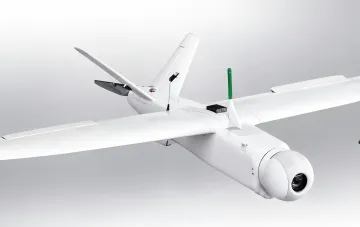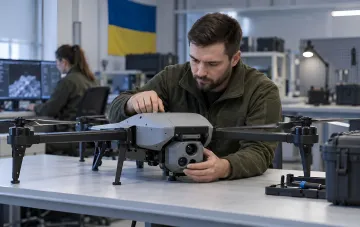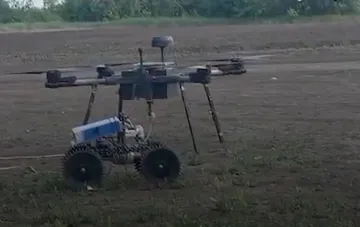
By August 2026, the Ukrainian defense industry has made a qualitative leap in integrating artificial intelligence into combat systems. The Ministry of Defense of Ukraine has officially confirmed that more than 200 domestic companies are now engaged in the development and production of unmanned aerial vehicles (UAVs) equipped with machine vision algorithms. This is no longer experimental prototypes, but mass practice that is changing the tactics of combat operations on the front lines.
From Navigation to Strike: Full Autonomy
The key change has been the introduction of technologies that allow drones to operate in conditions of complete absence of satellite communication. Machine vision algorithms analyze the terrain and visual landmarks, comparing them with loaded digital maps. This allows the devices to maintain navigation both day and night, ignoring the work of Russian electronic warfare (EW) systems, which traditionally jammed GPS signals.
Computer vision technologies have also revolutionized the process of target engagement. Modern drones are capable of autonomously capturing a target and correcting the flight trajectory for a guaranteed strike. According to the Ministry of Defense, this is critical in situations where communication with the operator is interrupted at the final stage of the attack.
Human in the Control Loop
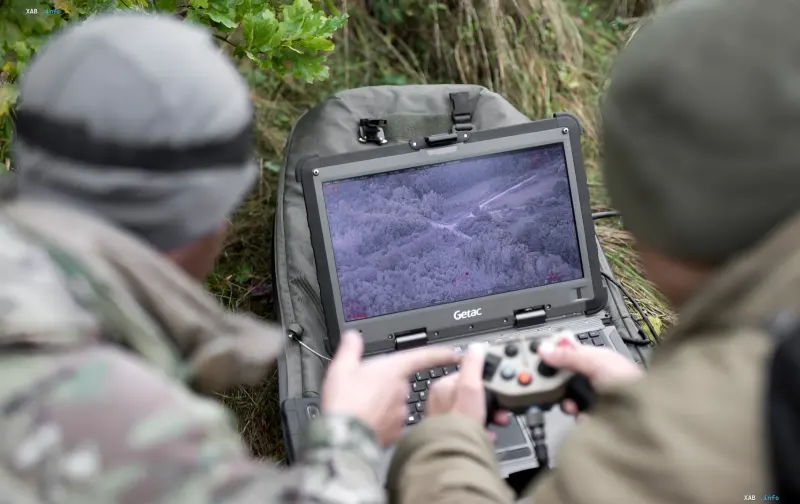
Despite the high degree of automation, the Ukrainian command insists on maintaining human control. The Ministry of Defense emphasizes that the final decision on target selection and engagement is made by the operator. AI acts as a powerful tool performing tasks related to identification, guidance, and assessment of results, but does not take on the ethical decision to open fire. On the state defense technology marketplace Brave1 Market, 46 specialized AI developments are already available, including optical stabilization modules and automatic terminal guidance.
Data Infrastructure: Brave1 Dataroom
Training neural networks requires colossal arrays of verified data. The solution to this problem is the Brave1 Dataroom platform — a secure environment where developers get access to structured datasets for training and validating models. More than 100 Ukrainian companies are already using this platform. The Dataroom features datasets with various types of targets, collected at different times of the day, in different weather conditions, and using various sensors, including thermal imagers.
Future Strategy
The Ministry of Defense of Ukraine has set an ambitious goal: in the near future, to ensure the presence of machine vision and artificial intelligence technologies on 100% of unmanned systems used on the front. This will allow creating a closed engagement loop where AI is involved at all stages — from target detection and identification to damage assessment. Experts note that such a transformation makes Ukrainian drones significantly more resistant to modern enemy air defense systems.