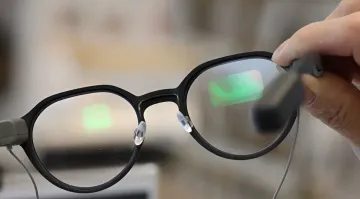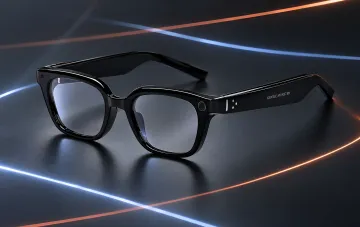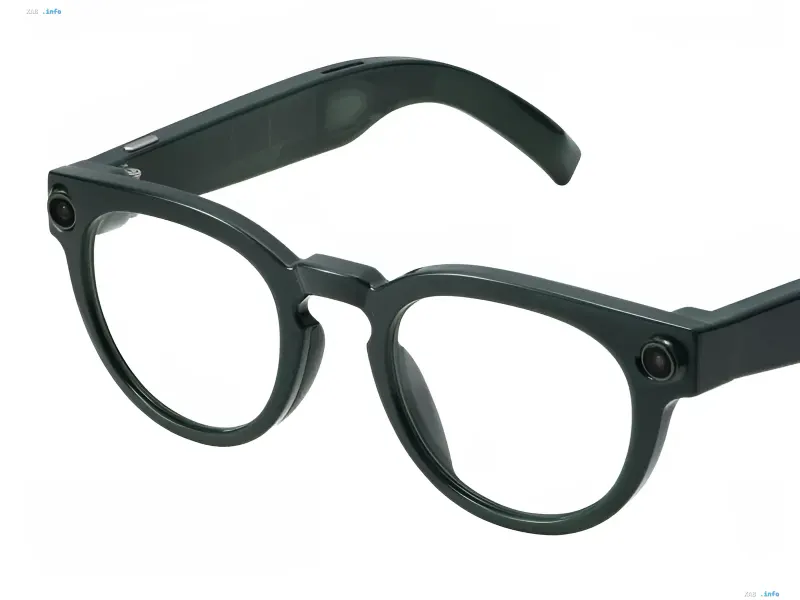
On November 12, 2026, Google and Samsung opened pre-orders for their Intelligent Eyewear, developed in collaboration with frame manufacturers Warby Parker and Gentle Monster. Full sales will launch on December 10, initially in the US and South Korean markets, with expansion to other countries, including Europe, expected later. Warby Parker offers three models starting at $395, while Gentle Monster offers six variants starting at $449. The glasses run on the Android XR platform and feature a 12-megapixel camera, microphones, and speakers, but lack a built-in display. The device weighs approximately 41 grams, with a claimed battery life of up to nine hours.
Design and Control: Nearly Like Regular Glasses
9to5Google editor Abner Li, who spent about an hour with the device, praised its design. According to him, the new product feels almost identical to regular glasses despite the built-in electronics: the weight is evenly distributed along the frame, and control is available via voice, touch gestures on the temple, and compatible Pixel Watch and Galaxy Watch devices. Li noted that while he preferred the touch panel at the start, he gradually relied more on voice commands. CNET reviewer Scott Stein, who tested final versions at Warby Parker and Gentle Monster demo spaces in New York, also liked the frames' appearance and low weight; the devices reminded him of current Ray-Ban Meta glasses, though he noted that tighter Gemini integration with Google services gives these new products additional capabilities.
Gemini in Action: Speed and Live Translation
Li noted that Gemini Live reacts noticeably faster to queries compared to the May demonstration: Google reduced latency and optimized the assistant's responses for use in glasses. However, the reviewer admitted he was not yet sure if voice control works fast enough for everyday use. Stein was particularly impressed by the automatic speech translation: during one demonstration, several robotic heads spoke different languages, and Gemini translated their remarks through the built-in speakers. The journalist listened to the translation for about ten minutes, noting that the system occasionally experienced minor delays and glitches. The glasses can recognize written text in over 70 languages and deliver translations that account for different speakers' intonations. Victoria Song of The Verge gave the AI capabilities a higher rating: during her test, Gemini translated French, Spanish, Korean, and German without pre-selection, and in another scenario, it translated a conversation from English and Thai into Japanese.
Camera, Sound, and Google Service Integration
Li was positively impressed by the camera: in his estimation, the 12-megapixel sensor provides good initial image quality, and photos are quickly transferred to a connected smartphone. The glasses also allow for video recording up to 90 seconds, though the journalist could not fully verify the built-in speakers' performance as a headphone replacement. Stein, in turn, noted the adequately loud speaker volume and fast photo transfer to a Pixel smartphone. Song tested Gemini’s integration with Google services: the assistant recognized a concert poster, added the event to a calendar, found flight information, and simultaneously provided walking directions and museum schedules. Sometimes, the system corrected its own object recognition errors independently.
Limitations and Battery Questions
Despite their strengths, reviewers pointed out several issues. In other tests, Gemini recognized items on shelves, compared products, and answered questions about objects in front of the camera, but struggled with some tasks: sometimes it refused to read a sign, citing too much distance even though Stein could clearly see the text, and in one case it answered "eight minutes" to a question about whether a 45-minute restaurant wait was worth it. Controlling music playback with temple gestures felt confusing to the journalist. The main questions, according to Stein, remain the reliability of Gemini in everyday conditions and actual battery life—these characteristics, in his assessment, will determine how useful the new glasses truly are.