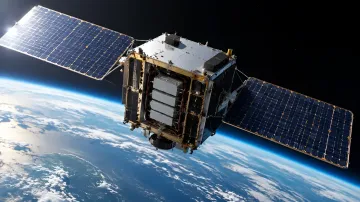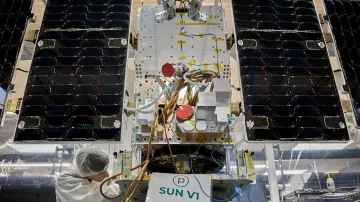
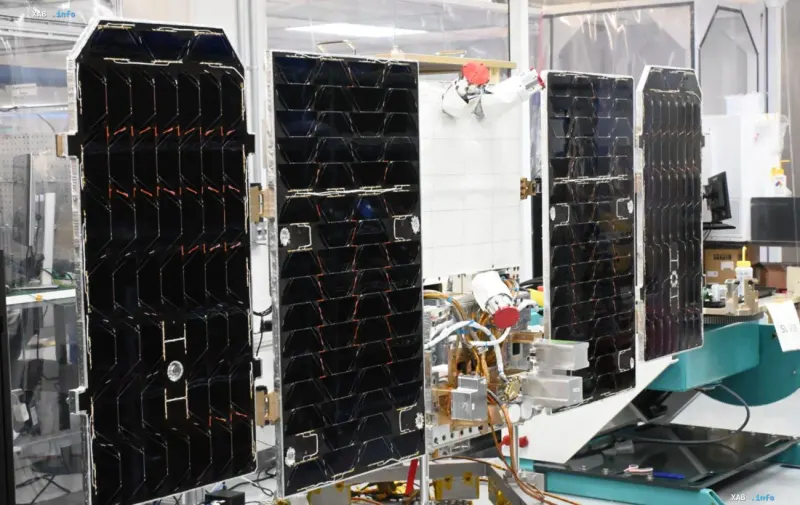
Google is preparing for an unprecedented experiment: on October 1, 2026, the Suncatcher project satellite will be sent into Earth orbit — an experimental module that the company calls a "minimum configuration test system" for placing artificial intelligence computing power in outer space. The spacecraft is equipped with four tensor processing units (TPUs), whose combined performance, according to the developers, is comparable to a single standard server node. The system is powered by 1 kW solar panels — equivalent to the power consumption of a household hair dryer. The mission is designed for one year of active processing of simple AI queries, while the total time in orbit until natural re-entry into the atmosphere will be six years.
Engineering challenges: radiation and vacuum cooling
The main obstacles to the operation of semiconductor chips in open space are harsh ionizing radiation and the complete absence of convective heat dissipation. High-energy particles from cosmic rays can physically penetrate the crystalline structures of semiconductors, causing not only software errors — so-called "bit flips" — but also irreversible physical damage to components. At the first stage of protection against radiation-induced distortion of binary code, Google relies on software-based chip resets. Preliminary testing of the system's resistance to radiation exposure was conducted at the Crocker Nuclear Laboratory, which allows for assessing real degradation processes under conditions close to orbital ones.
The heat dissipation problem: 15 minutes of continuous operation
The second critical node is the cooling system. In the vacuum of space, heat can only be dissipated through thermal radiation, and Google has applied a patented technology based on high-thermal-conductivity materials that allows thermal energy to be dumped directly into the space vacuum. However, according to the published technical specifications, this system can maintain continuous processor operation for only about 15 minutes. After that, the chips are forced to stop for passive cooling down to an acceptable temperature threshold. This means that even within the "minimum configuration," the satellite will not be able to perform computations in 24/7 mode without breaks, which significantly limits its practical usefulness at the testing stage.
Roadmap: from one satellite to an orbital network of 80 spacecraft
Google's strategic plan involves phased scaling. In 2027, the company intends to launch two similar satellites into orbit, which will allow testing the synchronized operation of a distributed group. The ultimate goal of the project is to form a tight formation of 80 satellites capable of jointly processing AI queries with load distribution. In addition, the tech giant is considering the concept of creating a large-scale orbital platform the size of a football field, which could become a full-fledged space data center. At the same time, Google explicitly urges the public and investors to refrain from inflated expectations, emphasizing that the deployment of fully functional space computing systems will require many years of development and significant capital investment.
Contradictory data
There is a discrepancy in the description of the project in open sources. On the one hand, in Google's marketing materials and Twitter announcements, the satellite is presented as part of a "new approach to AI infrastructure," which may give the reader the impression of a ready-made productive solution. On the other hand, in the technical description, the same spacecraft is explicitly called a "minimum configuration test system," and the company itself warns about the experimental nature of the mission. Additionally, according to WSJ, the launch is closely linked to SpaceX's involvement, but in Google's official communications the emphasis is placed on its own Suncatcher technology, while the role of the space carrier remains in the background. Finally, analysts from 3DNews point out that even with a successful launch, the cost of owning a space data center will be at least three times higher than a terrestrial equivalent if launch costs cannot be radically reduced — a factor that is not reflected in the company's own optimistic forecasts.
Context and significance of the experiment
The Suncatcher project fits into a broader trend of placing computing power beyond Earth, which has been actively discussed in the tech industry in recent years. If the experiment is deemed successful, it will open the way to creating orbital AI clusters capable of operating autonomously on solar energy and independent of terrestrial infrastructure. However, the current stage is, in essence, a test of basic physical feasibility: will the TPUs survive in the orbital radiation environment, and how effective is the radiative cooling system under real conditions. The result of the mission, which launches in just a few days, will be a key indicator of how realistic Google's long-term ambition is to turn near-Earth space into a distributed computing resource.