A new premium niche
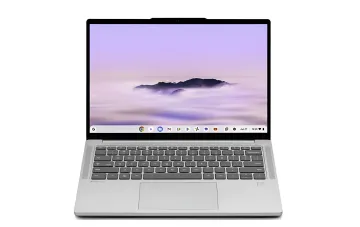
Google has officially confirmed the date for opening pre-orders on its new category of flagship Googlebook laptops: pre-orders will open on September 21 at 4:00 PM Kyiv time. The company emphasizes that the new laptops are not successors to budget Chromebook devices, but rather premium machines built on a new technological platform that combines the capabilities of Android and ChromeOS with deep integration of the Gemini Intelligence AI assistant. In effect, Google is entering a segment traditionally dominated by MacBook and other high-end laptops, offering an alternative focused on ecosystem and neural-network features.
First-wave hardware
Although Google has not yet disclosed the full list of first-wave devices, leaks from partner manufacturers — Acer, Asus, and Lenovo — agree on one point: the base processor for the entire Googlebook lineup will be the latest Intel Core Ultra 5325 Panther Lake. The specific specifications of the models differ. For example, the Lenovo Googlebook 15 will feature a 15.3-inch OLED touchscreen with a 120 Hz refresh rate and a 2880×1800 resolution, 16 to 32 GB of LPDDR5X RAM, storage of up to 512 GB, a 70 Wh battery, and proprietary chassis backlighting.
Prices and configurations
Initial price benchmarks have already appeared at retailers. According to Canadian retailers, the Asus Googlebook configuration with a Core Ultra 5 325 processor, 16 GB of RAM, and a 512 GB SSD will cost around 1,365 US dollars; more powerful versions with Core Ultra 7 processors and 64 GB of RAM are also expected. European sellers have priced the Acer Googlebook 14, with a 14-inch 2.8K OLED display at 120 Hz, 16 GB of RAM, and a 256 GB SSD, at approximately 1,178 US dollars. These figures set the price range for the first wave, which is noticeably higher than budget Chromebook models but remains competitive against flagship laptops from other vendors.
Integration with Android and AI
According to the developers, Googlebook laptops are designed for active use of AI tools, which is the key differentiator of the platform. In addition, Google promises seamless integration with Android smartphones: users will be able to run mobile apps directly on the laptop and gain direct access to the file system of a connected phone. This approach turns the Googlebook into a full-fledged productivity hub tied to the mobile ecosystem, rather than simply a desktop Chromebook replacement.
Contradictory data
When comparing sources, two notable inconsistencies stand out. First, the description of the base processor features two variants of the designation: in the general lineup list it is given as Intel Core Ultra 5325 Panther Lake, whereas in the Asus configuration it is named Core Ultra 5 325 — likely the same chip platform written in a different format, but Google has not officially commented on this. Second, Google has not disclosed the full list of first-wave devices: the specifications and prices for Lenovo, Asus, and Acer come from partner leaks and retailer data, not from a single official press release, so final specifications and pricing may be adjusted by the time sales begin.
When buyers will receive the devices
The first deliveries of devices to buyers are expected this fall, immediately after pre-orders open on September 21. For Google, this will be a major first step into the premium laptop segment on its own platform, where the bet is on the combination of Android, ChromeOS, and Gemini Intelligence. The ultimate success of the lineup will depend on how deeply the AI features and smartphone integration exceed the expectations set by the announcement, and on the final prices, which will be known after the full lineup is officially revealed.