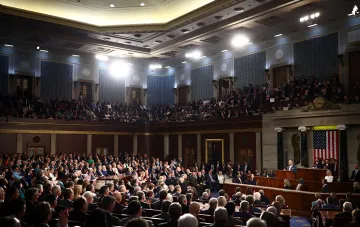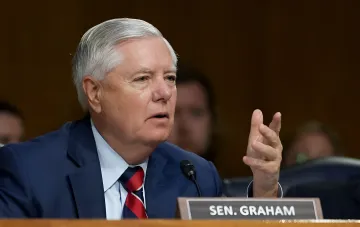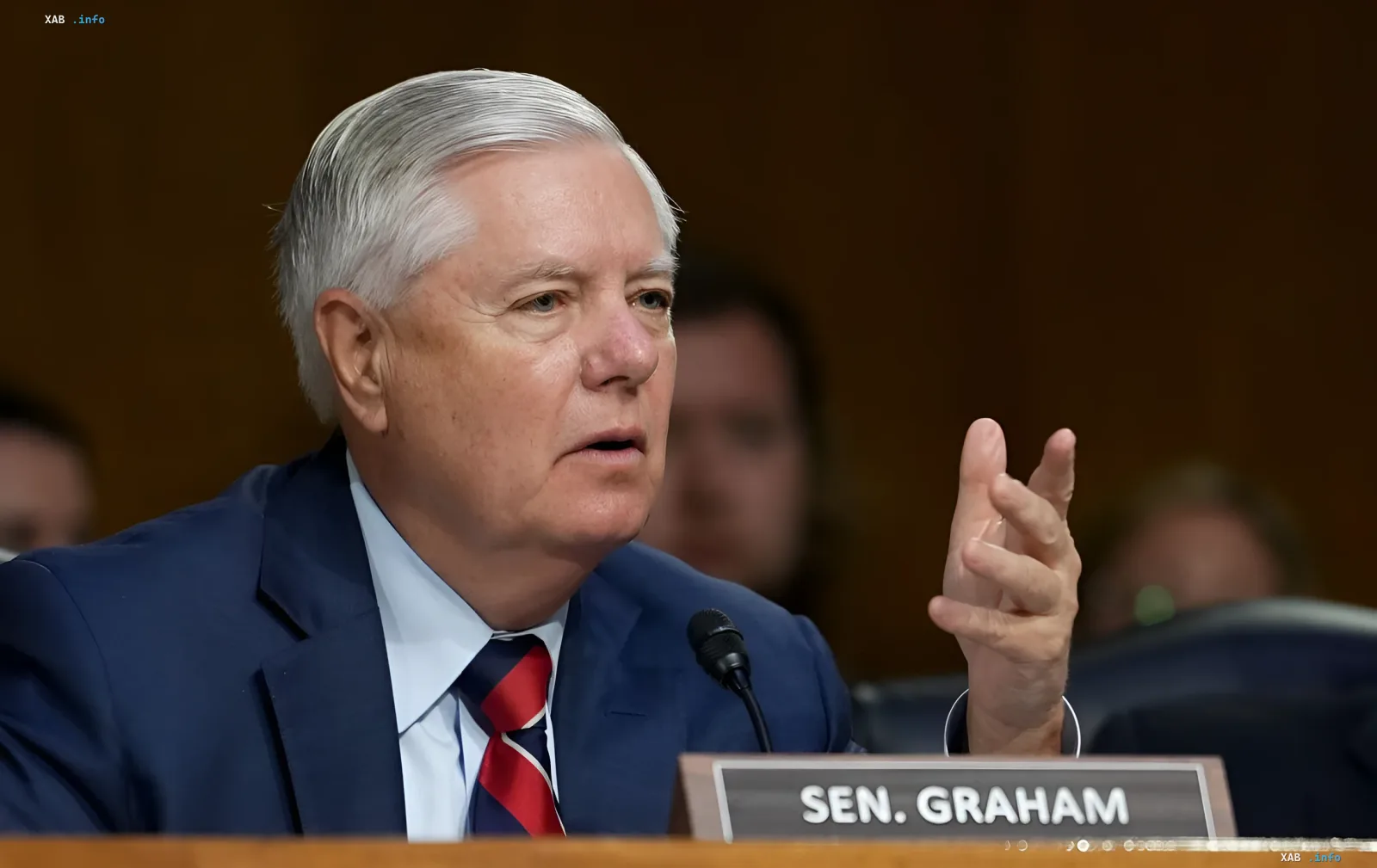
Sustained bipartisan support for the sanctions bill, co-authored by Republican Senator Lindsey Graham, remains strong in the US Congress. This was stated by Vladyslav Vlasyuk, the President of Ukraine's Commissioner for Sanctions Policy, during a televised marathon, emphasizing that the document has already been approved by the Senate and has been sent to the House of Representatives for consideration. According to him, the Ukrainian side intends to take advantage of the House of Representatives returning to work next week to intensify negotiations with American lawmakers and personally advocate for the adoption of the document.
Bipartisan Support and the Role of the House of Representatives
Vlasyuk noted that significant bipartisan support in the US Congress for increasing pressure on Russia is still in place, although the final timing of the vote depends on the document's further progress through the American parliament. The Commissioner reported that he plans to work in the US to support the bill and persuade lawmakers of the need to adopt it. "We are interested in the toolkit that will be available for pressuring Russia and, at the same time, Iran. We will convince members of Congress that this is truly needed for Ukraine and for Ukraine's victory," he stated. A colleague of Lindsey Graham's specifically pointed out that the sanctions law against the Russian Federation could be adopted as early as September.
What the Bill Provides For
As a reminder, on August 7 the US Senate approved a bill tightening sanctions against Russia and Iran, supporting it with 86 votes. The document provides for sanctions against the Russian leadership, banks, the energy sector, oligarchs, and the so-called "shadow fleet." In addition, it makes it possible to impose high tariffs on countries that continue to purchase Russian energy carriers. Thus, the bill combines direct restrictions on Russian entities with economic pressure on third countries that maintain trade ties with Moscow.
Contradictory Data
When comparing sources, a discrepancy in chronology and wording is noted. Some publications (in particular, materials from mid-July) describe the bill as an initiative that senators "propose" to adopt, while Ukrainian sources record an already-held Senate vote on August 7 with a result of 86 votes "in favor." These versions do not contradict each other in substance but reflect different stages of the document's progress: first the proposal and discussion, then the vote in the Senate. At the same time, the timing of adoption in the House of Representatives remains uncertain: September is named as the expected, but unconfirmed, deadline, and the final voting date depends on the agenda and the document's progress in the lower chamber.
Significance for Ukraine and Comparison with EU Sanctions
For Ukraine, the adoption of the document could become an additional tool of pressure on Russia, provided it receives the necessary support from American lawmakers. Ukrainian authorities believe that the restrictions being prepared in Washington could turn out to be significantly stricter than the sanctions currently in force by the European Union. Thus, the bill, associated with the name of the late Senator Graham, is positioned as a "memorial law" intended to enshrine the strengthening of the sanctions regime against the Russian Federation and Iran at the level of US legislation.