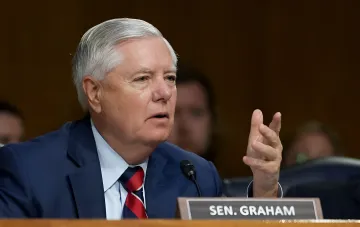
Members of the Democratic Party in the US House of Representatives have added an amendment to the sanctions bill targeting Russia and Iran, providing for a $15 billion direct loan to Ukraine. As the publication notes, this is Amendment No. 5 to bill HR 5334, initiated by the late Senator Lindsey Graham. According to the House Rules Committee's list, the document's status at the time of publication is "Submitted" — meaning it has been introduced but not yet adopted.
The essence of the amendment: a direct loan on top of Arms Export Control Act limits
The text of the amendment grants the US Secretary of State the authority to provide Ukraine with $15 billion in the form of direct loans. The key clarification is that these funds would be provided in addition to the resources already available under the existing program pursuant to the Arms Export Control Act. Thus, the initiative does not replace existing aid channels but creates a separate credit financing mechanism, distinguishing it from a grant-based support model.
Progress in the House Rules Committee
The House Rules Committee considered amendments to the bill on September 14. According to the publication, three Democratic proposals were put to a separate vote and all three were rejected by a vote of 3–7. However, the $15 billion loan amendment for Ukraine did not receive a separate committee vote. The committee adopted a procedural motion on the bill by a vote of 7–3, meaning the document advances to the next stage of consideration in the House of Representatives.
Context: the sanctions framework and the split among Democrats
The initiative fits within the broader context of US sanctions policy. On August 7, the US Senate approved so-called "hellish sanctions" against Russia and Iran: 86 senators voted in favor of Lindsey Graham's bill, while 11 voted against. The situation in the House of Representatives is more complex: it was previously reported that the Democratic leadership in the lower chamber openly opposed Graham's Russia sanctions bill, yet there is no unity within the party on this issue. Against this backdrop, the introduction of a pro-Ukrainian loan amendment demonstrates the presence of a faction among Democrats insisting on maintaining and strengthening financial support for Kyiv.
What this means for Ukraine and the scenario ahead
At the current stage, the $15 billion loan amendment is not an enacted law: it is at the committee introduction stage and has not passed a separate committee vote. Its fate will depend on further procedural decisions in the House of Representatives and the position of the Democratic leadership, which, as noted, does not demonstrate full unity on the sanctions package. For Ukraine, the potential adoption of the amendment would mean creating an additional credit financing channel beyond existing limits, which, amid the ongoing war, could become a significant element of long-term financial support.