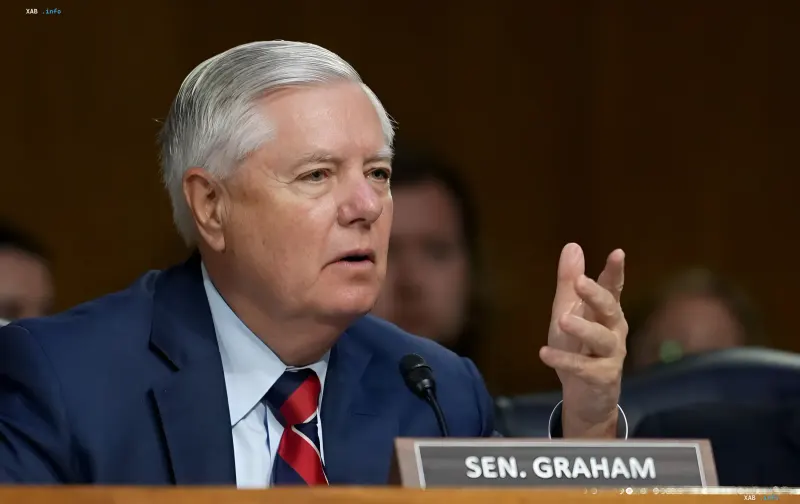
The bill on "hellish sanctions" against Russia, championed by the late Republican Senator Lindsey Graham, has hit a new obstacle on its path to enactment. The document, which until recently was considered one of the toughest anti-Russian packages in the history of Congress, has effectively fallen off the agenda of the U.S. House of Representatives. According to initial reports, a significant bipartisan majority in the Senate approved the initiative, which provides for intensified sanctions pressure on Moscow and its trading partners. However, after a five-week summer recess, Republican lawmakers returned to the Capitol, and the sanctions bill was not among their priorities.
What the 'hellish' package provides for
The initiative, co-authored by Lindsey Graham, calls for the introduction of so-called primary sanctions against Russian leader Vladimir Putin, his inner circle, banks, state energy projects, and the "shadow fleet." In addition, the document provides for tariffs of up to 500% on direct imports from Russia. As envisioned by its authors, such measures are meant to hit not only Russia itself but also its allies and trading partners, creating an additional economic lever of pressure.
Stalling in the House of Representatives
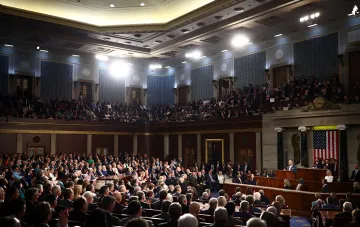
The situation in the lower chamber of Congress turned out to be considerably more complicated than in the Senate. Republican leaders removed the bill from the list of documents scheduled to be put to a vote this week. Virginia Fox, chair of the House Rules Committee, stated that the document was not even discussed at the meeting of committee chairs. When asked whether the bill could pass through her committee before being sent to the full chamber, Fox replied: "I have no idea. No one is talking about it." As a result, the document currently has no clear path to a floor vote.
Uncertainty over the position of Republican leaders
House Speaker Mike Johnson also gave no definitive answer about the bill's future fate, limiting himself to the phrase "We'll see." At the same time, he emphasized that Republicans have traditionally taken a hard line on Russia. Such wording leaves open the question of exactly when the document will be placed on the agenda and whether it will receive support in the lower chamber, despite the party's previously stated firmness.
Kyiv's efforts in Washington
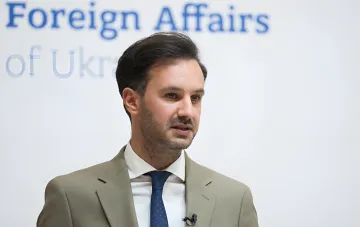
While Congress is in a pause, Ukraine continues its active work to advance the bill. Vladyslav Vlasyuk, the President of Ukraine's envoy for sanctions policy, is in Washington and is holding meetings with members of Congress. In his words, the process is ongoing: "I am currently in Washington, with a packed schedule of meetings with members of Congress, and I can say that the process is continuing." Vlasyuk added that for Ukraine it is important to turn the document into an effective tool of pressure on Russia, and in a few days it will be possible to speak more concretely about the next steps.
Contradictory data
The primary materials contain a discrepancy in the chronology. On the one hand, it is stated that the Senate supported the bill "less than a month ago"; on the other, it is noted that approval in the upper chamber took place "in early July." Counting from the current date of September 1, 2026, early July amounts to about two months, not "less than a month." This may be due to the fact that some of the wording reflects the moment of preparation of the initial report, rather than the current date. On the substance of the events — approval in the Senate and the subsequent stalling in the House — the sources agree, however, the exact date of the Senate vote should be verified against primary sources.
The outcome of the current situation is a paradox: a package that received broad bipartisan support in the Senate and was promoted as a flagship anti-Russian instrument is now stuck in the lower chamber with no clear timeline for a vote. The further fate of Graham's "hellish sanctions" will likely depend on whether Republican leaders can agree on the agenda and on the results of the ongoing negotiations in Washington between the Ukrainian side and members of Congress.