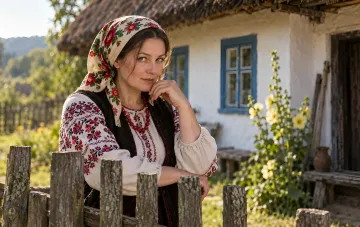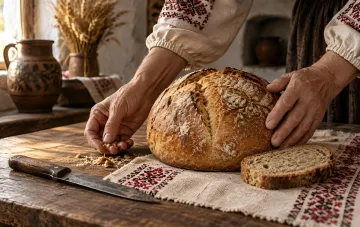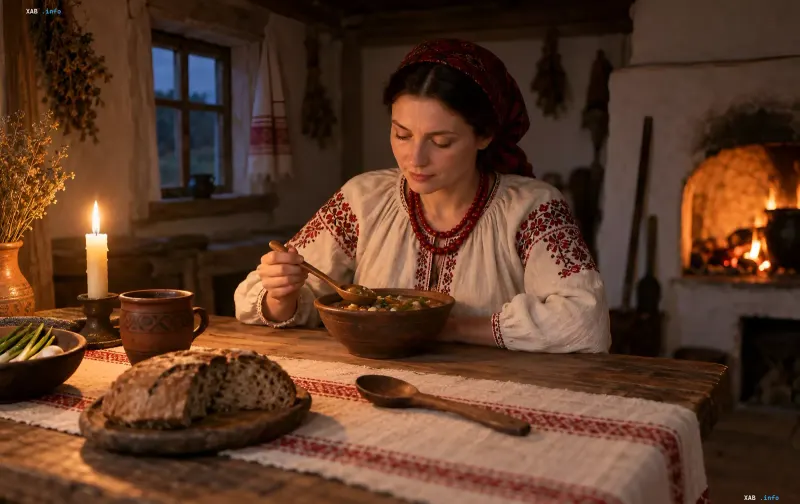
In Ukraine's folk culture, the concept of deceased relatives returning to their ancestral home remains one of the most enduring and deeply rooted beliefs. Ancestors were viewed not as abstract spiritual entities, but as real family guardians whose benevolence, according to folk beliefs, determined the health, well-being, and even the harvest of the household. This is why an entire system of rituals grew up around memorial days: from a special formula used to invite "grandfathers" to the table to a separate spoon, bowl, and glass left out for the invisible guests. Daria Antsibor, a folklorist and scientific editor of the "Vitoky" project (Zagoriy Foundation), discussed these traditions and their geographical features in a commentary for Styler.
A Separate Spoon, the First Shot, and Water with a Towel
In Polissia, memorial days were called "didiv" (grandfathers)—it was believed that the souls of the departed came to visit their living relatives for dinner. They were invited to the table with a special formula: "Grandfathers, grandfathers, come join us for dinner." A separate spoon or bowl was set aside for them, the first spoonful of a dish was served, or the first shot was poured. After the memorial dinner, the table was often left uncleared until morning so the ancestors could eat at night. In Polissia, water and a towel were also prepared for them: according to folk beliefs, the souls needed to wash after their long journey. These actions, Antsibor notes, reflected not fear, but care for those who were believed to remain part of the family.
Why People Blew on the Bench Before Sitting Down
Belief in the presence of the deceased was also linked to an unusual ritual widespread in the Hutsul region. Before sitting down on a bench, people would blow on it—so as not to crush a soul that might be sitting there. This gesture, which might seem strange at first glance, was actually a logical continuation of the overall system of relations with ancestors: if a soul could return and "sit down" in a familiar spot, then its presence deserved to be treated with respect. In the folklorist's opinion, such details best convey how everyday thinking framed the connection between the living and the dead—not as a barrier, but as everyday neighborliness.
When Ancestors Were "Expected": The Calendar of Memorial Days
The custom of treating the deceased was not limited to a single night of the year. Antsibor highlights several important periods: ancestors were treated during Svyatvecher (Christmas Eve) and commemorated after the harvest was completed. Additionally, there was a belief that from Easter to Trinity, souls "reside among the living," which is why they were "seen off" on Trinity. Recorded autumn commemorations of ancestors in the Ukrainian tradition are tied to the last Saturday before St. Demetrius' Day, which falls on October 26. Thus, throughout the year, there were several memorial days, each with its own ritual specifics.
"Veles Night" is a Modern Invention, Not an Ancient Holiday
In recent years, advice to leave food for the deceased is often linked to the so-called "Veles Night," which occurs on the night of October 31 to November 1. However, Antsibor emphasizes that this is a recent invention rather than an old holiday. "The custom of treating deceased ancestors truly existed and was very important for traditional culture. But this custom was tied to specific memorial days, of which there were several throughout the year," the folklorist explains. According to her, there is no basis for linking autumn commemorations to Veles: in documented tradition, it is tied to other dates and contexts.
The "Vitoky" Project and a Book on Family Traditions
Daria Antsibor works within the "Vitoky" project—a laboratory of social practices by the Zagoriy Foundation that explores Ukrainian traditions and ways of understanding them today. Together with Kateryna Osadcha's Foundation and the Stretovych Publishing House, the team prepared the book "Family Christmas for Everyone" (Родинне Різдво для всіх). A separate section of the publication is dedicated to how to interview relatives and research one's family history. The book also contains materials on rituals, festive dishes, carols, and ready-made formats for family celebrations. It is expected to hit bookstores starting November 20.