
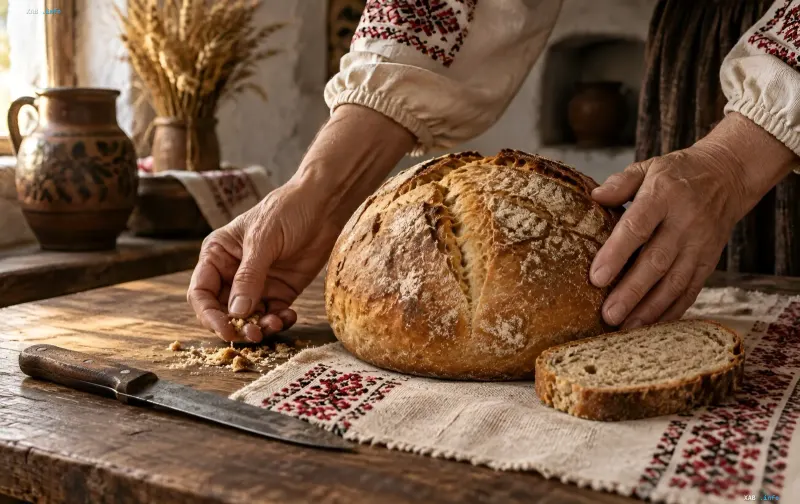
Bread on the Ukrainian table was never just a food item. It was served both on holidays and on ordinary days, used to welcome guests, and included in wedding and other rituals. That is why an entire body of rules, taboos, and superstitions formed around it, passed down from generation to generation. According to the publication Styler (an RBC-Ukraine project), the attitude toward bread was truly special, and even its leftovers required respectful handling.
Bread as a Sacred Object: The Historical Roots of the Tradition
The special, almost sacred attitude of Ukrainians toward bread was written about as early as by Ivan Franko in his work "Folk Beliefs in the Podhillya." In folk tradition, bread was considered holy, and this shaped every action involving it: from how it was held to what was done with the crumbs. Archival materials from the newspaper "Slova Prosvity" add to the picture a number of local customs that could vary depending on the region but were united by a shared respect for bread as a symbol of prosperity and abundance.
Taboos in the Kitchen: What You Could Not Do with Leftovers
The first and most important rule was not to throw away uneaten bread. If a person could not finish a piece, it could not simply be discarded: the leftovers were given to animals or burned. Crumbs were treated with no less strictness — even the smallest remnants were not tossed onto the ground where they might be stepped on. It was forbidden to place bread "upside down," that is, to turn it over with the bottom crust facing up: this was considered a bad omen. Certain taboos also concerned the context of eating: bread was not eaten over an open book, on the belief that otherwise one might forget what had been read, and it was not eaten behind another person's back, so as not, by superstition, to "take away" that person's strength.
The Ritual of Cutting: The Cross on the Crust and the Direction of the Knife
Before cutting the bread, there was a special custom: a cross was made with the knife on the bottom crust. The cutting process itself also followed a rule — bread was not cut "away from oneself," and the knife moved toward oneself while cutting, not in the opposite direction. These gestures, which at first glance seem everyday, were in fact part of a ritual that reinforced a reverent attitude toward the product.
Time and Space: Sunset, Salt, and Walls
Folk rules even took into account the time of day and the position of objects. Fresh bread was not started to be cut after sunset; if such a need did arise, the cut slice was pressed back against the loaf. Bread was not dipped in salt — by custom it was only lightly sprinkled. And finally, a cut loaf was not placed with the cut side against a wall: it was believed that it should lie with the cut facing the house, otherwise, by superstition, "people would turn away" from the hosts.
The Meaning of the Traditions Today
For the ancestors, bread was much more than everyday food: it became part of family and ritual traditions and was associated with well-being. That is why so many rules and taboos arose around it. Although in modern life most of them have lost their practical meaning, they remain a living testament to cultural memory and to that special respect that the Ukrainian tradition has always held for bread.