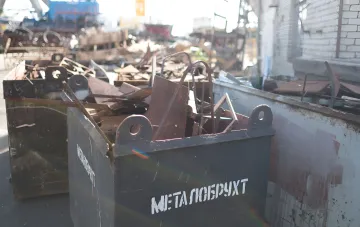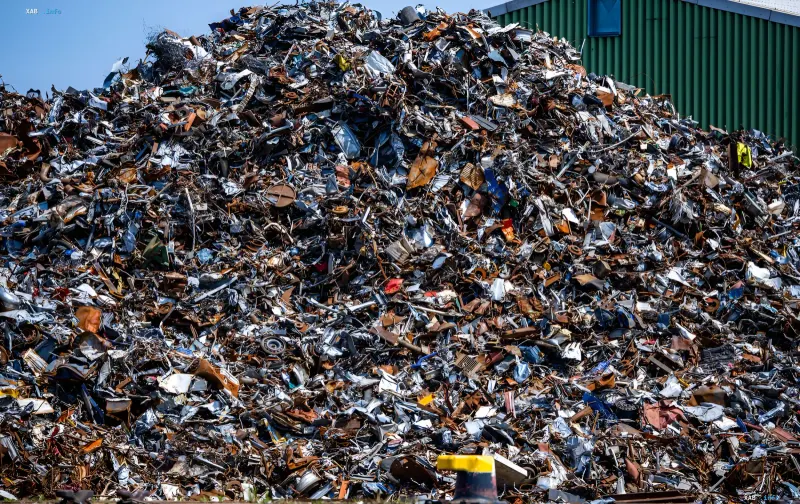
The National Mining Association of Ukraine (NADPU) has proposed extending the export customs duty of 180 euros per tonne to all destinations for scrap metal shipments, including European Union countries. This was stated by the association's executive director, Ksenia Orynchak, in a comment published by RBC-Ukraine. According to her, this mechanism should apply "to all countries without exception," which would simultaneously increase revenues to the state budget and reduce incentives for exporting scarce raw materials out of Ukraine.
How "grey" schemes cost the budget more than 3 billion hryvnias
Previously, when exporting scrap metal to EU countries, duties were effectively not paid. According to Orynchak's assessment, this led to double losses: the state budget failed to receive the planned revenues, while Ukrainian metallurgical enterprises were deprived of critically important raw material. Moreover, even the formally in-force duty of 180 euros per tonne brought Ukraine no real income, since a significant portion of the scrap was exported through Poland at a zero rate and only then redirected to Turkey. Due to such "grey" export schemes, the association's data show that the state budget lost more than 3 billion hryvnias.
Context: zero quota and Cabinet restrictions for 2026
It is worth recalling that before the introduction of the zero quota on scrap metal exports, the volumes of scrap shipped out of Ukraine showed steady growth. From January 1, 2026, the Cabinet of Ministers restricted scrap exports for the entire current year, explaining the decision by the need to ensure raw materials for Ukrainian enterprises engaged in producing goods for defense needs, infrastructure reconstruction, and the domestic market. NADPU's initiative concerns the period after the expiry of this zero quota: the association proposes not to return to the previous model, in which some destinations remained free of duties.
Support from ferroalloy producers
The call to introduce a duty on scrap metal exports to the EU had previously been voiced by ferroalloy producers, who also pointed to the raw material shortage and the need to protect domestic metallurgical production. Thus, NADPU's position is backed by the interests of several industry groups, which increases the chances of the proposal being considered at the government level. Orynchak emphasizes that extending the duty to all destinations will be "support for the budget" and at the same time a tool for keeping raw materials within the country.
What will change for the market
If the proposal is implemented, scrap metal exports to the EU will become economically less attractive for intermediaries, and revenues from customs payments will flow into the Ukrainian budget. For metallurgical enterprises, this means a more stable supply of raw material, which is especially important given that scrap is needed for the production of defense goods and reconstruction. Experts note that a key condition for the effectiveness of the measure will be strengthening border control to prevent a recurrence of "grey" routes through transit countries.