On the eve of and on Ukraine's Independence Day itself, which in 2026 is marked as the 35th anniversary of the declaration of independence, Kyiv's Western partners announced several defense-related steps at once. These include preparing Swedish Gripen fighter jets to defend Ukrainian airspace, declassifying British components of the long-range SCALP missile for local assembly on Ukrainian territory, and new bilateral 'drone deals' (Drone Deal) with Norway and Finland. Below is what is known about each of these announcements, based on statements by officials and data from verified sources.
Gripen fighters: from leaders' agreements to a working schedule
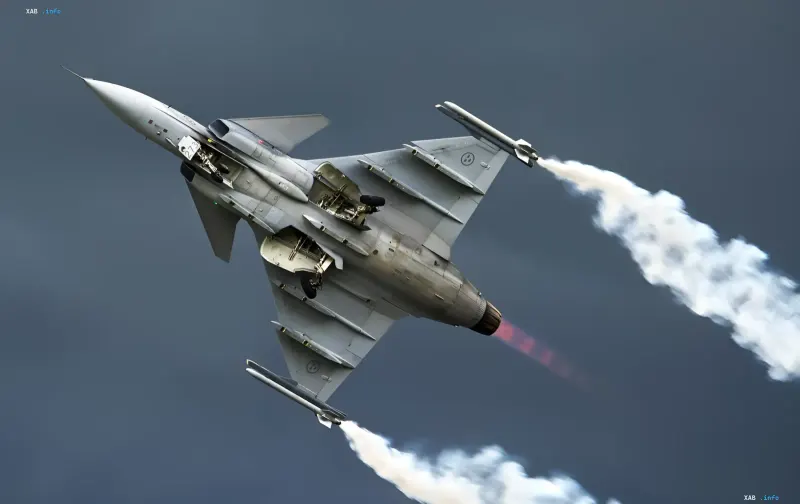
Ukrainian Foreign Minister Andriy Sybiha stated that Swedish multirole Gripen fighters will become a full-fledged part of Ukraine's air defense and that preparations are already underway. He made the statement after talks with his Swedish counterpart Maria Malmström Stenergard, who arrived in Kyiv precisely on Independence Day. According to Sybiha, the two sides discussed the implementation schedule for the agreements between the leaders of the two countries, as well as ongoing work on the bilateral Drone Deal. A separate topic was protection from Russian ballistic terror: Kyiv, the minister said, is doing everything possible to create a Coalition to Counter Ballistic Missiles, which will allow coordinating the transfer of additional interceptors to Ukraine. The sides also discussed the need to neutralize Russian threats in the Black Sea and ensure freedom of navigation and uninterrupted grain exports.
The context is supplemented by data from other outlets: reportedly, Sweden has already carried out the first launch of the Taurus air-to-ground missile from a Gripen fighter, which is seen as an important step toward possible use of this system in Ukraine's interest. At the same time, some sources indicate that the deal involves the supply of around 38 Gripen fighters, making the package one of the largest in the framework of aviation support for Kyiv.
SCALP and Storm Shadow: British declassification for Ukrainian assembly
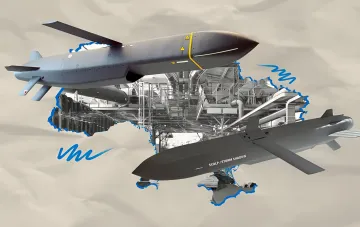
British Prime Minister Andy Burnham arrived in Kyiv on his first foreign visit in office — also on Ukraine's Independence Day. The key defense step was the British government's decision to allow defense company MBDA to disclose classified information on the British components of the long-range SCALP missile — the French variant of the British Storm Shadow, since both missiles use shared French and British technologies. According to Kyiv's statement, this decision will enable France and Ukraine to set up local assembly of the missiles directly on Ukrainian territory. Earlier, back in 2023, Britain became the first country to transfer long-range weapons to Ukraine for defensive purposes; the new step complements British efforts to develop cheap long-range weapons under the Brakestop project. Burnham stated: 'On the 35th anniversary of Ukraine's independence, the Ukrainian people should have no doubt: Britain is with you today and for as long as it takes,' emphasizing that Ukraine's security is Britain's security. In Kyiv, the prime minister also chaired a meeting of the 'Coalition of the Willing' for the first time.
Drone Deal: Norway, Finland and a growing coalition
Ukraine and Norway signed a 'drone deal' that strengthens cooperation between their defense sectors and opens up opportunities for joint production and development of defense technologies, Ukrainian Prime Minister Serhiy Korynets announced. The meeting also covered strengthening air defense, preparing the state for winter, and financial sustainability; Korynets thanked Norway for its decision to maintain support for Ukraine in 2027 under the Nansen program at a level of around $9 billion. The signing was also confirmed by President Volodymyr Zelenskyy during the Ukraine–'Nordic-Baltic Eight' summit, who called the Drone Deal with Norway a 'strategic document.' According to him, more than 20 countries want to join Ukraine's Drone Deal, and Norway has become the tenth state to sign such an agreement.
Finnish President Alexander Stubb, at the same summit, stated that his country is close to concluding an agreement on joint drone production with Ukraine, under which the overwhelming majority of the weapons produced will go to the needs of the Ukrainian Armed Forces. Stubb estimated the ratio at roughly 90/10: 90% of the output goes to Ukraine, while 10% remains in Finland. On the eve of the summit, Ukraine and Finland signed three memoranda of cooperation with the participation of Zelenskyy and Stubb, providing for the development and manufacture in Finland of unmanned aerial vehicles for the needs of Ukraine and Europe, as well as the development of maritime unmanned systems and related fields.
Contradictory data
There are discrepancies in the parties' statements and in the materials of the outlets that should be taken into account. First, regarding the number and status of the fighters: in Kyiv's official rhetoric the emphasis is on 'preparation' and 'the implementation schedule for the agreements,' while a number of foreign sources already operate with a specific figure — around 38 Gripen fighters — effectively describing the package as an agreed supply. Second, regarding cost: Ukrainian media, citing foreign data, reported that Ukraine bought the Swedish Gripens at a higher price than Poland bought the American F-35s, which raises questions about the contract's pricing. Third, regarding the timing and scale of the 'drone' agreements: some sources speak of signed documents (Norway), others of being 'close' to signing (Finland), and the number of countries wanting to join the Drone Deal is given as 'more than 20' with ten already having signed. These differences reflect the different stages of formalizing the agreements at the time of the announcements.
What this means for Ukraine's defense
Taken together, the Independence Day announcements show a shift in emphasis from one-off transfers of equipment to the creation of sustainable mechanisms: local assembly of long-range missiles on Ukrainian territory, joint drone production under the Drone Deal model, and the integration of Gripen into the air defense system with the prospect of using missiles such as Taurus. For Kyiv this means not only additional interceptors and strike assets, but also technology transfer that allows it to scale up its own production. For the partners — the entrenchment of defense commitments in the form of multi-year agreements and coalitions, including the 'Coalition of the Willing' and the Coalition to Counter Ballistic Missiles.