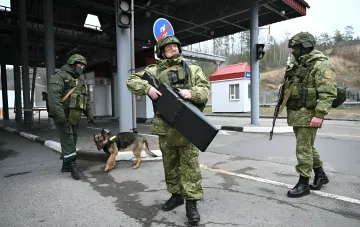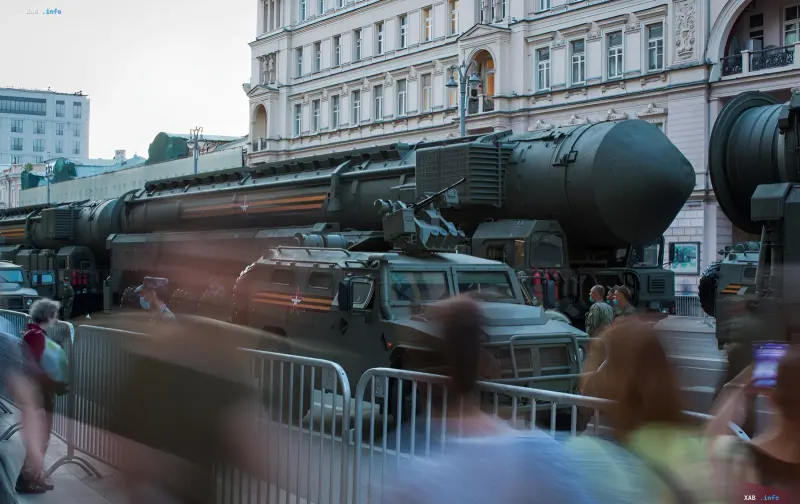
Oleg Ivashchenko, Head of the Main Directorate of Intelligence (GUR) of the Ministry of Defense of Ukraine, stated that units of the 101st Missile Brigade of the Russian Armed Forces are deployed on the territory of Belarus, which is equipped with the medium-range 'Oreshnik' missile system. According to RBC-Ukraine, he said this in an interview with Ukrinform. In the assessment of Ukrainian intelligence, Moscow is not giving up its attempts to directly drag Minsk into the hostilities and is seeking to use the territory and military resources of the neighboring state to expand the geography of the war against Ukraine.
Deployment of the 101st Missile Brigade and the 'Oreshnik'
The key element of Ivashchenko's statement was the reference to a specific formation — the 101st Missile Brigade, which carries the 'Oreshnik' system. The deployment of such a unit on foreign territory, in the logic of Ukrainian intelligence, means not merely logistical support, but the actual integration of the Belarusian space into the Russian strike potential system. This confirms the thesis that Russia views Belarus not as a neutral neighbor, but as part of its military infrastructure, from which strikes on Ukrainian targets can be launched.
Threat from the North and Relays for 'Shaheds'
At the same time, Ivashchenko emphasized that Ukrainian intelligence currently does not detect any signs of the Belarusian armed forces being ready for a direct invasion, and the threat from the northern border remains minimal. He separately cited as a source of concern Belarus's permission for the deployment of radio signal relays, which, according to GUR data, guide Russian 'Shahed'-type strike UAVs onto civilian targets and critical infrastructure in Ukraine. Thus, even without the participation of Belarusian soldiers in combat operations, the country's territory, in the assessment of Kyiv, is being used to coordinate drone attacks.
The Question of Minsk's Control over Its Own Territory
Ivashchenko placed particular emphasis on the legal and political aspect: even if Minsk formally did not grant permission for the deployment of the 'Oreshnik', the very fact of the presence of this weapon, in his words, is direct evidence that the Belarusian authorities no longer control the activities of the Russians on their own territory. This casts doubt on the thesis of the sovereign nature of Belarusian consent to the presence of Russian troops and shifts the discussion to the plane of de facto control over military facilities.
Contradictory Data
Here there are two non-matching lines. On the one hand, Ukrainian intelligence claims that there are no signs of Belarus preparing to enter the war and that the threat from the north is minimal, while at the same time it notes the deployment on its territory of a strategic Russian missile unit. On the other hand, the question of whether Minsk gave official permission for the deployment of the 'Oreshnik' remains open: according to the GUR version, no permission was given, which is interpreted as a loss of control by the Belarusian authorities. The official positions of Moscow and Minsk on this specific fact are not provided in the available materials, so the assessment is based on the statement of one side — Ukrainian intelligence.
Context: Opposition Statements and 'Oreshnik' Components
In a broader context, the leader of the Belarusian opposition, Sviatlana Tsikhanouskaya, previously stated that Russia could use the territory of Belarus to intensify tensions and provocations against NATO countries. Additionally, the materials note that the Russian medium-range ballistic missile 'Oreshnik' now has almost no foreign components left, while many of them are produced by Belarus. The combination of these factors, in the assessment of Kyiv, increases the risks that the Belarusian space will be involved in the escalation of the conflict beyond its borders.