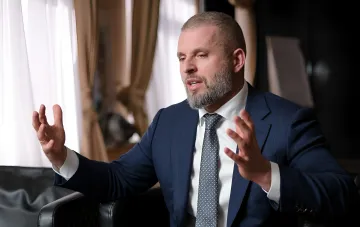
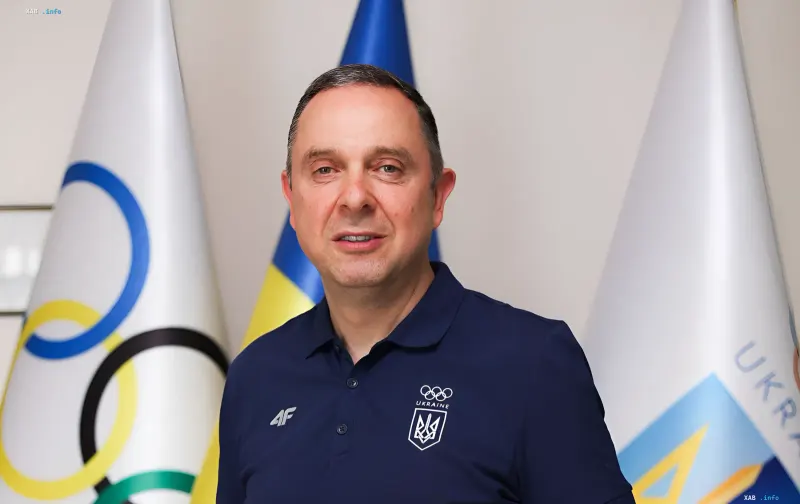
President of the National Olympic Committee of Ukraine Vadym Guttsait gave an extensive interview on the International Olympic Committee's new policy regarding the admission of Russian and Belarusian athletes to world championships. The NOC head emphasized that the Ukrainian side is waging a continuous struggle to prevent representatives of the aggressor states from participating in international events, cooperating with both sports officials and international federations. This topic remains a key challenge for the Ukrainian sports leadership in the current realities.
IOC Position and the Role of International Federations
According to Vadym Guttsait, the situation is complicated by the fact that after the IOC changed its recommendations, many international federations began using new easing measures due to a lack of understanding of the realities of the conflict in Ukraine. The NOC, together with the Ministry of Youth and Sports, regularly sends evidence against specific athletes involved in military operations. However, the degree of effectiveness of such measures varies: some federations approach answers formally or have biased leadership, while others, such as the figure skating federation, promptly respond to facts of aggression support and suspend violators.
Experience of the Paris Olympics and the Importance of Political Support
Recalling the Paris Games, the NOC head noted the successful experience of joint work with the IOC, thanks to which it was possible to apply strict admission criteria that excluded athletes associated with the CSKA and Dynamo clubs. However, new trends show that public sports organizations are not always able to resist pressure. In this regard, a direct political line is critically important: the active position of city mayors, prime ministers, and state presidents who implement principled bans on the ground or demand the strictest neutral status, as was the case at the rhythmic gymnastics competitions in Romania.
Contradictory Data
There are noticeable discrepancies in assessments of the prospects for the participation of Russian and Belarusian athletes in future international starts. On the one hand, official sports officials and softened IOC recommendations pave the way for the return of athletes in a neutral status subject to a number of conditions. On the other hand, the Ukrainian side insists on the complete isolation of representatives of the aggressor, pointing to the impossibility of an objective assessment of the 'silent consent' of athletes living under a harsh political regime. The issue of the effectiveness of international federations also remains controversial: some organizations severely suppress manifestations of support for the war, while others limit themselves to formal replies.
Future Tasks and Prospects for Winter and Children's Sports
Summarizing the results of his tenure and outlining tasks for the next four years, Vadym Guttsait emphasized that the IOC has not yet approved the new provisions as final. This leaves room for maneuver and the continuation of work to collect evidence of athletes' involvement in the conflict, especially in the occupied territories. In addition to the international agenda, the NOC continues to solve internal tasks, including funding issues, state prizes for medalists, and support for children's and winter sports, which face serious infrastructural and financial difficulties.