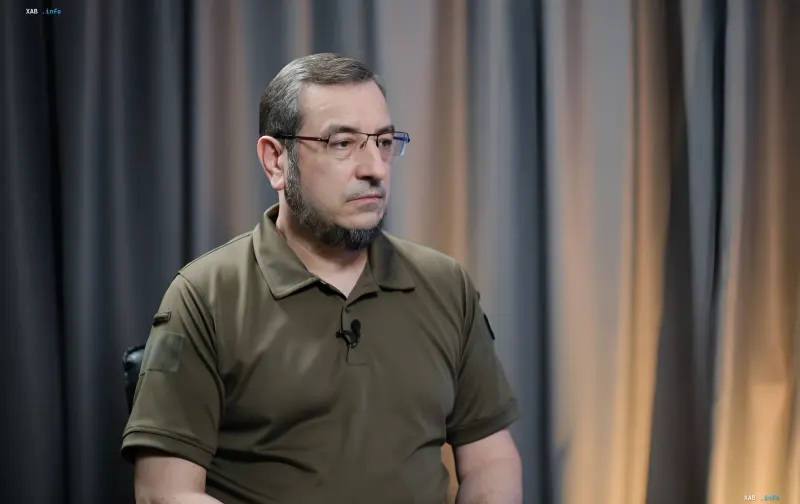
July 2026 entered the history of the Ukrainian war as one of the heaviest months for the air defense system. According to the Main Directorate of Intelligence of the Ministry of Defense of Ukraine, the Russian armed forces have reached unprecedented figures in the use of ballistic and hypersonic missiles. Major General Vadym Skibitsky, Deputy Head of the GUR, in an exclusive interview with RBK-Ukraine, revealed details of Moscow's tactical shift and the state of the Russian military-industrial complex.
Paradigm shift: betting on ballistics
The strategy of Russian attacks has undergone fundamental changes. If previously Moscow relied on combined strikes involving dozens of missiles of various types and hundreds of kamikaze drones to suppress air defense, then this year the priority has shifted to ballistic missiles. According to Skibitsky, this is due to a shortage of Patriot system interceptors on the Ukrainian side, forcing Russia to use more expensive and complex means of destruction to achieve a guaranteed effect.
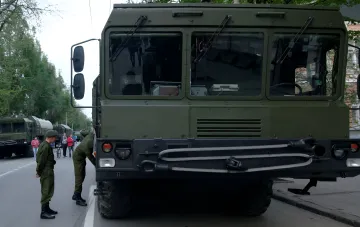
In July, the number of launched ballistic and hypersonic missiles (9M723 "Iskander-M", RM-48U from S-400, and "Zircon") amounted to 198 units. This is an absolute record for 2026. The growth dynamics were linear: from 61 missiles in April to 134 in June. The intervals between attacks decreased from ten days to weekly, and at peak moments — to a few days.
Overfulfillment of the defense order: production figures
The main indicator of the success of the Russian strategy is the ability of industry to maintain a high intensity of strikes. The GUR has documentary evidence of the fulfillment of the state defense order plans. As of August 3, 2026, Russia has already fulfilled the annual plan for the production of "Zircon" hypersonic missiles and modernized "Onix" missiles.
During the first seven months of the year, the enemy produced 33 "Zircon" missiles and 60 "Onix" units. The latter, originally created as an anti-ship missile, underwent modernization for striking ground targets, receiving increased range and an improved warhead. Overall, for the main types of weapons, the fulfillment of monthly plans is 110–120%. In particular, the plan for the production of Kh-101 cruise missiles in July was overfulfilled by 140%, and Kh-35 by 200%.
New threats and technical problems
In addition to classic missiles, Moscow is actively introducing new samples of weapons. This year, loitering munitions "Banderyol" and "Dan-T", launched from helicopters, appeared on the battlefield. Work is underway to adapt these systems for launch from aircraft. There is also active use of new reactive "Geranys" instead of mass waves of ordinary drones.
However, despite successes in missile building, the aviation component of strikes is decreasing. According to intelligence, Russia has encountered technical problems with cruise missiles and carriers: not all missiles launch successfully. Reserve aviation is being attracted as a backup, but the general trend indicates a shift in focus towards means for which there are stable supplies of components.