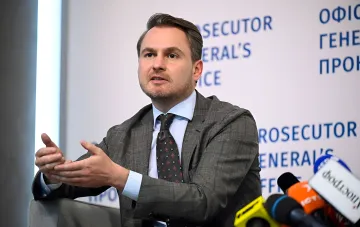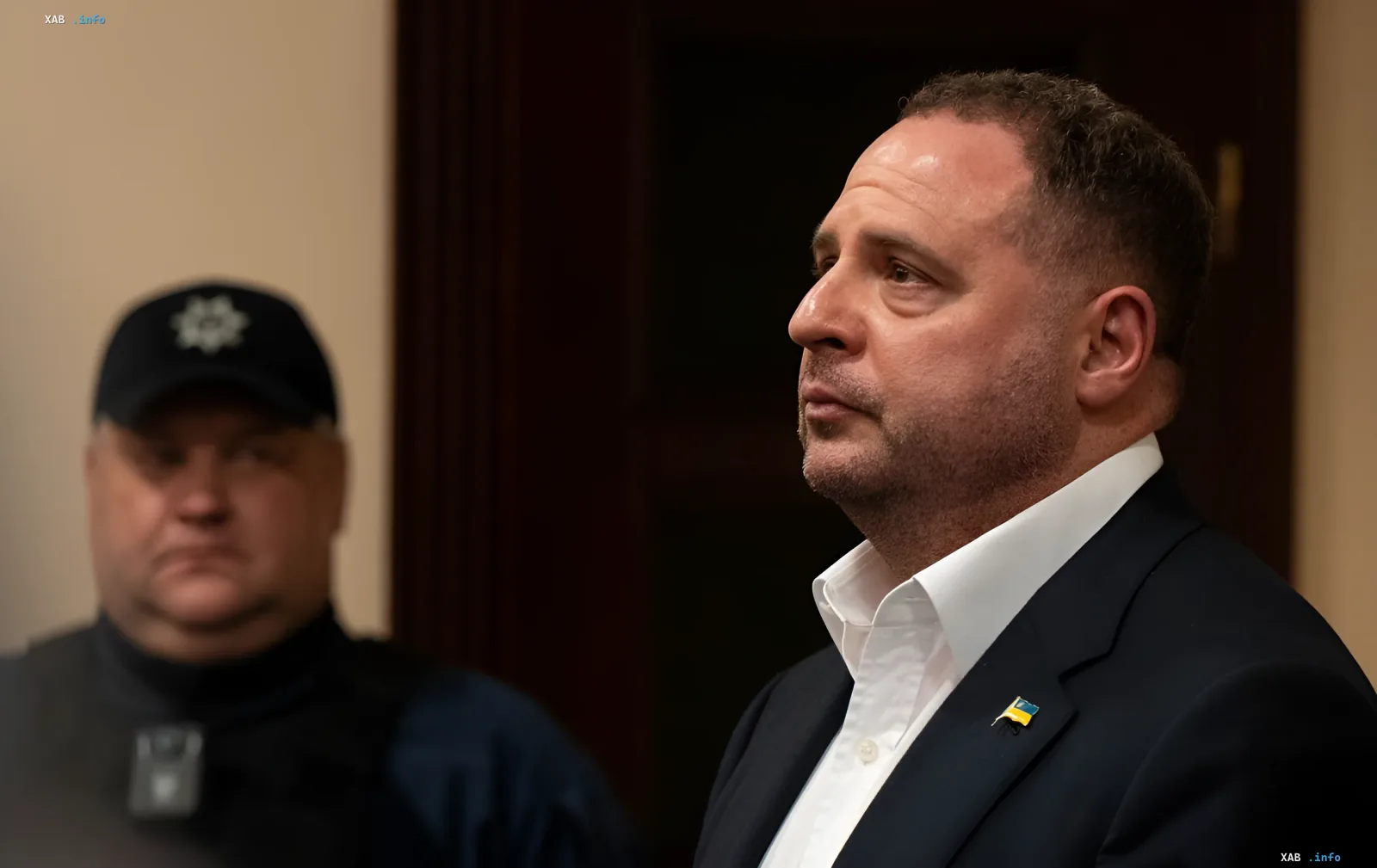
The High Anti-Corruption Court (HACC) partially granted the motion filed by a prosecutor of the Special Anti-Corruption Prosecutor's Office and extended the term of the procedural obligations imposed on the former head of the Presidential Office, Andriy Yermak, by a further 60 days. At the same time, the court refused to extend electronic monitoring: according to RBC-Ukraine, citing the HACC, an independent medical expert indicated a possible threat to the person's life and health from continued use of the electronic monitoring device. The court did not disclose the defendant's name in its ruling, but sources at the outlet confirm that the case concerns Yermak.
Which restrictions remain in place
Under the court's decision, Yermak is required to appear upon every request from a detective, a prosecutor, or the court, and to report any change of residence or place of work. He is prohibited from leaving the previously designated settlements, and his passports and other documents granting the right to leave and enter Ukraine must be surrendered for safekeeping. A separate restriction concerns communication: Yermak must refrain from contact with certain individuals specified in the court's ruling, including other suspects and witnesses in the proceedings related to the circumstances set out in the notice of suspicion.
Health as the basis for lifting monitoring
The court separately considered the question of extending electronic monitoring. The HACC reported that the opinion of an independent medical expert on the possible threat to life and health was one of the grounds on which the court refused to extend the corresponding procedural obligation. As a result, the electronic bracelet is no longer included in the list of restrictions Yermak must observe, while the remaining procedural obligations remain in force for the full term extended by the court.
Contradictory data
The chronology of the court's rulings on electronic monitoring appears contradictory at first glance and requires clarification. In late June 2026 (citing the newspaper Gazeta.ru) and in mid-August 2026 (citing mk.ru and pravda.com.ua), it was reported that the court had refused Yermak's defense a request to remove the electronic bracelet and to change the conditions of its use. At the same time, in the ruling reported by RBC-Ukraine in September 2026, the court had already refused to extend electronic monitoring, citing a medical opinion on health risks. Thus, the court's position changed over time: earlier refusals to remove the bracelet gave way to its cancellation on the basis of new medical data. The differing versions in publications of different dates reflect precisely this dynamic, rather than a contradiction within a single ruling.
Context: resignation and the 'Dynasty' case
As a reminder, in late November 2025 Andriy Yermak resigned as head of the Presidential Office against the backdrop of a corruption scandal surrounding Energoatom and the 'Midas' case. In May 2026 he was formally charged by the NABU and the SAP in the 'Dynasty' case: according to the investigation, the case concerns the possible laundering of funds obtained from deals at Energoatom through the construction of a residential complex near Kyiv. The court sent him to pretrial detention, but later Yermak posted a bail of 140 million hryvnias and was released.
Yermak is currently engaged in legal practice and the 'Advokat+' project, aimed at providing legal support to military personnel. Last month, a scandal erupted around the project after the army corps 'Charta' joined it.