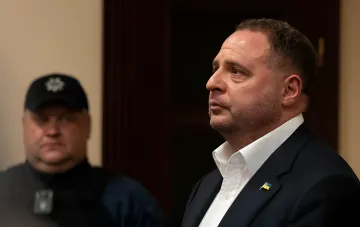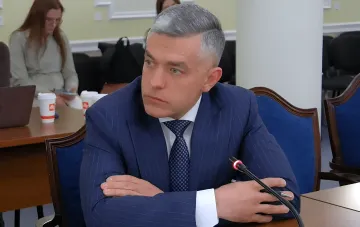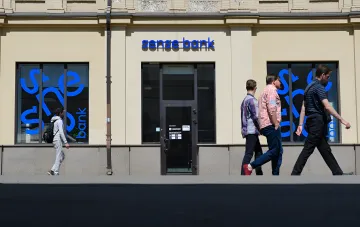


Dmytro Oleinyk, Deputy Head of the National Bank of Ukraine, presented preliminary results of the analysis of fund flows related to bail payments to the High Anti-Corruption Court (VAKS) during a session of the Temporary Investigative Commission (TIC). According to him, the regulator traced payment chains across four levels — from the direct payers to the VAKS to their counterparties and beyond — and established that not the entire volume of bail transfers was processed through Sense Bank. “To put it briefly, I will tell you that not all the bail was processed through Sense. We have now conducted the analysis down to the fourth level — that is, from the VAKS: who transferred to the VAKS, who transferred to those who transferred to the VAKS, and so on,” Oleinyk stated, emphasizing that no cash operations have been detected in the identified chains so far.
Four Unplanned Inspections and a Shift in Focus
The NBU is conducting four unplanned inspections of banks mentioned in the so-called “tapes” in the NABU case, through which funds for bail payments could potentially have been routed. It was precisely during this multi-level analysis that the regulator concluded that the identified payment chains include other banks to which the NBU has no fewer — and in some cases even more — questions than about Sense Bank. As a result, the initial narrative, in which attention was concentrated predominantly on a single credit institution, is substantially broadened: the regulator notes a more complex and distributed structure of transactions.
No Technological “Window” and Ongoing Inspections
Oleinyk emphasized that, at the current stage, the NBU has not detected any technical or technological “window” that could have been used to circumvent the established restrictions. At the same time, the regulator continues to inspect the systems used by Sense Bank and is requiring the bank itself, as well as the auditor EY, to carry out an independent review of access to the automated banking systems. An internal investigation is being conducted at the bank in parallel. The NBU acknowledges that assistance in opening accounts may have taken place, but it does not yet have confirmation that anyone deliberately disabled the established restrictions.
Context: Enhanced Supervision of Sense Bank in 2022–2026
Previously, the NBU published the results of its review of the supervisory actions report on Sense Bank for the 2022–2026 period. The regulator stated that the bank had been under enhanced supervision in recent years. This fact adds further weight to the current conclusions: if the bank was already in the zone of heightened attention of the supervisory authority, then the absence of a confirmed “window” for circumventing restrictions and the distribution of questions across several credit institutions indicate that the picture emerging from the investigation is substantially more complex than initially assumed.
Contradictory Data
In the public discourse prior to Oleinyk’s statement, the version that Sense Bank was the key — and in some interpretations the sole — channel for the flow of bail funds to the VAKS had dominated. The Deputy Head of the NBU’s statement directly calls this interpretation into question: the regulator did not establish that Sense Bank was the sole or primary bank for this channel, and moreover points to the presence of other participants in the chains with a comparable or higher level of issues. It is important to note, however, that the phrasing “did not establish” is not identical to a categorical “was not”: the NBU notes the absence of confirmed data on the dominant role of a specific bank, but does not rule out its involvement in the chains. In addition, the regulator emphasizes the preliminary nature of the conclusions — the inspections are ongoing, the internal investigation has not been completed, and the requirements imposed on EY and the bank have not yet been fulfilled. Thus, both sides — those who insist on the exclusive role of Sense Bank and those who point to the distributed nature of the operations — are currently working with an incomplete picture that the NBU intends to flesh out during the ongoing inspections.