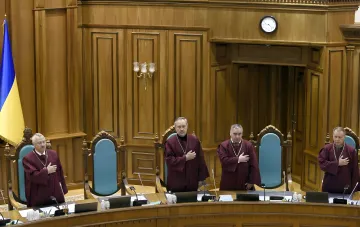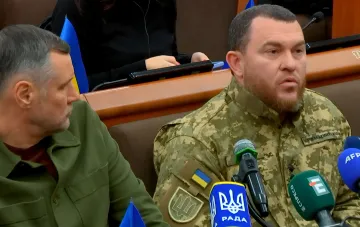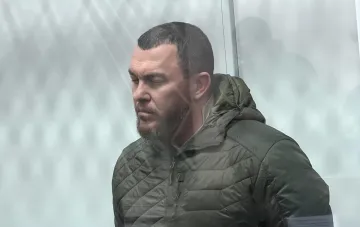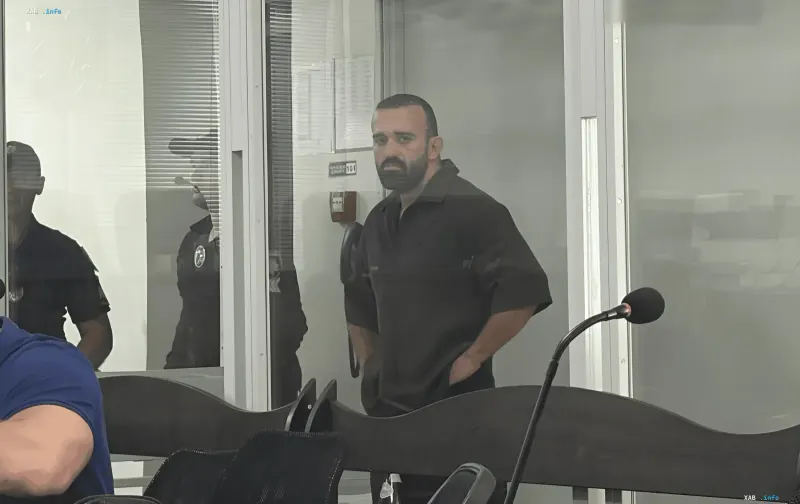
On November 18, 2026, the High Anti-Corruption Court (HACC) selected a custodial measure for Andriy Osipov, a defendant in the "Carthage" case currently being investigated by NABU and SAPO. According to investigative data, he is allegedly known as "Kriminal" (Criminal) in recordings released by anti-corruption authorities. The court upheld the position of the Specialized Anti-Corruption Prosecutor's Office and remanded the suspect in custody for 60 days—until January 16, 2027, inclusive—without the right to post bail. The decision was made in an open hearing: the defense's motion to hold the trial in closed session was denied.
Custodial Measure and Prosecution Arguments
The prosecutor justified the necessity of arrest without bail citing three main risks: flight abroad, illegal influence on witnesses and other accomplices, and the destruction or distortion of evidence. According to the prosecution, Osipov crossed the border 37 times and spent a total of about 300 days outside Ukraine, which the investigation claims confirms the flight risk. Among additional arguments, the prosecutor cited recordings of conversations with law enforcement, correspondence regarding upcoming searches at a call center in Odesa, and the suspect's refusal to provide passwords to his phones during detention. Meanwhile, as media report, Osipov stated in court that he does not refuse to cooperate with the investigation. Previously, he had already been held in custody within the framework of another case where he is accused of extorting one million dollars for a promise to prevent the extradition of a Russian citizen.
'Kriminal' and the Organization's Structure
According to the prosecutor, the criminal organization was led by Andriy Osipov ("Kriminal") and Egor Burkin ("Meksikanets"), with members including SBU, National Police, and prosecutor's office employees. Organization members perceived Osipov as an SBU confidant capable of "solving any issue": he had a separate phone for communicating with intelligence officers, and contacts were listed under pseudonyms. Osipov also used the services of an armed driver—an off-the-books SBU employee—who crossed the border unimpeded and moved about during curfew. According to the investigation, the group encompassed more than 50 fraudulent call centers, as well as drug trafficking, currency counterfeiting, kidnappings, and torture; investigators recorded the defendants' ties to the Russian FSB and discussions regarding an acid attack on journalist Denys Bihus.
Cover-ups: SBU General, National Police, and Own Force
To cover up the organization's activities, Osipov, according to the prosecutor, recruited SBU General Serhiy Duka, whom he had known since at least 2022; no later than the beginning of 2026, a National Police officer named Tsenov was added to the scheme, who, according to the investigation, ensured the call centers' operation and warned of investigative actions. Another defendant—an officer of the National Police directorate in the Kyiv region, Demyanchuk—transferred information from state databases to members, instructed them on conspiracy, and reported on potential searches. Furthermore, Osipov created his own security structure whose members, according to the prosecution, attacked and tortured competitors and persons hindering the suspects' activities. The prosecutor also noted Osipov's acquaintance with Vasyl Malyuk, who headed the SBU from February 7, 2023, to January 13, 2026.
Property and Lifestyle
For transport, Osipov used a Toyota Land Cruiser Prado with cover plates. According to the investigation, he purchased a Porsche 911 worth 14 million hryvnias and a Porsche Panamera for 7.8 million hryvnias, both registered to his common-law wife; additionally, he used an Audi S8 with a market value of about 5.5 million hryvnias. Part of the criminal proceeds, according to the prosecutor, was spent on Patek Philippe, Audemars Piguet, and Rolex watches. The total value of the legalized property, by the prosecution's estimate, exceeds 42 million hryvnias.
Context: Operation 'Carthage' and the Duka Resonance
The "Carthage" case became one of the most high-profile anti-corruption proceedings: on November 4, NABU and SAPO announced the exposure of a criminal organization comprising at least 12 people that had operated for years under the cover of high-ranking law enforcement officials from the SBU, National Police, and the Prosecutor General's Office, releasing relevant recordings. The situation surrounding SBU General Serhiy Duka caused a separate stir: according to SAPO prosecutor Mykola Karas, during a search of his apartment while he served as the First Deputy Chief of the SBU's Economic Counterintelligence Department, he threatened detectives with a pistol and smashed equipment with a hammer, while "Alpha" fighters tried to drive the general away. On November 6, the HACC sent him to custody with the possibility of a 65 million hryvnia bail, which, according to media and his lawyer, was raised by 1,113 payers; on November 13, Duka was released from the pre-trial detention center, with an unusually large number of people in military uniform, including "Alpha" special unit fighters, gathering outside.