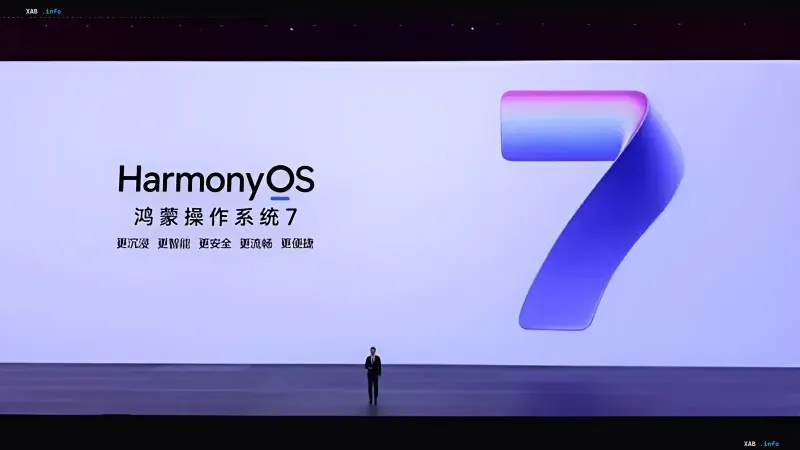
The HarmonyOS operating system, developed by Chinese company Huawei, has surpassed 100 million users. With this milestone, the system now trails only Android and iOS, securing the third position among mobile platforms. The company attributed this achievement to the consistent development of the software platform and the expansion of the compatible device ecosystem. According to Chinese outlet Mydrivers, Huawei has decided to celebrate this milestone with a special employee recognition program.
From smart electronics to mobile platform
Development of HarmonyOS began in 2019, with the platform initially focusing primarily on smart electronics. Only later did the operating system appear on smartphones and tablets, eventually expanding to wearables and Internet of Things (IoT) devices. This phased approach allowed Huawei to build a unified software foundation, which later became the basis for the widespread adoption of the system on consumer devices.
Transition to a fully native platform
A key milestone was the transition to HarmonyOS Next, also known as HarmonyOS 5. In this version, Huawei removed all AOSP libraries previously used for compatibility with Android-based applications and committed fully to its own proprietary software. The system integrated its own microkernel, the SoftBus distributed bus, and the Ark compiler. Simultaneously, third-party developers and major tech companies began actively supporting the new platform by releasing native applications.
HarmonyOS 7 as a driver for installation growth
An additional growth driver was the recently released HarmonyOS 7, officially unveiled at the annual developer conference. The platform received a new "spatial" design language with 3D and lighting effects, enhanced artificial intelligence integration via the Celia assistant, and the updated HarmonyOS Intelligent Agent Framework 2.0, which Huawei claims successfully handles over 90% of complex queries. Additional personalization features contributed to an increase in installations across smartphones, tablets, wearables, and MateBook computers.
User base dynamics and ecosystem recognition
User base growth has been steady: as of late September 2026, the number of HarmonyOS installations on Huawei smartphones exceeded 90 million, with a daily increase of about 177,000 users. Analysts at Counterpoint Research noted at the time that the system ranked third among mobile operating systems behind Android and iOS, with its primary audience concentrated in China. Surpassing the 100 million installation mark has confirmed and strengthened this position.
Huawei's strategy: People, developers, and resources
According to Mydrivers, as part of the reward program, more than 60,000 employees who contributed to the development of the HarmonyOS ecosystem will receive honorary awards and additional bonuses for their contribution to building the proprietary platform. Huawei emphasizes that the success of a mobile operating system depends not only on technical specifications, but also on the size of the user base, the developer community, and accumulated resources. Therefore, the company continues to focus heavily on attracting third-party developers and creating applications for its devices.