The scientific community has received a powerful tool to solve the problem of information storage. Researchers from Harvard University have developed a fundamentally new way to create artificial DNA. This technology promises to make the process of synthesizing molecules significantly cheaper, more accurate, and, importantly, more environmentally friendly.
From Chemistry to Biology: The Evolution of Synthesis
Artificial DNA has long ceased to be science fiction. Today, it is a working tool actively used in medicine: from accurate disease diagnosis to genome editing and the development of anti-cancer drugs. However, until recently, the creation of such molecules was fraught with serious difficulties.
Traditional methods of "assembling" DNA relied on complex chemical technology. The process required the use of hazardous organic solvents, left toxic waste behind, and necessitated expensive protective equipment. This made production expensive and harmful to the environment.
Harvard scientists have proposed a radical alternative — enzymatic synthesis. In this process, natural protein enzymes build DNA chains directly in a normal aqueous solution, eliminating the need for aggressive chemistry.
Microchip Technology and Acidity Control
The main technical problem of enzymatic synthesis remained accuracy. For enzymes to assemble DNA without errors on tiny areas of a microchip, it was necessary to instantly and locally change the acidity level. Any leakage of acid onto a neighboring area led to the spoilage of the entire molecular chain.
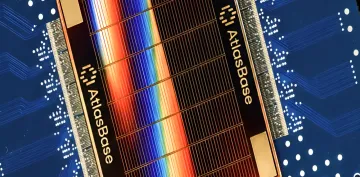
To solve this problem, engineers created a special microchip equipped with 64 independent micro-zones. Each is equipped with two ring electrodes that allow for controlling the chemical environment with jewel-like precision.
Thanks to this architecture, the chip is capable of simultaneously assembling 64 absolutely different molecular sequences up to 39 nucleotides long, without confusing the elements with each other.
Recording Data in Molecules
To test the system's functionality, researchers conducted an experiment to encode digital information. 64 unique DNA chains were generated on the chip, in the sequence of which a text file of 169 bytes was embedded.
Although this volume of data is negligible compared to the memory of a modern smartphone, the experiment proved a fundamental possibility: digital data can indeed be reliably stored inside biological molecules.
Scientists emphasize that the volume of information in the world is growing daily, and classic media — hard drives and flash drives — may soon fail to cope with this flow. DNA molecules are capable of storing terabytes of data in a tiny drop of water for thousands of years.
The new technology paves the way for this process to become not only possible but also environmentally safe for the planet, replacing toxic chemical plants with the biological laboratories of the future.