The world of biotechnology and additive manufacturing is experiencing a breakthrough. Scientists have presented a fundamentally new material for 3D printing capable of reproducing the complex properties of living tissues. The development, named JIBEs (Jammed Interconnected Bilayer Emulsions), opens the way to creating artificial organs, neural computers, and high-tech industrial filters.
Imitating living matter
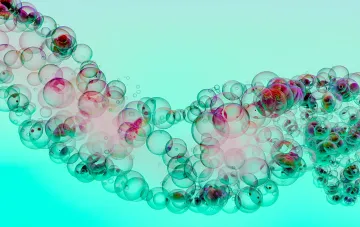
The study, published in the prestigious journal Nature Materials, describes a material that works like a selectively permeable membrane. Unlike traditional polymers, JIBEs mimics the cellular structure of the human body. Tissues printed on a 3D printer are capable of sorting and filtering substances, allowing some molecules to pass while retaining others, which is a key function of living organs.
Technology accessible to everyone
One of the main problems in the field of bioprinting has always been production speed and the complexity of scaling. The authors of the study found an elegant solution by abandoning complex laser setups. To create large volumes of material, ordinary mixing and centrifugation are used.
The process takes only a few minutes. Each drop of material is covered with an ultra-thin shell that accurately reproduces the merging of living cells in internal organs. This means that the technology can be implemented in any laboratory with basic equipment, without the need for sterile conditions or expensive inventory.
From medicine to lithium mining
The flexible and biocompatible structure of JIBEs allows it to be used in a wide variety of fields:
- Medicine and robotics: The material is ideal for growing human organ implants. In addition, it is used to create soft robots that can be used in surgery or rescue operations without harming living tissues.
- Neuroengineering: Embedding special proteins allows the material to conduct ionic currents. This opens up prospects for creating neural computers whose architecture will mimic the workings of the human brain.
- Industry and ecology: Special modifications of the material are capable of selectively filtering substances. The technology is already being tested for the extraction of lithium and rare earth elements, as well as for the purification of industrial wastewater from ammonia.
Patents and government support
Researchers Aida Fika and Manish Kumar have already patented this method. Work on the implementation of lithium mining technologies is being carried out in cooperation with the Advanced Research Projects Agency-Energy (ARPA-E) of the U.S. Department of Energy. This confirms not only the scientific but also the high economic significance of the discovery.