A breakthrough has occurred in the world of military technology and engineering that could radically change the rules of engagement in modern warfare. Scientists have developed a fundamentally new type of camouflage material — a 3D cloak capable of completely hiding the thermal signature of objects from thermal imagers. The study, published in the prestigious scientific journal Nature Communications, describes a technology that does not merely block radiation but manages heat flows.
How "Thermal Camouflage" Works
The essence of the novelty lies in the physical principle of redirecting heat. Instead of trying to isolate the object and create a "cold spot" that is easily detected by sensors, the new material directs infrared radiation around the protected surface. The thermal wave smoothly glides around the outer shell and reconnects on the other side, creating the illusion of continuous space.
On a thermal imager screen, the surrounding temperature landscape looks absolutely natural, without any distortions. The object under the cloak becomes invisible, as its temperature contour does not disrupt the general background.
Technical Features and Structure
The development is free from the limitations inherent in previous prototypes. Early versions of protective screens worked only in two dimensions or at a fixed angle. It was enough to change the position of the sensor for the camouflage to disappear. The new technology, thanks to complex mathematical modeling of heat transfer, provides protection in three-dimensional space.
The structure of the "cloak" represents a complex engineering system:
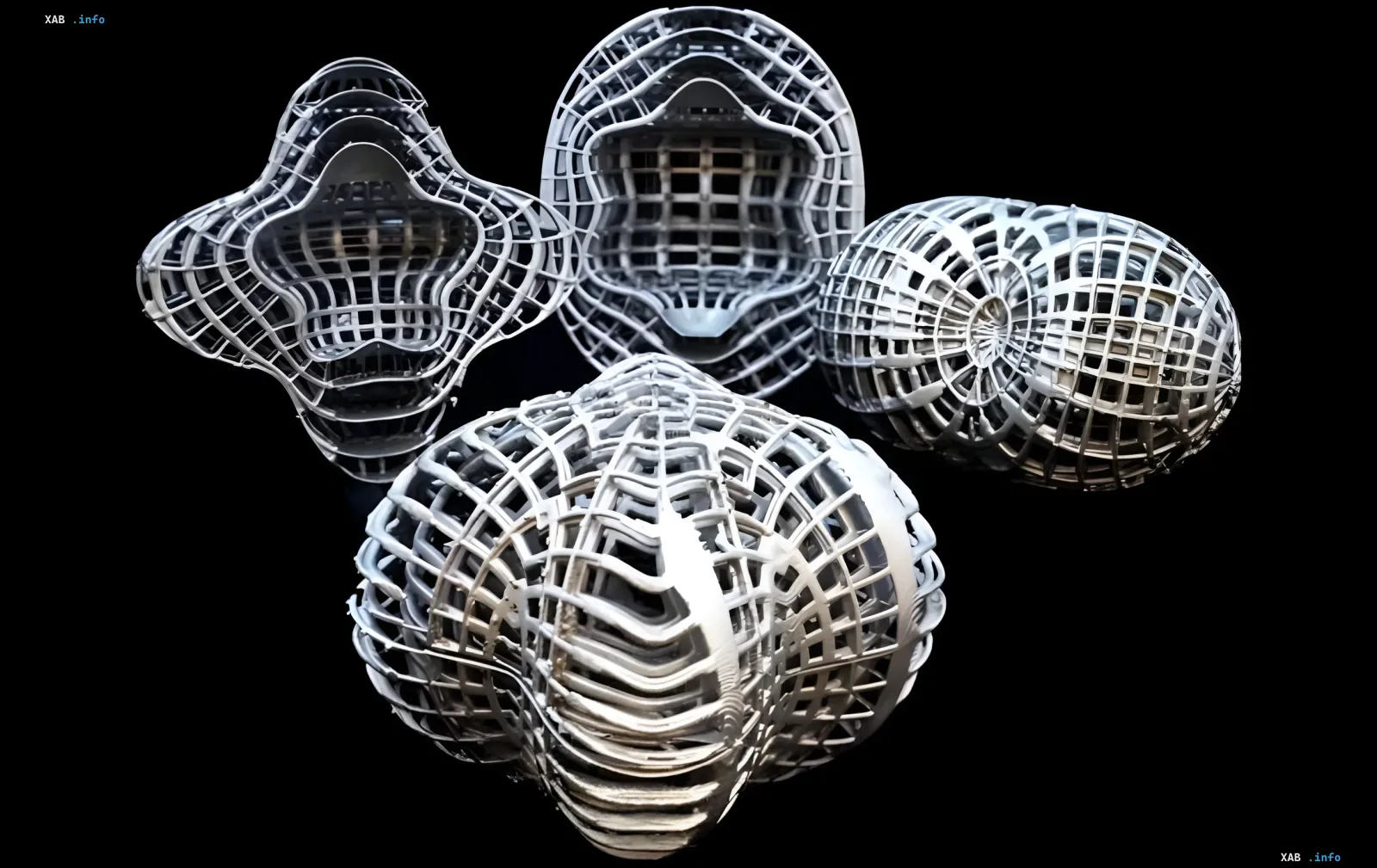
- Frame: The base is manufactured using 3D printing from aluminum. The lattice has the shape of high-tech honeycombs and possesses ultra-high thermal conductivity.
- Filler: The voids of the metal structure are filled with a rubber-like material with ultra-low thermal conductivity, applied by injection molding.
- Adjustment: Three-dimensional adjustment of the lattice size allowed scientists to finely tune the local thermal conductivity at every point of the device.
Successful Tests on Complex Objects
During experiments, the material was tested under conditions of extreme temperature gradients. To prove the universality of the technology, researchers successfully concealed objects with extremely complex geometry, including an accurate 3D model of a human head.
The results showed that the temperature inside the camouflaged zone remained stable and uniform, fully protected from external temperature fluctuations.
Military and Civilian Applications
In the defense sector, this development is of critical importance. Tanks, drones, and personnel will be able to move across enemy territory, remaining invisible to thermal sensors and aerial surveillance equipment. This opens up new possibilities for stealth maneuvering and the survival of equipment.
However, the potential of the technology goes far beyond military needs. In the field of consumer electronics, the "cloak" could change the principles of heat distribution inside miniature microchips. The technology will allow safely diverting destructive hot spots from fragile components, extending the lifespan of gadgets.
The Future of "Smart" Materials
Developers are already working on the next generation of devices. New materials will be able to independently record the internal heat generation of an object and dynamically dissipate this energy when necessary. According to researchers, this will allow masking even the operating engines of military equipment, which are traditionally the most visible targets for thermal imagers.