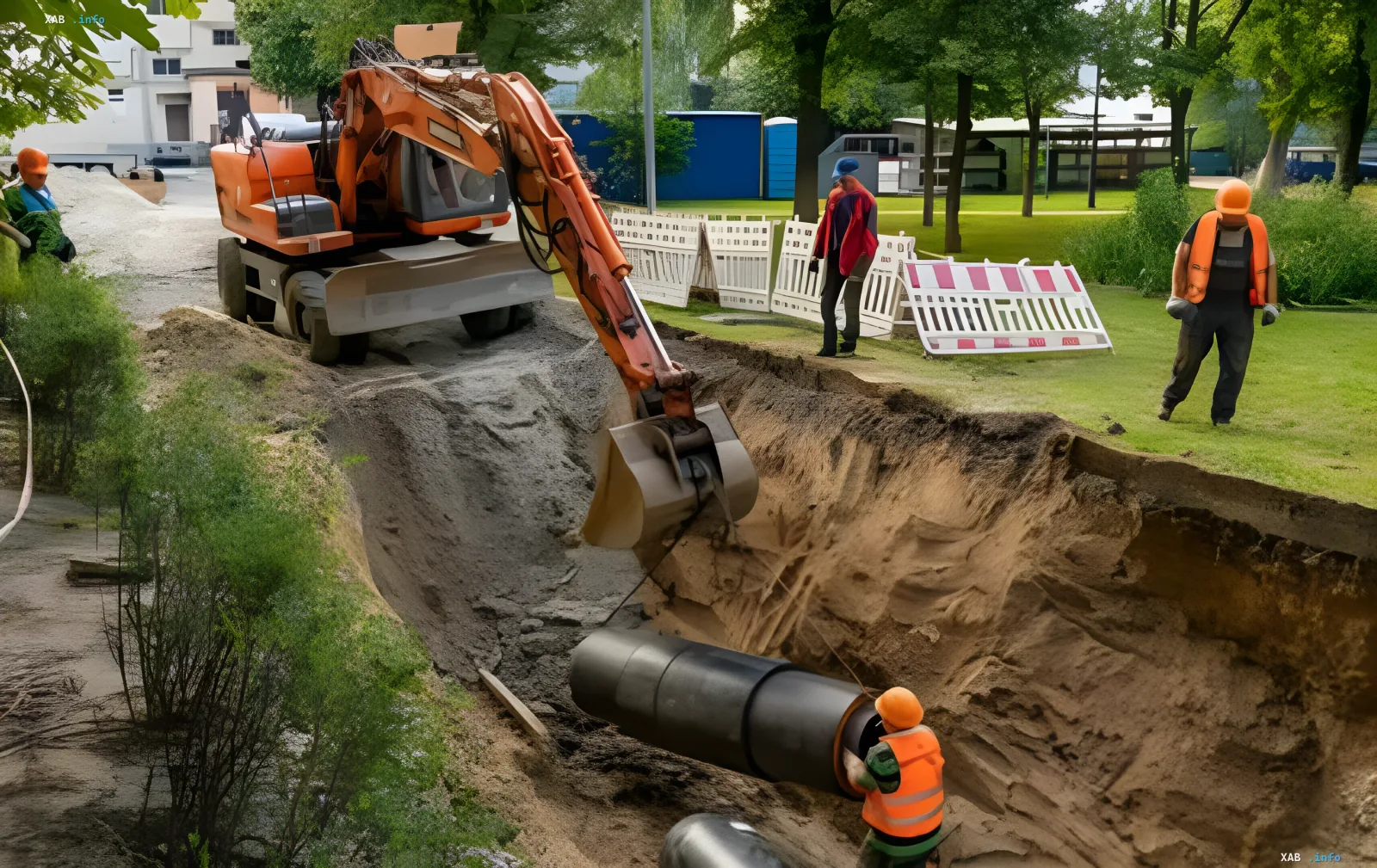
Kyiv has reached a compromise on the controversial issue of building a new heat network for the Teremky-1 and Teremky-2 residential districts. Following a meeting of city officials, representatives of the academic community, and local residents, a decision was made to implement the base construction project with maximum preservation of greenery. This was announced on September 1, 2026, by Petr Panteleev, First Deputy Head of the Kyiv City State Administration (KCSA), who emphasized that specialists had verified the proposed solutions for compliance with building codes and technical requirements, and assessed the timelines and complexity of the work.
Three Routing Options: Why the Alternatives Were Rejected
Specialists considered three options for laying the heat pipeline. The first — along Teremkova Street. However, as explained by Mikhail Kyrychenko, Candidate of Technical Sciences and Associate Professor of the Heat Engineering Department at the Kyiv National University of Construction and Architecture, implementing this route would require relocating existing utilities: the pipeline intersects with sewage, gas and water mains, electrical cables, and communication lines. In addition, the only route for vehicular traffic would have to be closed approximately once a year. The second option — laying the pipeline along the duplicate road of Academician Glushkov Avenue. In this case, the length of the heat pipeline would increase by approximately 50%, and some of the engineering solutions did not meet the requirements of state building codes, making the route unfeasible in its proposed form.
The Base Project — the Only Realistic Option
Andriy Borysenko, Doctor of Technical Sciences and Professor of the Thermal and Alternative Energy Department at the National Technical University of Ukraine "Igor Sikorsky Kyiv Polytechnic Institute," emphasized that the main goal of the project is to provide Teremky with backup heat supply. "Having heard the opinions of all those present and relying on my own expertise and experience, I can say that the only realistic project that can be implemented in a relatively short time remains the base project, which has already passed the expert review," he noted. The preliminary review confirmed that alternative routes would have required a significant delay in the timeline and the closure of key transport routes.
Why the Holosiivskyi District Needs a New Heat Network
The new infrastructure is critically important for the Holosiivskyi district: it will provide backup heat supply to nearly 200 buildings in the event of emergencies or damage to TPP-5. According to previously published data, this concerns backup heat supply for more than 200,000 residents of the district. When agreeing on the route, the issue of maximum preservation of greenery was considered separately, taking into account public recommendations, which became a key condition of the final decision.
Contradictory Data
Different official statements contain varying quantitative assessments of the coverage: in one case it is stated as "nearly 200 buildings," in another — as "more than 200,000 residents." These figures do not formally contradict each other, as they refer to different units of measurement (buildings versus population); however, the exact number of buildings to be connected to the backup heat network is not unambiguously fixed in public statements. In addition, the initial reports featured the phrasing "more than 200,000 residents," whereas in Panteleev's later comments the emphasis is placed specifically on "nearly 200 buildings," which may indicate a refinement of the project's scale during the public consultation stage.