On August 6, 2026, in the height of the summer season, thousands of passengers across Europe and the CIS are facing the same problem: a train ride without a climate control system turns into a test of endurance. Heat, stuffiness, lack of fresh air — all this can not only spoil the impression of the journey but also cause serious harm to health. Children, the elderly, and pregnant women are particularly vulnerable.
Portable Fan: Your Personal Oasis of Cool
One of the most effective measures to combat the heat on a train is using a compact portable fan powered by batteries or rechargeable accumulators. This small gadget does not take up much space in a bag but can create a personal zone of coolness. Experts recommend directing the airflow towards the face and décolleté — this helps instantly ease breathing and reduce the feeling of suffocation. It is important to choose models that can be recharged from a power bank or to have a spare set of batteries so the device works throughout the journey.
Cooling via Pulse Points: A Scientifically Proven Method
When the heat becomes unbearable, a simple but effective technique comes to the rescue: moisten a clean handkerchief or small towel with cool water and apply it to the back of the head, neck, elbows, or wrists. It is in these areas that extensive blood vessels pass, so local cooling of pulse points quickly lowers the overall body temperature. Thermal water in the form of a spray also works excellently — it should be periodically sprayed on the face and hands for refreshment.
Proper Hydration: What You Can and Cannot Drink
Categorically avoid sweet carbonated drinks, coffee, and strong tea while traveling — they only exacerbate dehydration and create excessive strain on the heart. Your best choice is ordinary non-carbonated water at room temperature. For a better refreshing effect, add a few slices of lemon, cucumber, or a fresh mint leaf to the bottle. Drink in small sips every 15–20 minutes — this will help maintain fluid balance and prevent overheating.
Clothing and Footwear: Choose Natural Materials
Synthetic fabrics are strictly forbidden in a suffocating train. Wear loose items made of natural cotton, muslin, or linen for the journey — they allow the skin to breathe and do not retain moisture. Footwear should also be light and open. Be sure to take off closed sneakers and change into comfortable slippers so your feet can rest and not overheat. This is especially important for children, whose thermoregulation is not yet fully formed.
Contradictory Data
According to sources, in early August 2026, about 300 passengers in Milan were stranded in a train without air conditioning at temperatures above 35°C (Source ID 1). In Germany, more than 600 people found themselves in a similar situation with 40-degree heat (Source ID 3). However, a Ukrainian passenger with an infant, whose story was published on Focus.ua (Source ID 2), claims that such conditions are "illegal" and require regulatory intervention. Meanwhile, railway operators in several countries cite technical failures and a lack of budget for wagon modernization. Thus, while the fact of train overheating is confirmed, legal liability and response measures remain a subject of debate.
Recommendations for Family Trips
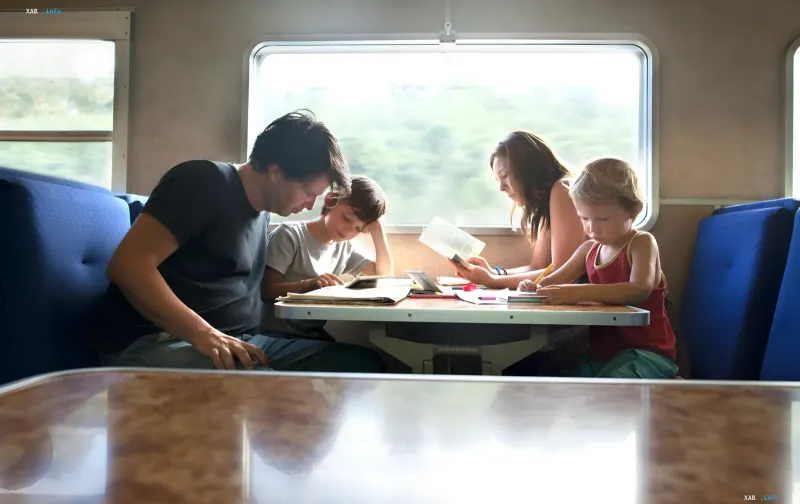
If you are traveling with children, as in the photo above — where a family spends time at a table in the carriage, engaging in creativity and reading — it is especially important to prepare everything necessary in advance. In addition to a fan and water, bring wet wipes, sunglasses, a hat, and a light blanket in case of sudden temperature changes. It is also recommended to plan trips for morning or evening hours when the heat is less intense.
Remember: comfort on the move is not a luxury, but a necessity. Proper preparation can turn even the hottest journey into a safe and pleasant adventure.