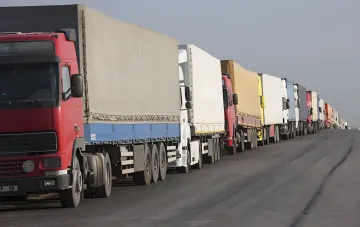
Temporary restrictions on the movement of heavy transport have been introduced in Kyiv. The reason for these measures is the extremely hot weather, which poses a threat to the road surface. The restrictions come into force during periods when the air temperature reaches +28 degrees Celsius and above.
According to the Patrol Police, the ban applies to trucks with an actual weight of more than 24 tons. Additionally, the movement of vehicles with an axle load exceeding 7 tons is restricted. These measures are aimed at preventing the formation of ruts and the destruction of asphalt under the influence of high temperatures and heavy wheels.
Where drivers can wait out the heat
Special zones for temporary parking have been provided for logistics professionals and drivers whose routes pass through the capital. Drivers can stop at sites located in the road reserve strips, as well as on territories adjacent to road service facilities. This will allow trucks to safely wait for the air temperature to drop.
The Patrol Police of Ukraine has promised to promptly inform the public about the lifting of restrictions. Relevant messages will be published in the department's official Telegram channel immediately after weather conditions allow movement to resume.
Weather forecast: thunderstorms and the return of heat
The weather situation in Ukraine remains unstable. After a prolonged period of scorching heat, meteorologists forecast a brief cooling period expected on July 28. The passage of atmospheric fronts will bring thunderstorms, gusty winds, and a temporary drop in temperatures to the country.
However, this lull will be short-lived. At the end of July and the beginning of August, the weather will change under the influence of the interaction of atmospheric fronts and an anticyclone. After a series of rains and thunderstorms, meteorologists forecast the return of dry and hot weather with a new temperature rise.
According to meteorologists, August in Ukraine is expected to be warmer than the climatic norm. At the same time, the amount of precipitation in most regions should be close to the long-term average, although a deficit is possible in the western regions.