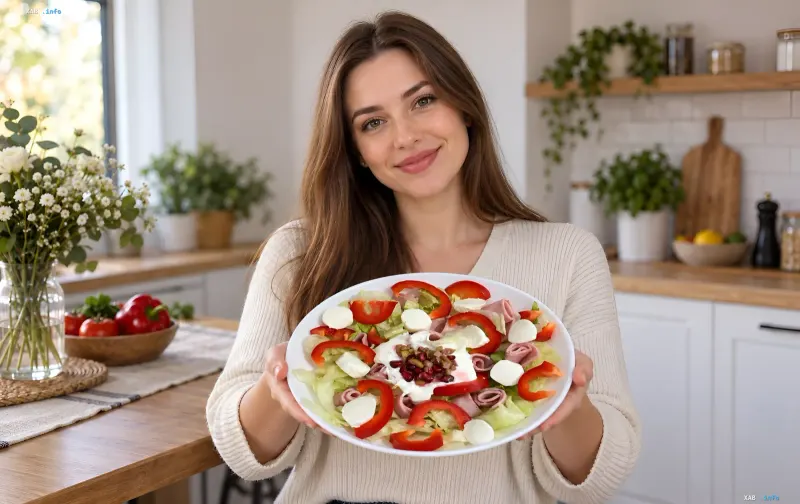
Household power outages are no longer a rarity: rolling blackouts, emergencies, or seasonal grid overloads can easily leave your kitchen without a working stove, oven, or microwave. However, as demonstrated in a recipe published by the lifestyle project Styler (RBC-Ukraine), all you need to prepare a nutritious meal is a knife, a bowl, and a few ready-to-eat ingredients. At the center of attention is a high-protein iceberg lettuce salad featuring chicken ham, mozzarella, and two original dressings, requiring no boiling, frying, or baking. Served on a white plate with ham rolls and bright bell pepper rings, the dish looks visually appealing even without specialized kitchen utensils.
Two Sauces Instead of Classic Mayonnaise
The key difference between this recipe and standard ham salads is the complete rejection of mayonnaise-based dressings in favor of two independent sauces. The first is a yogurt-lemon dressing: thick, natural Greek yogurt without added sugar or flavorings is mixed with finely grated parmesan and lemon juice. Lemon acts as a balancer here, neutralizing the rich dairy flavor of the yogurt and giving the dressing a more pronounced profile. The second sauce is a pomegranate-olive salsa, combining finely chopped olives with pomegranate seeds and a small amount of olive oil. Some pomegranate seeds are pressed with a spoon to release their juice, while others are left whole to preserve texture. Serving the two sauces separately—one over the vegetables and ham, the other on top—creates a contrast between salty and sweet-and-sour flavors.
Assembly and Portion Nutritional Value
The base of the salad is iceberg lettuce, which is washed, dried, and torn by hand into small pieces, combined with bell pepper sliced into thin strips. Thin slices of chicken ham (optionally rolled) and pieces of mozzarella are laid out over the vegetables. Next, the yogurt-lemon sauce is distributed, topped off with the pomegranate-olive salsa. According to Styler's calculations, a single portion contains approximately 300 kcal and 25 g of protein. The primary protein sources are chicken ham, mozzarella, Greek yogurt, and parmesan, while iceberg lettuce and bell pepper provide freshness and a crisp texture. Exact calorie and protein contents depend on the specific manufacturer and composition of the products used.
Food Safety and Serving Rules
Despite the simplicity of preparation, the recipe emphasizes the importance of maintaining proper storage temperatures. Ham, mozzarella, and Greek yogurt must be kept refrigerated. If the refrigerator has been inactive for a long time and the products have warmed up, their safety for consumption should be assessed before cooking. The finished salad is best served immediately after assembly so that the iceberg leaves retain their crunch and do not release excess juice. Choosing a thick natural yogurt is critical for the sauce: runny drinking yogurt will not work, as the dressing must maintain a creamy consistency. Before adding salt to the yogurt-lemon sauce, it is worth tasting it, since parmesan already imparts a distinct salty note.
Why This Recipe is Essential During Blackouts
All salad ingredients are used in a ready-to-eat form: vegetables just need to be washed and sliced, and meat and dairy products sliced and arranged. The sauces are mixed with a regular spoon in a bowl. No heat source, kitchen appliances, or lengthy preparation are required. The minimal set of utensils includes a knife, a cutting board, a bowl for the sauces, and a serving plate. This makes the recipe a practical option for a quick meal when standard cooking scenarios are impossible, but the need for a nutritious and filling dish remains.